Disclaimer: Information found on CryptoreNews is those of writers quoted. It does not represent the opinions of CryptoreNews on whether to sell, buy or hold any investments. You are advised to conduct your own research before making any investment decisions. Use provided information at your own risk.
CryptoreNews covers fintech, blockchain and Bitcoin bringing you the latest crypto news and analyses on the future of money.

The Mystery of Satoshi: Is it Possible to Uncover the Identity of Bitcoin’s Creator?, 2026/02/26 10:00:01

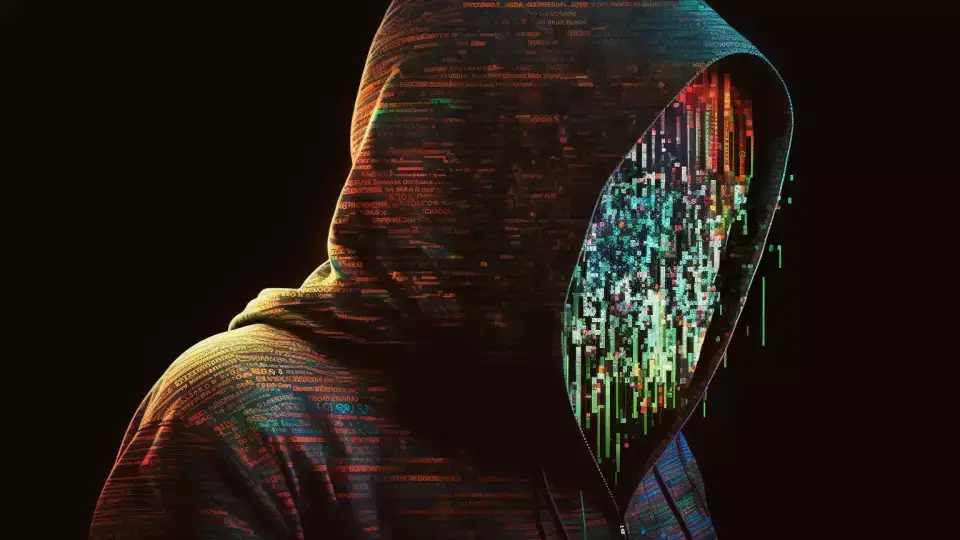
The Elusive Developer
Despite the passage of many years since the release of Bitcoin’s White Paper, the crypto community remains unable to answer several key questions: who was the enigmatic creator, did he operate alone or as part of a team, and what transpired after his disappearance?
Over the years, a vast array of hypotheses and conjectures has emerged surrounding this topic. It may seem that identifying the author of such a significant technology is merely a matter of time. However, the reality is far more complex. Let us explore which theories are grounded in fact and which remain speculative.
What is Known About Satoshi
The anonymous developer left behind relatively few “clues.” It is known that he was active on the Bitcointalk forum during 2009–2010 and published the Bitcoin White Paper in 2008. The technical documentation references participants in the cypherpunk mailing list, suggesting his involvement in that community. The pseudonym itself warrants particular attention.
The Name Nakamoto
In the early years, attempts were made to identify Satoshi through his name. In 2014, journalists from Newsweek speculated that the creator of the first cryptocurrency was engineer Dorian Nakamoto, who denied any connection to Bitcoin.
The Japanese origin of the pseudonym is also questioned. The White Paper and Nakamoto’s messages are written in English. Linguistic analysis revealed the use of British spellings (“grey,” “colour”), and the genesis block contains a reference to the British newspaper The Times.
Occasionally, Nakamoto employed American spellings. This has led to theories of intentional obfuscation or team collaboration. There are also interpretations of the name as a hidden message, though compelling evidence for this is lacking.
Additionally, programmer and cryptographer Paul Calder Le Roux is sometimes associated with Satoshi’s identity. He developed encryption software and used pseudonyms in his documents. His imprisonment could theoretically explain Nakamoto’s disappearance.
Nevertheless, analysis of the pseudonym does not provide definitive proof.
Cypherpunks
Among the potential candidates for the role of Nakamoto are often mentioned Nick Szabo, Hal Finney, Wei Dai, Adam Back, and others. The White Paper references Dai’s work “b-money” and Back’s Hashcash system, which became the foundation for the Proof-of-Work mechanism. Finney expanded on this concept in Reusable Proof-of-Work and was the first recipient of a Bitcoin transaction from Satoshi.
Related Posts
Indeed, early cypherpunks not only discussed ideas for decentralized payment systems free from the control of banks or governments but also actively developed and proposed technologies. Bitcoin integrated decades of cryptographic advancements. However, many prominent cypherpunks have explicitly stated that they are not Satoshi Nakamoto.
Nonetheless, it is worth mentioning one candidate who has persistently sought to prove otherwise.
Evidence in Court
The most contentious candidate remains Australian entrepreneur Craig Wright, who has repeatedly attempted to assert his authorship through legal channels. However, in 2024, the High Court of London ruled that Wright is not the creator of Bitcoin.
History has shown that documents, correspondence, and circumstantial evidence can be easily fabricated or interpreted in various ways. Therefore, identifying Satoshi requires evidence of a different caliber.
Interestingly, Bitcoin itself has technical mechanisms in place that would allow a potential candidate, including Craig Wright, to definitively prove their authorship.
The Key Question
The Bitcoin blockchain is a public ledger. To establish authorship, one must demonstrate control over the private keys of early addresses. The most straightforward method is to sign a message with the private key. Such a signature is impossible without access to it.
Another option is to move early BTC mined in the initial days of the network. Researcher Sergio Demian Lerner identified a distinctive mining pattern (“Patoshi”) presumably linked to Nakamoto. Moving these coins would serve as compelling evidence. However, the majority of early BTC remains untouched, estimated to exceed 1.1 million BTC.
Any movement of these funds could impact the market and attract regulatory attention. Even if Satoshi has access, there may be reasons for not demonstrating it.
Cryptographic proof aligns with Bitcoin’s philosophy: the system trusts mathematics, not authorities. Theoretically, it is also possible to publish previously unknown correspondence or materials, but such evidence remains circumstantial.
It is also plausible that access to the keys has been lost or that their owner has passed away. In such a case, the question of identification will remain unresolved. Conversely, this uncertainty enhances Bitcoin’s decentralized nature: the system lacks a center, a face, or a point of pressure.
Conclusion
Technically, it is possible to establish Satoshi’s identity through cryptographic proof of ownership of early keys. Practically, the likelihood of such a scenario diminishes over time. Circumstantial evidence does not provide guaranteed certainty. However, the absence of a proven author only reinforces the decentralized nature of Bitcoin.
