Disclaimer: Information found on CryptoreNews is those of writers quoted. It does not represent the opinions of CryptoreNews on whether to sell, buy or hold any investments. You are advised to conduct your own research before making any investment decisions. Use provided information at your own risk.
CryptoreNews covers fintech, blockchain and Bitcoin bringing you the latest crypto news and analyses on the future of money.

Russian miners are projected to lose competition to American counterparts in two years, according to a study., 2026/04/08 13:13:05

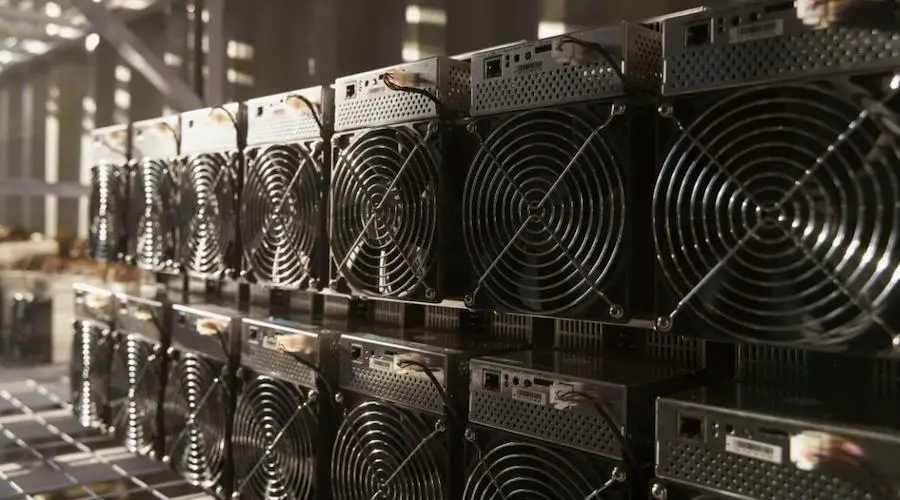
In the next two to three years, the model of continuous operation of mining farms connected to the power grid will become economically unfeasible in Russia, according to the mining company “Algorithm,” which referenced its research.
The researchers examined electricity tariffs in the regions most favored by cryptocurrency miners and concluded that due to rising energy costs, Russia is already “losing competition to large American firms.”
Related Posts
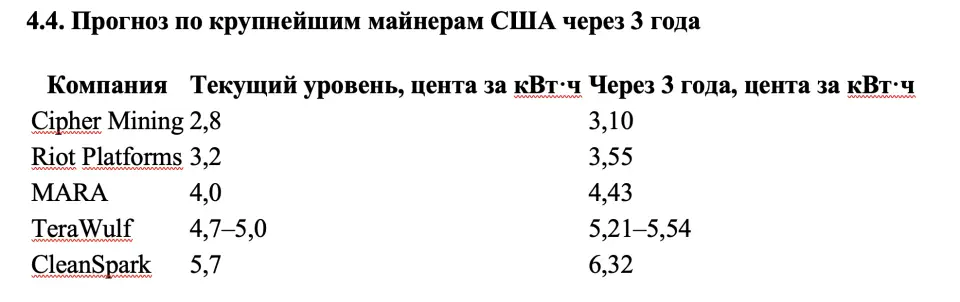
Previously, Russia was viewed as an attractive jurisdiction for establishing mining operations, but American mining companies have now gained an advantage due to lower rates. For instance, Cipher Mining pays 2.8 cents per kWh, Riot Platforms — 3.2 cents, and MARA — 4 cents.
In contrast, even in the most cost-effective region for electricity in Russia, the Murmansk region, miners face a rate of 5.83 cents (converted) per kWh, the researchers lament. In other regions, the rates are even higher, ranging from 7 to 9 cents per kWh.
According to the study, the cost of electricity for mining in Russia is increasing by an average of 10% annually, while for the largest American miners, the increase is only 3.5%.
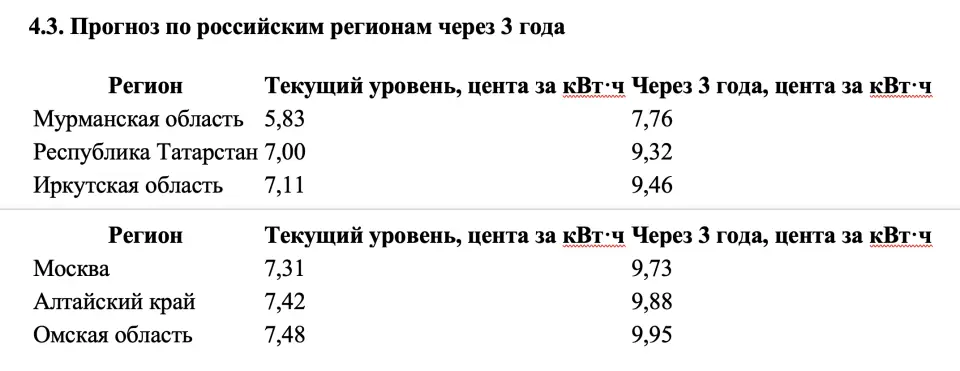
Considering this trend, in two years, the region in Russia with the best rates is expected to reach 7.05 cents per kWh, while most regions will fall within the range of 8.5 to 9 cents, as indicated in the study. In three years, experts from “Algorithm” predict that tariffs in Russia will rise to between 7.7 and 10 cents per kWh. Meanwhile, American companies will have electricity costs ranging from 3 to 6 cents.
“Algorithm” emphasizes that the “take or pay” principle promoted by the Ministry of Energy, which requires miners to pay not based on actual consumption but for 90% of maximum capacity, restricts the industry’s ability to flexibly manage operational modes.
“If the current trajectory of electricity costs continues, mass grid mining in Russia under a model of continuous full load will cease to be a viable market model within two to three years. Only specific specialized sites, older facilities with unique economics, individual contractual arrangements, and other exceptions may persist, but not a broad market for continuous mining from the grid,” the authors of the study predict.
Previously, “Algorithm” sent a letter to the Ministry of Energy of the Russian Federation requesting the abandonment of the “take or pay” principle. The letter, signed by managing partner Pavel Gudimov, states that under the current unfavorable economic conditions, miners could become energy-balancing organizations — capable of utilizing energy capacities during periods of downtime and, conversely, limiting consumption when the grid is under strain.
