Disclaimer: Information found on CryptoreNews is those of writers quoted. It does not represent the opinions of CryptoreNews on whether to sell, buy or hold any investments. You are advised to conduct your own research before making any investment decisions. Use provided information at your own risk.
CryptoreNews covers fintech, blockchain and Bitcoin bringing you the latest crypto news and analyses on the future of money.


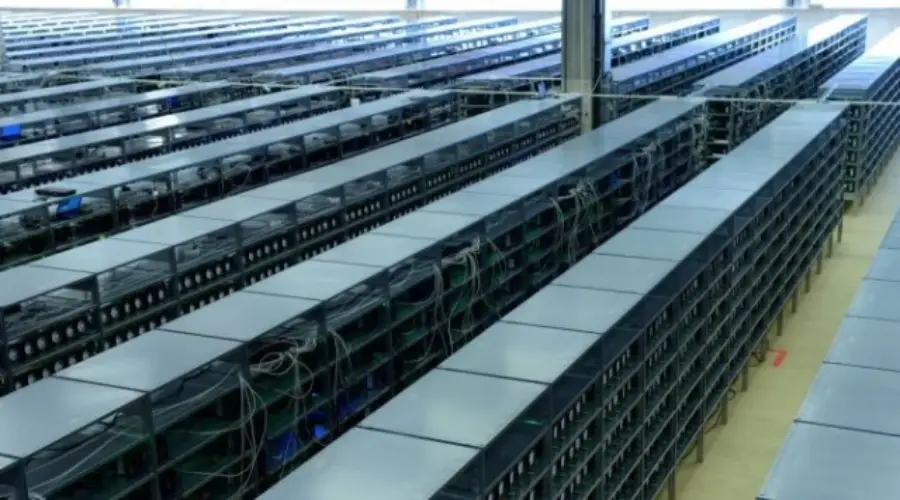
The Kostroma region has emerged as the leader among Russian regions in the increase of mining farms during the first quarter of this year. During this time, the number of facilities in the region surged fourfold compared to the same period in 2025, according to data from the analytical platform MTS EnergyTool.
In 2025, the primary growth in the number of mining farms was concentrated in Central Russia and the Northwest. Significant growth was recorded in the Leningrad and Tula regions, where the number of facilities increased by 2.4 and 2.1 times, respectively. Gains were also noted in other areas: the Moscow region saw an increase of 89%, Oryol by 91%, Smolensk by 53%, Novgorod by 51%, and Yaroslavl by 44%.
The communications director of the cryptocurrency exchange EXMO.me, Mikhail Smirnov, attributed the Kostroma region’s leadership to a combination of affordable electricity, available capacity, and the absence of overloads typical of traditional mining areas. He also mentioned the proximity to Moscow as a factor that simplifies operational management.
Valery Petrov, a member of the expert council of the Russian Association of the Crypto Industry and Blockchain, pointed out that the dynamics were also influenced by the low base effect. He stated that increased government oversight has led to a rise in the number of legalized miners, while restrictions in several regions have contributed to a redistribution of mining geography.
“This is one of the reasons why Kostroma could become one of the centers of migration. Central Russia provides access to logistics markets and network infrastructure,” he clarified.
Related Posts
Market participants indicate that the strengthening of Central Russia and the Northwest reflects a shift in the approach to infrastructure placement. When selecting sites, the stability of working conditions and the development of infrastructure are becoming increasingly important, particularly for large operators and investors working through data centers.
“The growth in the Central and Northwest districts appears logical. The market is moving away from the model of ‘where electricity is cheaper’ to ‘where the rules are more stable and clearer.’ This is especially crucial for industrial operators and investors working through data centers. Major players are no longer tied to a single region. Their capacities are distributed from the Irkutsk region to Central Russia. Overall, market infrastructure is developing in the regions, and exchange users are evenly distributed among them,” noted Mikhail Smirnov.
As of December 1, 2024, cryptocurrency mining is restricted in several regions of Russia due to the load on the energy system. Restrictions are in place in the North Caucasus and in new subjects, including Dagestan, Ingushetia, Kabardino-Balkaria, Karachay-Cherkessia, North Ossetia, and Chechnya. Local measures have also been implemented in certain areas of Buryatia, the Transbaikal Territory, and the Irkutsk region. Such measures increase pressure on the market and encourage the redistribution of capacities.
According to Valery Petrov, the growth in Central Russia and the Northwest is shaped by two factors: the relocation of miners from regions with restrictions and the development of infrastructure near major cities and data centers. However, many market participants are not prepared for constant relocations and prefer to establish a stable business where the rules of operation are clear and access to necessary resources is available.
Previously, the Chamber of Commerce and Industry of Russia (TPP) proposed lifting restrictions on mining for companies engaged in the production and transmission of electricity to consumers.
