Disclaimer: Information found on CryptoreNews is those of writers quoted. It does not represent the opinions of CryptoreNews on whether to sell, buy or hold any investments. You are advised to conduct your own research before making any investment decisions. Use provided information at your own risk.
CryptoreNews covers fintech, blockchain and Bitcoin bringing you the latest crypto news and analyses on the future of money.


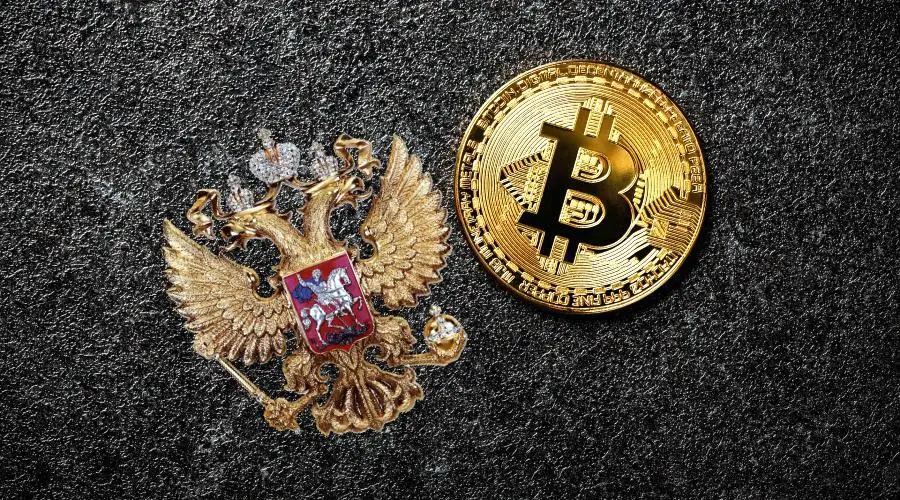
Trading and exchanging will only be permitted through platforms fully controlled by the Central Bank, with the ability to buy and sell only a limited number of cryptocurrencies—this outlines the future of state regulation in Russia. The draft of the law was shared by Sergey Mendeleev.
A document titled “Federal Law on Digital Currency and Digital Rights” appeared in the Telegram channel of Exved’s CEO, “Mendeleevshchina.” The 108-page text was accompanied by a narrative about his attempts since December to influence cryptocurrency market regulation. However, “those who were actually developing the document just laughed at us,” he noted.
“Cryptocurrency can now only be stored in crypto depositories, and for TrustWallet and MetaMask—it’s a bottle,” Mendeleev wrote.
Previously, officials had promised that a package of bills aimed at restricting the free circulation of cryptocurrencies would be submitted to the State Duma as early as next week.
Related Posts
What Will Happen to Crypto Exchanges
Russian tax residents, essentially all citizens of Russia, are proposed to be prohibited from conducting cryptocurrency transactions except through “entities engaged in the circulation of digital currencies.” According to the published text, exchanging one crypto asset for another or converting money into a crypto asset will only be allowed on platforms with a monthly turnover exceeding 3.5 million rubles, registered in a special state registry.
There is a direct analogy with the state registry of miners. Those who mine on a larger scale and are not listed in the registry face fines and even potential criminal charges.
Exception: Russians may be allowed to conduct free transactions with cryptocurrencies—but without exchanging them for rubles. This means they can operate freely elsewhere, as some officials put it, “outside the Russian financial framework.” Another exception applies to transactions under foreign trade contracts.
According to the document, only the following entities are permitted to engage in cryptocurrency transactions:
-
organizations with exchange or trading system licenses;
-
brokers and management companies;
-
digital depositories;
-
exchanges from the special registry of the Central Bank.
All of these are referred to in the text as “entities engaged in the circulation of digital currencies.”
Who Must Be in the State Registry of Exchanges: anyone wishing to conduct cryptocurrency exchanges exceeding 3.5 million rubles per month. The Central Bank is expected to be granted the authority to set requirements for exchanges—such as capital size—and to demand information about completed transactions (this is explained as part of the fight against fraud).
Information about transactions may also be accessed by Rosfinmonitoring, the tax service, and any authorities “if such information is necessary for them to perform their functions.” Servers used by exchanges must be located in Russia.
To be included in the state registry of exchanges, one must apply to the Central Bank. The Central Bank will have the authority to remove entities from the registry for “repeated violations” of any Russian laws and regulations. A separate article grants this financial regulator the powers of the main cryptocurrency regulator in Russia.
Which Cryptocurrencies Are Allowed for Purchase and Sale
It is directly proposed to prohibit Russians from purchasing cryptocurrencies “not permitted for public circulation.” Only digital currencies from a special list maintained by the Central Bank will be approved. According to the draft law, the list will include crypto assets:
-
with a capitalization of at least 5 trillion rubles (this capitalization must be maintained for at least two years before inclusion in the registry);
-
with an annual trading turnover of at least 1 trillion rubles (also for the past two years);
-
with a minimum five-year listing on a major exchange (its annual trading volume must start from 100 billion rubles).
The exchange/trading of private cryptocurrencies like Monero, which are “aimed at concealing information about transfers,” is prohibited. Furthermore, the document grants Rosfinmonitoring and the Central Bank the authority to ban any other digital asset at their discretion.
Legal terminology such as “exchange of digital currency”—meaning the purchase of one cryptocurrency for another—and “address-identifier”—the address in a digital depository that allows identification of the cryptocurrency wallet owner—are introduced.
The maximum amount for cryptocurrency purchases is not specified in the text, but it is clarified that the Central Bank has the right to establish an annual limit at its discretion.
What Is a Digital Depository and Why Is It Being Introduced
According to the text of the document, this is an organization that every Russian crypto investor must work with, through which all cryptocurrency traded by a specific Russian on an exchange must pass. The Central Bank, as indicated in the text, will have the authority to control the list of instances when the depository transfers or does not transfer cryptocurrency to a specific Russian at its discretion.
Previously, a depository referred only to a place in a bank where clients store their money or other valuables in safes. In the stock market, a depository is a record-keeper of the transfer of ownership rights to assets and a custodian of securities certificates.
The digital depository, as described in the draft law, acts as a limiting intermediary that must block a wallet (“address-identifier”) if unauthorized cryptocurrency is received. Transferring assets from an “address-identifier” to any foreign address, such as on an international crypto exchange, will only be allowed for individuals who have passed testing, miners, exchanges, and similar “entities engaged in the circulation of digital currencies,” as well as “participants in foreign trade activities”—but only under existing foreign trade contracts. For such transfers “outside the Russian financial framework,” the Central Bank will have the right to set limits at its discretion.
The document includes a separate provision stating that brokers will only be able to conduct transactions with addresses/accounts administered by the digital depository. The Central Bank will have the authority to establish exceptions.
The Central Bank is expected to be granted the right to set requirements for digital depositories. Moreover, the Central Bank intends to obtain the ability to establish a tariff threshold for the services of these organizations.
The Central Bank, courts, election commissions, police, and investigators—all will have the right to access information about clients’ accounts at the digital depository and “access keys to address-identifiers.”
Transfers of cryptocurrency to individuals or organizations on the prohibited list maintained by the tax service and Rosfinmonitoring will be explicitly banned.
What Are the Tests for the Right to Trade Cryptocurrency
Residents of Russia without the status of qualified investors (which is obtained on the stock market or in a digital depository) will be required to undergo testing to purchase cryptocurrency. If the testing is not passed, brokers, exchanges, or any legal intermediaries must refuse to proceed.
Such “entities engaged in the circulation” of digital currencies must conduct a free written test for each interested individual client. No details about the questions are provided, only the goal is stated: to ensure that the test-taker demonstrates “the ability to assess risks considering the nature of the proposed transactions and operations with digital currency.” If the individual being tested does not have the status of a qualified investor, a new test will be required for each new broker.
Main Point: Russians are generally considered too uninformed to be allowed to freely profit from cryptocurrency.
Advertising of cryptocurrencies is effectively prohibited—with the wording that it “is not allowed for individuals who do not have the right to acquire it.” Consequently, the right to purchase cryptocurrency is limited to a clearly defined number of specially tested residents of the country.
Additionally, it is proposed to relieve exchanges, brokers, and other “entities engaged in the circulation of digital currencies” from liability to clients for losses incurred due to failures in foreign crypto services or foreign sanctions.
Sergey Mendeleev, in a conversation with Bits.media, suggested that the final text of the draft law may change by the time it is submitted to the State Duma.
