Disclaimer: Information found on CryptoreNews is those of writers quoted. It does not represent the opinions of CryptoreNews on whether to sell, buy or hold any investments. You are advised to conduct your own research before making any investment decisions. Use provided information at your own risk.
CryptoreNews covers fintech, blockchain and Bitcoin bringing you the latest crypto news and analyses on the future of money.

More than half of cryptocurrency news misleads readers, according to a study., 2026/02/04 15:30:49


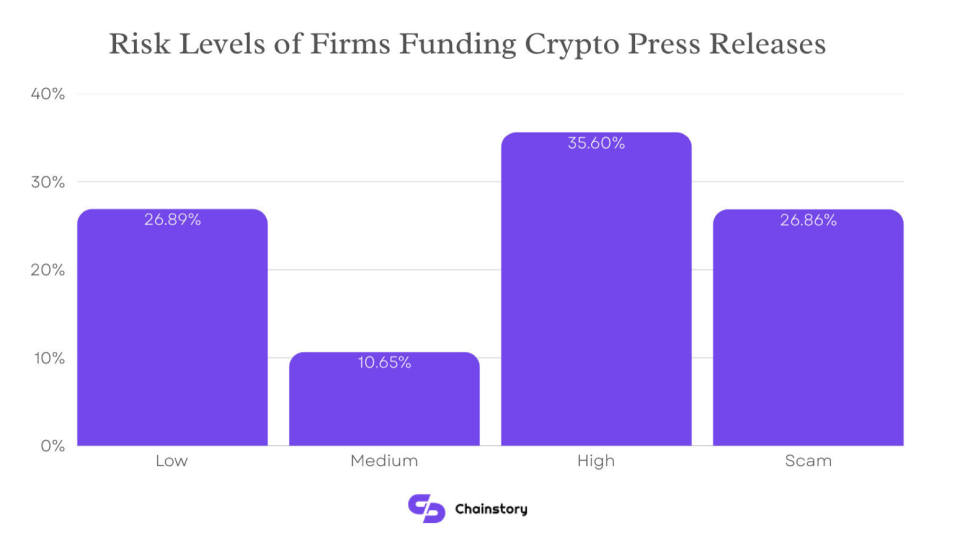
62% of press releases sent to the media by cryptocurrency projects are associated with scams or overly risky services, according to specialists from Chainstory. These releases are widely published on news platforms for a fee, circumventing editorial filters and misleading readers, experts noted.
Related Posts
The researchers examined 2,893 press releases. The majority of “questionable press releases” (90%) pertain to the cloud mining market, Chainstory representatives reported. Of the total messages from various cryptocurrency companies, only 2% are focused on genuinely significant events—such as fundraising, mergers and acquisitions, or large-scale research, the experts lamented. They stated that the vast majority of releases concern routine updates, exchange listings, and token sales, which are too trivial to constitute noteworthy news.
Chainstory outlined typical informational tactics employed by cryptocurrency companies:
Spam listings. Exchanges frequently announce the addition of new tokens—these messages account for 24% of all releases. Each listing receives a separate publication, creating the illusion of ongoing activity, even though most of these announcements lack real news value.
False legitimacy. Projects with questionable reputations utilize press releases to display logos of reputable media in their “About Us” section. This creates an appearance of endorsement by well-known news platforms, although in reality, these are merely paid publications.
Hyperboles and buzzwords. Texts are filled with trendy terms like AI, Web3, and DeFi, even if the project has no real connection to them. The aim is to capture investor attention by exploiting current trends.
Analysts at Chainstory noted the writing style: 73% of messages are composed in an overtly promotional tone using hyperbolic language. A neutral informational style is found in only 10% of cases, indicating that cryptocurrency companies strive to maximize the use of press releases in marketing styles.
Another issue is the widespread availability of various PR services that offer clients “guaranteed publication” on hundreds of news platforms for a fixed fee. These platforms do not prioritize fact-checking, do not conduct rigorous verification of authors, allow anonymous projects to publish, and post materials without editorial oversight, researchers lamented. As a result, a stream of messages is generated that superficially resembles journalistic texts but is essentially paid advertising.
For readers, such texts represent a trap, as the line between news and advertising becomes nearly indistinguishable. This leads to a FOMO (fear of missing out) effect, and the overall informational noise unjustifiably impacts prices and can confuse inexperienced investors, Chainstory experts stated. They particularly highlighted instances of fact distortion. For example, projects InfinityStakeChain and FlexyStakes disseminated press releases with false claims of support from Binance and other major players, which was not the case.
Last year, 11.6 million crypto tokens were shut down, primarily due to an oversupply of meme coins launched on platforms like Pump.fun, CoinGecko analysts reported. Many of these projects saw price increases driven by news.
