Disclaimer: Information found on CryptoreNews is those of writers quoted. It does not represent the opinions of CryptoreNews on whether to sell, buy or hold any investments. You are advised to conduct your own research before making any investment decisions. Use provided information at your own risk.
CryptoreNews covers fintech, blockchain and Bitcoin bringing you the latest crypto news and analyses on the future of money.

Iran will not receive bitcoins for the passage of vessels through the Strait of Hormuz — Bloomberg, 2026/04/11 11:55:47

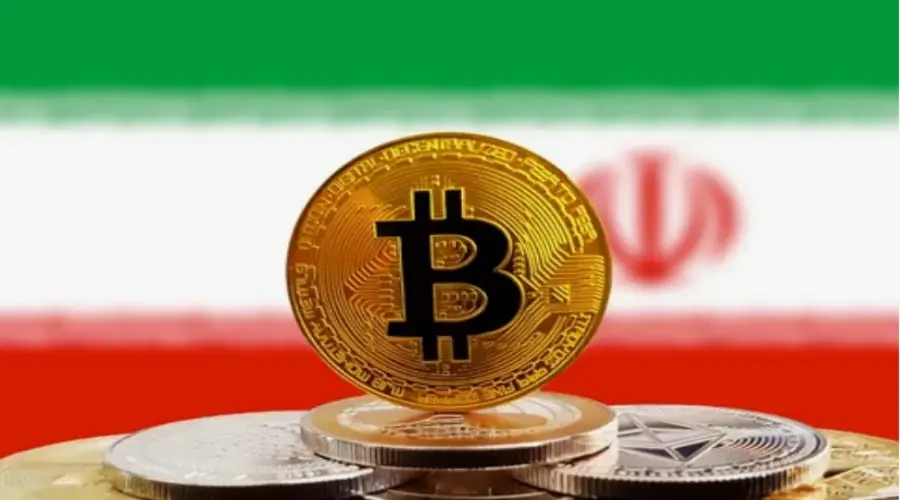
Experts consulted by Bloomberg have stated that Iran’s demand to receive payments in Bitcoin for the passage of vessels through the Strait of Hormuz is unlikely to be feasible through legal channels.
Their assessment indicates that Iran’s interest in such a scheme suggests the country has developed a sophisticated infrastructure for circumventing sanctions, which is significantly more complex and extensive than any direct payment mechanism.
Analysts from TRM Labs point out that Tehran allows cryptocurrency transactions through local intermediaries. This enables the control of fund movements without directly integrating them into the international financial system.
However, when attempting to facilitate payments through intermediaries linked to the Islamic Revolutionary Guard Corps, this mechanism becomes ineffective. In such cases, all risks fall on shipping companies, many of which are registered in Western jurisdictions and are required to adhere to sanctions.
“Shipping companies are already under strict scrutiny. If there is a risk that a transaction falls under sanctions, no dealer will participate,” explained Jake Ostrovskis, head of over-the-counter trading at Wintermute.
Even participants in the gray market face restrictions. Typically, these operators utilize unregulated offshore brokers who exchange cash for cryptocurrency without checks, but in the case of Iran, the issue of blockchain transparency arises.
Related Posts
“Whether it’s stablecoins or Bitcoin, all transactions are recorded in public ledgers. Eventually, this transfer will be noticed,” noted Bohan Jiang, a senior trader at the brokerage platform FalconX.
Rich Rosenblum, co-founder of the GSR platform, added that much depends on the type of carrier. Companies operating a “shadow fleet” are already using cryptocurrencies for transactions, but this poses risks for traditional operators.
According to him, to execute a payment, companies would need to purchase cryptocurrency through exchanges or over-the-counter dealers. However, upon discovering a connection to Iran, most regulated platforms block such transactions.
The cost for a standard supertanker carrying approximately 2 million barrels of oil can reach $2 million. In theory, such amounts could be processed through an exchange or dealer, but sanctions make this extremely challenging.
“Most exchanges would not want their clients to send money to Iran. In theory, one could buy cryptocurrency, withdraw it from the exchange, and then transfer it from a personal wallet,” Rosenblum noted.
However, even when using personal wallets, transactions remain on the blockchain. U.S. regulators can trace them and potentially add the tanker owner or intermediary to the sanctions lists of the Office of Foreign Assets Control (OFAC), experts concluded.
Previously, Hamid Hosseini, a representative of the Iranian Oil and Gas Exporters Union, stated that the country’s authorities are considering charging $1 for each barrel of oil transported through the Strait of Hormuz during a two-week ceasefire with the U.S.
