Disclaimer: Information found on CryptoreNews is those of writers quoted. It does not represent the opinions of CryptoreNews on whether to sell, buy or hold any investments. You are advised to conduct your own research before making any investment decisions. Use provided information at your own risk.
CryptoreNews covers fintech, blockchain and Bitcoin bringing you the latest crypto news and analyses on the future of money.

Iran vs Bitcoin: What the Middle East Conflict Will Mean for the Cryptocurrency Market, 2026/03/03 19:34:02

The “Special Military Operation” by the United States, Israel, and allies against Iran is beginning to impact capital markets and the global economy. Speculating on the duration and outcome of the hostilities is the domain of military and political analysts; however, we will attempt to clarify what crypto investors might anticipate.
Related Posts
Initial Reaction of the Crypto Market
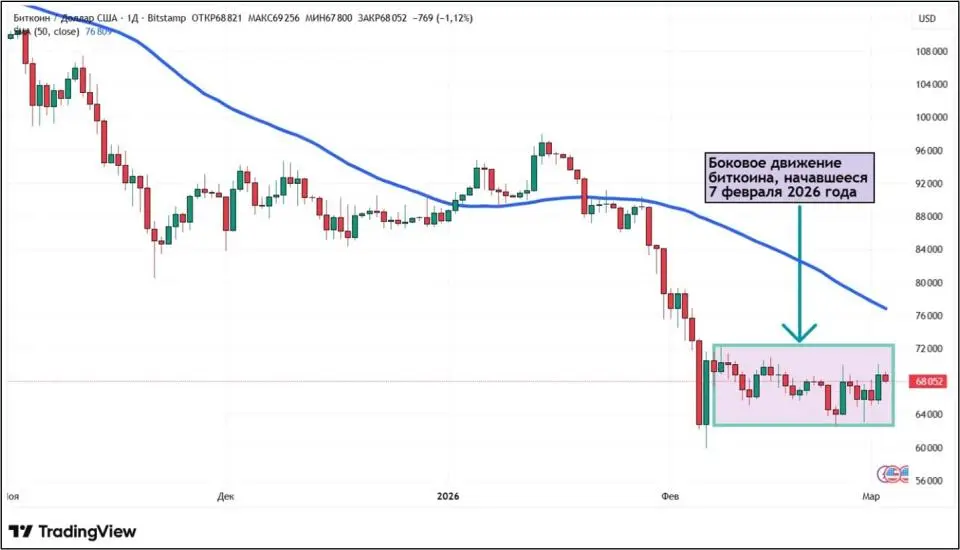
Observing Bitcoin reveals that the response of the leading cryptocurrency has been relatively muted. There has not been a significant surge in buying or selling activity. The highest daily increase since February 28, the day of the first attack on Iran, was recorded on March 2 at 4.64%. However, on February 25, prior to the onset of hostilities, Bitcoin had gained over 6.14% in a single day, only to reverse those gains just a couple of days later.
The reason lies in the fact that the long-term trend for BTC remains downward. In the short term, the largest cryptocurrency by market capitalization has been in a sideways trend for nearly a month. These patterns continue to dominate investor sentiment.
Source: tradingview.com
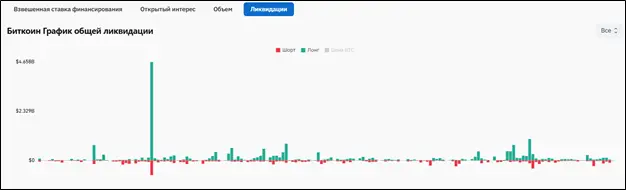
Some analysts had hoped for a sharp rise in liquidations—forced closures of traders’ margin positions. When looking at Bitcoin, nothing extraordinary, such as what occurred on October 10, 2025, has happened in recent days. Liquidations of long positions exceeded short positions only once, on March 1, amounting to $126.803 million versus $54.31 million. In terms of total volume, the highest number of forced closures of BTC positions occurred on February 28, totaling just over $268 million. In other words, if there was any brief panic at the beginning, it was likely due to the element of surprise. Subsequently, things returned to relative normalcy quite quickly.
Source: coinglass.com
Nevertheless, anxiety in the market remains elevated. The Fear and Greed Index, although it rose from a value of 5 (recorded on February 23) to a value of 14 (on March 3), still indicates extreme fear among investors. However, should crypto investors be concerned about the ramifications of prolonged military actions? Or a different outcome? There are two potential scenarios to consider.
Prolonged Conflict
The first scenario is that the military conflict between Iran and the U.S. will extend. While this option is grim from a humanitarian perspective, it could prove quite favorable for digital assets. Extended military confrontations necessitate substantial financial inflows. Typically, these funds are sourced from the issuance of national currency, leading to inflation. In an environment of declining purchasing power of fiat currency, individuals will seek ways to preserve their savings. In this context, Bitcoin may emerge as a viable option, alongside gold, as a safe-haven asset.
This viewpoint is notably held by Arthur Hayes, co-founder of the cryptocurrency exchange BitMEX. He believes that U.S. activity in the Middle East has historically resulted in lower interest rates and rising inflation. This was evident during the Gulf War in 1990 and following the September 11 attacks in 2001. Hayes asserts that once the U.S. central bank takes action, decisive measures should be taken:
“It’s time to return to the truck to buy Bitcoin and high-quality altcoins like HYPE—immediately after the Fed lowers rates or prints money to support U.S. objectives in Iran.”
Support for Bitcoin amid rising prices is also echoed by Stephen Coltman, head of macro analytics at the Swiss investment firm 21Shares. He believes that the outcome will depend on how quickly the hot phase of the conflict concludes and notes an increase in inflation expectations:
“If the rate is 3% and expected inflation is 5%, you will look for alternatives to fiat money. Otherwise, your money will lose real purchasing power over time.”
Short-Term Conflict
If the conflict is resolved swiftly, significant benefits for Bitcoin are unlikely. However, a collapse is also not anticipated. The worst for Bitcoin—a drop to $63,000—has already occurred. This view is shared by Mike McGlone, an analyst at Bloomberg Intelligence. He notes that the initial fear among crypto enthusiasts due to the escalation has shifted to relief following the assassination of long-time Iranian leader Ayatollah Ali Khamenei.
Ryan McMillin, the investment director at Australian financial firm Merkle Tree Capital, believes the time to buy has already arrived:
“The initial sell-off of Bitcoin occurred as per textbook; markets dislike uncertainty more than bad news, and when the scale of the Iranian conflict was localized, reflexive demand resumed. The market mechanically pays you to open long positions; this is a time for going long.”
Conversely, Pratik Kala, head of the research department at investment firm Apollo Research, expresses concern regarding oil prices, which could negatively impact cryptocurrencies:
“If oil prices remain high, the risks of rising inflation will increase, which is detrimental to risk assets, including Bitcoin. However, I do not consider this to be the base scenario.”
Conclusion
So far, the Middle Eastern conflict has had a limited impact on cryptocurrency. The initial shock was quickly absorbed. As a result, Bitcoin’s price has experienced minor fluctuations over five days. Should the war extend, it could lead to inflation, which may benefit BTC.
This material and the information contained herein do not constitute individual or any other investment advice. The views of the editorial team may not align with those of analytical portals and experts.
