Disclaimer: Information found on CryptoreNews is those of writers quoted. It does not represent the opinions of CryptoreNews on whether to sell, buy or hold any investments. You are advised to conduct your own research before making any investment decisions. Use provided information at your own risk.
CryptoreNews covers fintech, blockchain and Bitcoin bringing you the latest crypto news and analyses on the future of money.

In Russia, a proposal has been made to allow energy companies to engage in mining activities., 2026/03/24 11:15:10

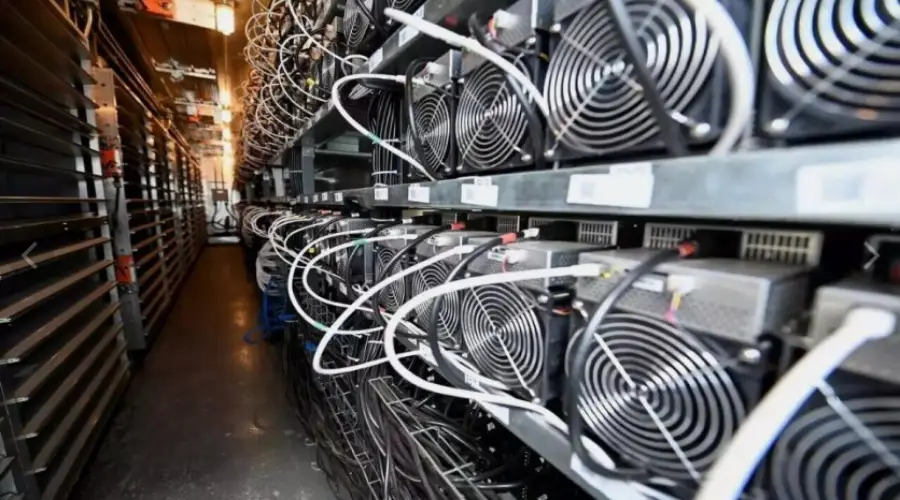
The Russian Chamber of Commerce and Industry (TPP) has proposed lifting restrictions on mining for companies involved in the production and transmission of electricity.
Sergey Bezdelov, the first deputy chairman of the TPP Council for the financial market and investments, as well as the head of the commission on mining activities and blockchain technology, stated that by the end of 2025, it is suggested to allow the combination of cryptocurrency mining with activities in the energy sector. This initiative pertains to legal entities and individual entrepreneurs engaged in electricity transmission, operational dispatch management, as well as its production and sale.
“We are not altering the essence of the law; rather, we are expanding its subjectivity and enhancing administration,” Bezdelov remarked.
According to him, the mechanism would enable the utilization of unused capacities of large companies, increase tax revenues, and expedite the transition of mining out of the shadows.
Andrey Loboda, a member of the TPP Council’s commission on mining and blockchain technology, pointed out that tightening restrictions on mining in several regions does not yield significant benefits for the energy system and the economy. He noted that this encourages miners to switch to their own generation, which could increase the burden on infrastructure and raise costs for other consumers.
Yuri Stankevich, deputy chairman of the State Duma’s energy committee, expressed that the initiative, without additional restrictions, carries risks. He believes that the combination of activities could lead to conflicts of interest: energy companies perform socially significant functions, while mining is associated with high volatility and network load.
Related Posts
He emphasized that such a model is only feasible with strict regulation, separate accounting of costs, the establishment of a distinct tariff framework, and oversight from regulators. Otherwise, the risk of cross-subsidization and deteriorating conditions for consumers increases.
The initiative has faced criticism from the Association “Community of Energy Consumers.” They argue that access for energy companies and their affiliated structures to infrastructure and data could create unequal conditions for market participants and lead to increased load on the energy system and tariffs.
Sergey Sasim, director of the Center for Energy Research at HSE, noted that the risks of local electricity shortages remain, thus current restrictions are still relevant. He stated that mining is less tax-efficient compared to other consumer categories.
Meanwhile, some experts are open to the implementation of the initiative, provided there is balanced regulation. Eгор Бозриков, an analyst at “Implementa,” believes that with transparent rules, the combination could enhance the efficient use of surplus generation and attract investments.
A similar view was expressed by Vadim Karle, a manager in the energy analytics group at Kept. He stated that industrial mining could serve as a controllable load in energy surplus regions, potentially reducing tariff burdens and improving generation efficiency.
Stankevich also cautioned that including mining costs in regulated activities could lead to increased tariffs for the population and businesses, especially in energy-deficient regions.
Previously, Ivan Chebeskov, the deputy finance minister of Russia, indicated that authorities are considering measures to stimulate the transition of mining out of the shadows.
