Disclaimer: Information found on CryptoreNews is those of writers quoted. It does not represent the opinions of CryptoreNews on whether to sell, buy or hold any investments. You are advised to conduct your own research before making any investment decisions. Use provided information at your own risk.
CryptoreNews covers fintech, blockchain and Bitcoin bringing you the latest crypto news and analyses on the future of money.

Energy Directed Appropriately: The Most Unconventional Mining Farms Worldwide, 2026/04/09 10:00:04

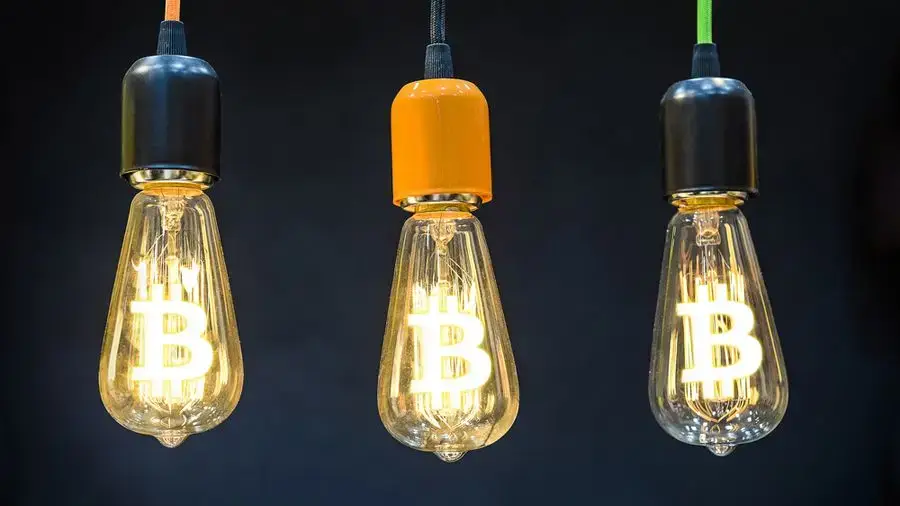
Ecologists often express dissatisfaction with mining due to the significant amount of heat generated. However, some companies have learned to utilize this heat in various agricultural and industrial sectors—from greenhouses and heating systems to beverage production.
Mining in 2026
In recent years, the term “mining” has increasingly been used for marketing purposes. For example, the phrase “social mining” implies receiving rewards for specific social activities. In its original sense, the term refers to the extraction and issuance of new coins by creating blocks in a blockchain.
Related Posts
In the context of Bitcoin, mining is carried out by computing hashes using specialized equipment—ASIC miners. Participants incur real costs, paying for electricity and equipment. When discussing unconventional mining, we will focus specifically on ASIC mining.
Among the popular equipment models in 2026 are the Bitmain Antminer S21, with a power consumption of approximately 3500 W, and the AvalonMiner A16XP-300T from Canaan (approximately 3850 W). In industrial quantities, these devices are used in the thousands, raising the logical question of how companies handle heat dissipation.
Tulips and Bitcoin
The Bitcoin Bloem project in the Netherlands uses heat generated during mining to grow tulips. The farm has been operating since 2022 near Rotterdam. Part of the energy for the mining infrastructure comes from solar panels installed on the building’s roof. Thus, farmers care about ecology and optimize their expenses.
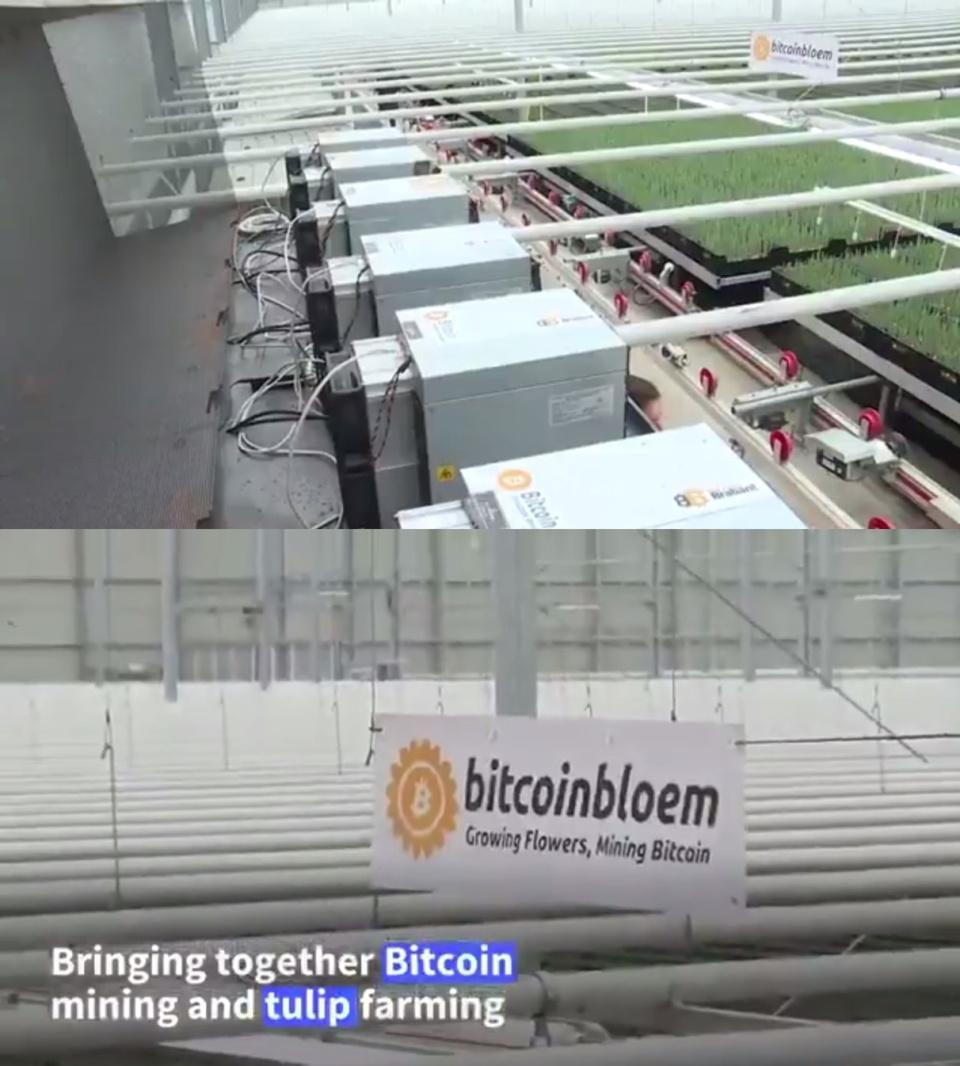
Source: news.afp.com
Similar solutions are being implemented in the United States. Barefoot Mining, in collaboration with Upstream Data, has introduced an innovative heating system in its greenhouses in Davie, Florida.
Bitcoin and Heating
Marathon Digital Holdings (MARA) launched a building heating project for 80,000 residents of Finland in 2024. The process utilizes heat generated during Bitcoin mining. Water passes through equipment housed in special metal blocks for cooling, heats up to 50–78°C, and then enters the city’s heating systems.
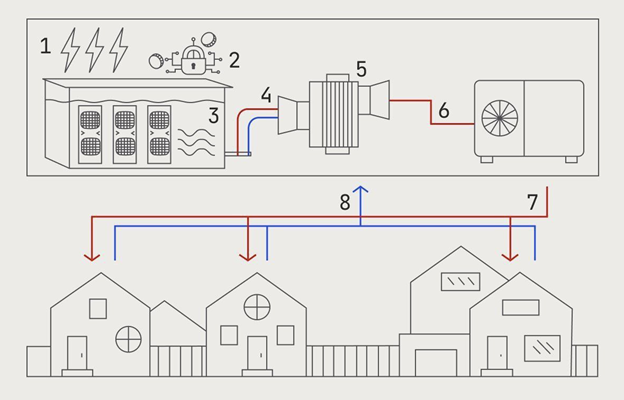
Source: mara.com
The project was implemented in two stages. First, a 2 MW data center was launched in the Satakunta region, providing heat to approximately 11,000 residents. Subsequently, MARA increased the number of households served in other cities by another 67,000.
Hashlabs has implemented similar solutions, launching six such platforms in the country. The company’s management views heat as an additional revenue stream and a way to diversify business—if the company loses income from cryptocurrency, it will generate profit from heating services.
Wood and Algae Drying
The Norwegian company Kryptovault, operating on renewable energy, uses hot air from ASICs to dry wood and algae. This method, introduced by Kjetil Hove Pettersen, fits well into Norwegian logistics business processes. Svein Bjerke, director of a local logging company, rates this approach as the “most ecological.”
A similar model is implemented in Guyana by Bitcoin Timber International. There, wood waste is first converted into electricity through biomass gasification, then used for mining, and the generated heat is applied for drying. The company claims to have achieved a nearly zero-waste cycle.
Pools and Spas
The Bathhouse spa complex in the United States, located in Manhattan, New York, uses mining to heat water in its pools. According to the owners, this ensures more even and economical heating.
Among American companies, there are suppliers of specialized equipment and turnkey solutions. For example, Hashrate House produces water heating systems using mining heat, including water heating tanks, pool heating, and jacuzzi systems.
Whiskey Production
In 2022, the Canadian company MintGreen signed a partnership agreement with the Shelter Point Distillery. Under this agreement, MintGreen provides heat for the uniform warming of whiskey barrels, accelerating the aging process of the product. Although the details of the agreement are not disclosed, it is known that Bitmain ASICs were initially used for this purpose, placed in a specific manner within a rotating installation to ensure even heat distribution.
Volcanic Energy
In El Salvador, geothermal energy from volcanoes is used for Bitcoin mining. The project has been implemented since 2021 under the initiative of President Nayib Bukele. Over the first three years, El Salvador mined more than 470 bitcoins this way. A 102 MW power plant located near the Tecapa volcano powers the mining infrastructure, which consumes approximately 1.5 MW. The project is implemented by LaGeo.
Conclusion
Mining is gradually moving beyond purely cryptocurrency infrastructure and integrating into real-world sectors. The application of heat for heating, agriculture, and industry demonstrates the potential for energy reuse. Although such solutions remain niche, they are shaping the direction of industry development toward more efficient and hybrid energy systems.
