Disclaimer: Information found on CryptoreNews is those of writers quoted. It does not represent the opinions of CryptoreNews on whether to sell, buy or hold any investments. You are advised to conduct your own research before making any investment decisions. Use provided information at your own risk.
CryptoreNews covers fintech, blockchain and Bitcoin bringing you the latest crypto news and analyses on the future of money.

Co-founder of GlydeGG: Bitcoin issuance could have been 100 times greater., 2026/03/31 10:25:34


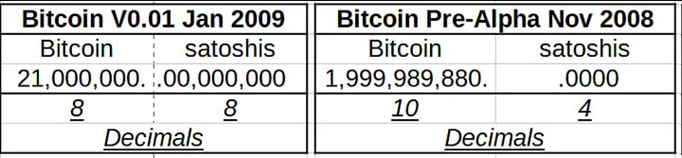
The initial version of Bitcoin anticipated an issuance of approximately 1.99 billion coins; however, Satoshi Nakamoto revised the parameters prior to the network’s launch, as reported by GlydeGG co-founder and researcher known as Sweep.
Related Posts
According to him, at the early stages, the anonymous creator of Bitcoin, Satoshi Nakamoto, did not utilize the term “blockchain.” In the protocol version v0.0, dated November 2008, the system was referred to as timechain.
This terminology, in the researcher’s view, more accurately represented the original concept of the project—a mechanism for recording events in an immutable chronological order, rather than merely a payment tool. The term “blockchain” became established later, after the network was launched.
An analysis of the archived code, according to his claims, also indicates differences in the monetary model. Specifically, the initial block reward could have been 10,000 BTC instead of the 50 BTC that marked the beginning of mining in 2009.
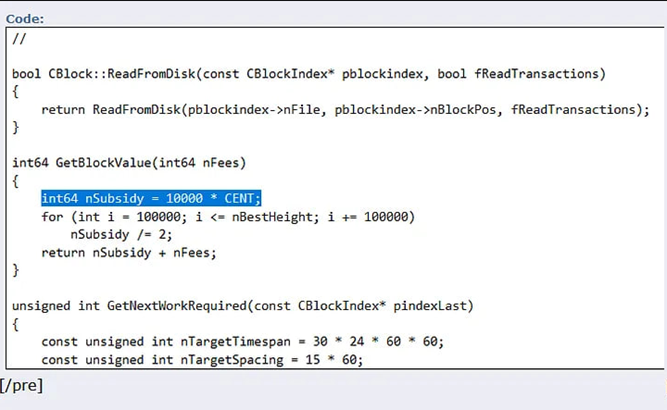
With such parameters, the total issuance would have reached approximately 1.99 billion coins—nearly one hundred times the current cap of 21 million BTC. However, shortly before the launch, Satoshi Nakamoto revised the key network parameters, reducing the potential supply by nearly 99%, the researcher asserts.
He estimates that the limited supply became a crucial factor in determining the current market value of the asset.
Previously, Coinbase CEO Brian Armstrong described Bitcoin as a decentralized form of international currency, resistant to inflation and independent of centralized control.
