Disclaimer: Information found on CryptoreNews is those of writers quoted. It does not represent the opinions of CryptoreNews on whether to sell, buy or hold any investments. You are advised to conduct your own research before making any investment decisions. Use provided information at your own risk.
CryptoreNews covers fintech, blockchain and Bitcoin bringing you the latest crypto news and analyses on the future of money.



Chinese cryptocurrency traders are expressing their grievances on social media, reporting that banks in China have begun freezing their accounts due to money transfers that mention USDT, Dogecoin, and other cryptocurrencies in the notes field.
Related Posts
In one instance, the China Construction Bank, the world’s third-largest bank, blocked the accounts of two clients after a transfer of 250 yuan ($35) was made with the note “Dogecoin this week.” As part of its risk management and virtual currency control program, the bank deemed this transaction to be high-risk.
On the popular Chinese social network Rednote, users are sharing this experience, cautioning other local traders to refrain from mentioning Bitcoin, meme coins, stablecoins, and other digital assets when sending money. Otherwise, they claim, their bank accounts could also be frozen.
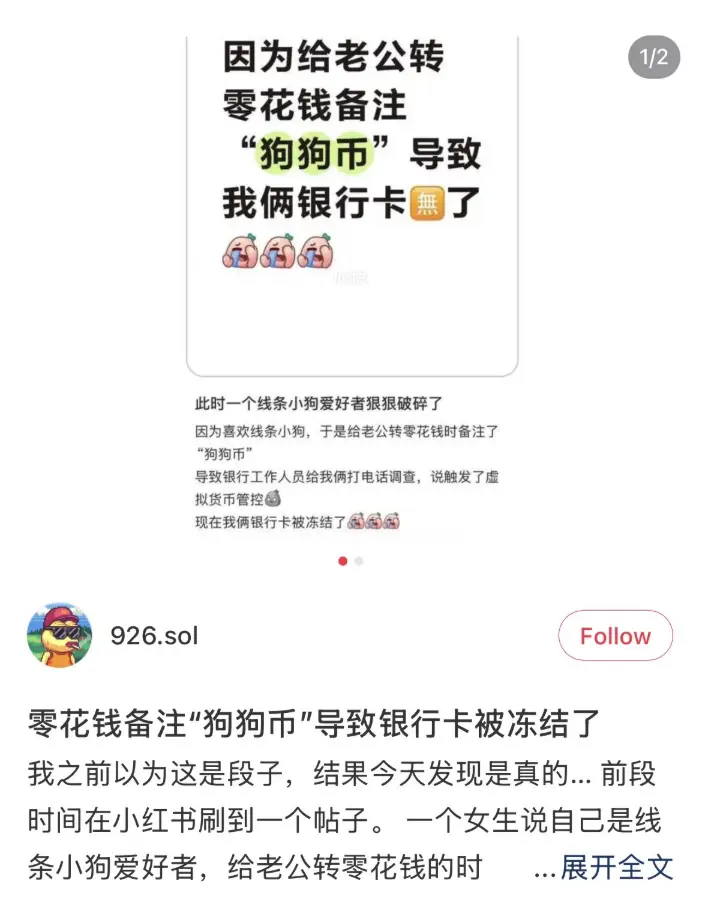
Users who have encountered similar issues explained that the only way to unblock an account is to prove to bank officials that the funds were not used for purchasing cryptocurrency. This requires submitting a statement to the bank explaining why a particular cryptocurrency was mentioned, followed by waiting for the outcome of the investigation. The entire process may take several weeks, and there are no guarantees of account reinstatement.
China is known for having one of the strictest regulatory environments regarding cryptocurrencies. In September 2021, Chinese authorities banned cryptocurrency trading, citing threats to financial stability and national security. The government justified the ban by stating that crypto assets could be used for money laundering, illegal capital outflows, and financing illicit activities. Mining activities in China are also prohibited. Concurrently, the Chinese authorities are actively promoting the central bank’s digital currency, the digital yuan, to the country’s residents.
Recently, Chinese regulators prohibited the issuance of independent stablecoins pegged to the yuan without prior approval, declaring that digital assets are not recognized as legal tender in the country.
