Disclaimer: Information found on CryptoreNews is those of writers quoted. It does not represent the opinions of CryptoreNews on whether to sell, buy or hold any investments. You are advised to conduct your own research before making any investment decisions. Use provided information at your own risk.
CryptoreNews covers fintech, blockchain and Bitcoin bringing you the latest crypto news and analyses on the future of money.

Buterin suggested establishing Ethereum as a payment system for artificial intelligence., 2026/02/10 13:16:28

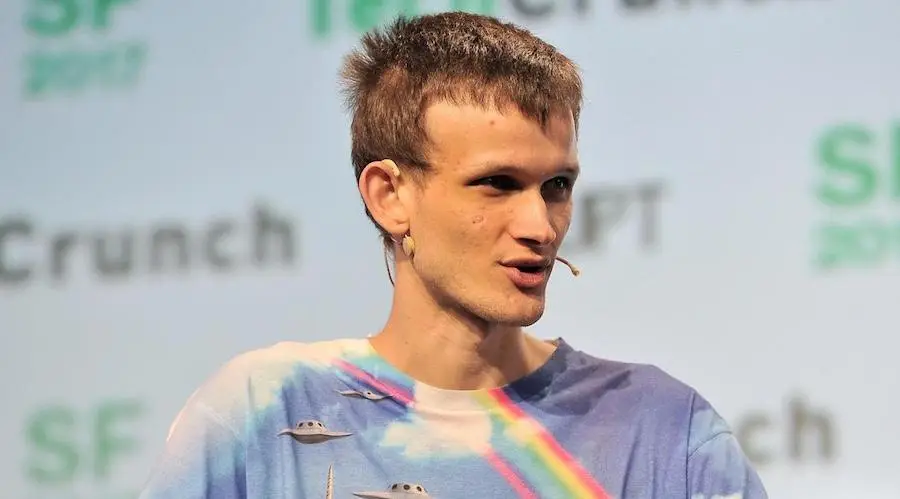
Ethereum has the potential to serve as a foundation for payment transactions conducted autonomously by artificial intelligence, stated co-founder Vitalik Buterin.
According to Buterin, Ethereum is ideally suited to function as an economic tool for engaging with AI—such as when bots “hire” one another to perform tasks. The blockchain enables the establishment of “economic autonomy for AI agents,” incorporates mechanisms for collateral and dispute resolution directly within the blockchain, and facilitates the implementation of standards for AI system reputation, Buterin explained. This innovative approach promotes the development of decentralized AI ecosystems that fundamentally differ from closed solutions controlled by a single entity, the developer-entrepreneur believes.
Buterin also suggested leveraging AI in prediction markets, as neural networks, unlike humans, can analyze vast amounts of data and provide more accurate forecasts.
Related Posts
“Prediction markets and decision-making, decentralized governance, quadratic voting, combinatorial auctions, universal barter economies—all these concepts are excellent in theory, but their practical application is limited by one significant factor: the constraints of human attention and decision-making capabilities. Large language models alleviate this limitation and greatly enhance human judgment… Ethereum can help bring all of this to fruition,” wrote Buterin.
The businessman believes that the interaction between AI and blockchain should adhere to the “classical ideal of cypherpunks”—the principle of “trust but verify.” In the view of the Ethereum co-founder, neural networks can handle routine transaction verification: they can analyze transactions of decentralized applications, conduct local audits of smart contracts, and interpret formal verification (FV) proofs provided by other network participants. This will create conditions under which users can engage with Ethereum applications without intermediaries, relying on their own local models, the programmer assured.
Previously, the Ethereum co-founder proposed that digital artists create personal tokens and put them up for voting, allowing artists and users to profit in prediction markets by betting on which personal tokens will succeed.
