Disclaimer: Information found on CryptoreNews is those of writers quoted. It does not represent the opinions of CryptoreNews on whether to sell, buy or hold any investments. You are advised to conduct your own research before making any investment decisions. Use provided information at your own risk.
CryptoreNews covers fintech, blockchain and Bitcoin bringing you the latest crypto news and analyses on the future of money.


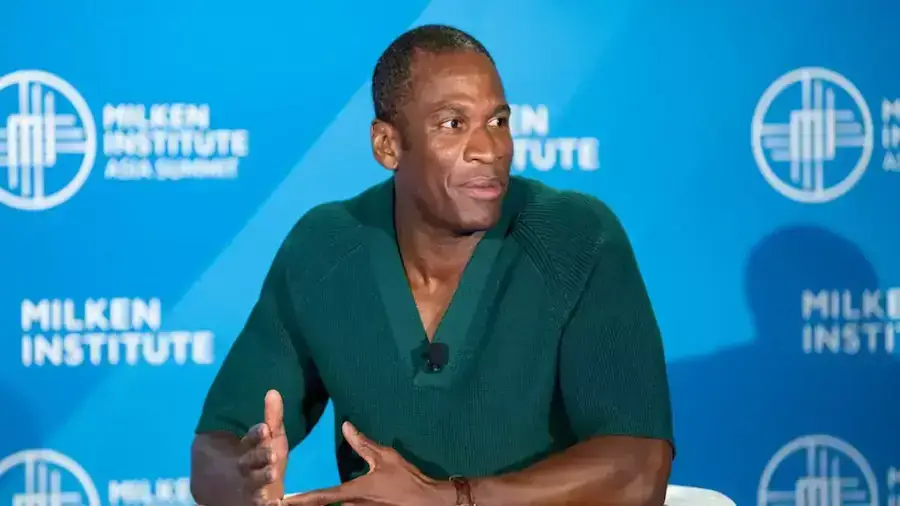
Co-founder of the crypto derivatives exchange BitMEX, Arthur Hayes, has proposed a wager to Kyle Samani, the founder of Multicoin Capital, regarding the future price movement of the HYPE token from the decentralized platform Hyperliquid.
According to the terms suggested by Hayes, the bet will be in effect from February 10 at 00:00 Coordinated Universal Time (UTC) until July 31, 2026, at 00:00 UTC. During this period, HYPE must outperform any altcoin with a market capitalization exceeding $1 billion on the CoinGecko platform, Hayes announced. Samani is invited to select the token for comparison. The loser of the bet will be required to donate $100,000 to a charity chosen by the winner, as proposed by the BitMEX co-founder.
It remains unclear whether Samani has agreed to participate in this wager.
Related Posts
Hayes issued the challenge to Samani after the Multicoin Capital founder criticized the Hyperliquid platform multiple times. Samani claims that the platform’s code is not fully open-source, it is managed centrally, and its creator left their country to launch the business. The Multicoin Capital founder accused Hyperliquid of facilitating criminal activities.
Hayes disagreed with these assertions and suggested that if HYPE is indeed a weak asset, it will eventually fail to surpass other major tokens over time.
Earlier in February, Hayes purchased 57,881 HYPE tokens for approximately $1.91 million. His total holdings of the tokens increased to around 131,807. These acquisitions followed the sale of PENDLE, ENA, and LDO tokens. Last September, Hayes sold about 96,600 HYPE for $5.1 million, realizing a profit amid concerns over token unlocks.
Last year, Hayes speculated that the HYPE token could reach $5,000 in the near future, potentially boosting demand for decentralized exchanges. Recently, Hayes stated that Bitcoin could exit the bearish trend more swiftly if the U.S. Federal Reserve begins printing dollars to stabilize the Japanese government bond market.
