Disclaimer: Information found on CryptoreNews is those of writers quoted. It does not represent the opinions of CryptoreNews on whether to sell, buy or hold any investments. You are advised to conduct your own research before making any investment decisions. Use provided information at your own risk.
CryptoreNews covers fintech, blockchain and Bitcoin bringing you the latest crypto news and analyses on the future of money.

A U.S. Bitcoin thief revealed his identity through a conversation in a messaging app., 2026/03/05 19:45:16


Related Posts
The Federal Bureau of Investigation (FBI) in the United States has announced the arrest of John Daghita, who is suspected of stealing $46 million in cryptocurrency from wallets controlled by U.S. authorities.
FBI Director Kash Patel stated that the arrest took place on the island of Saint Martin as part of a joint operation between the FBI and an elite unit of the French gendarmerie. According to photographs released by law enforcement, cash and cold cryptocurrency wallets were seized from Daghita.
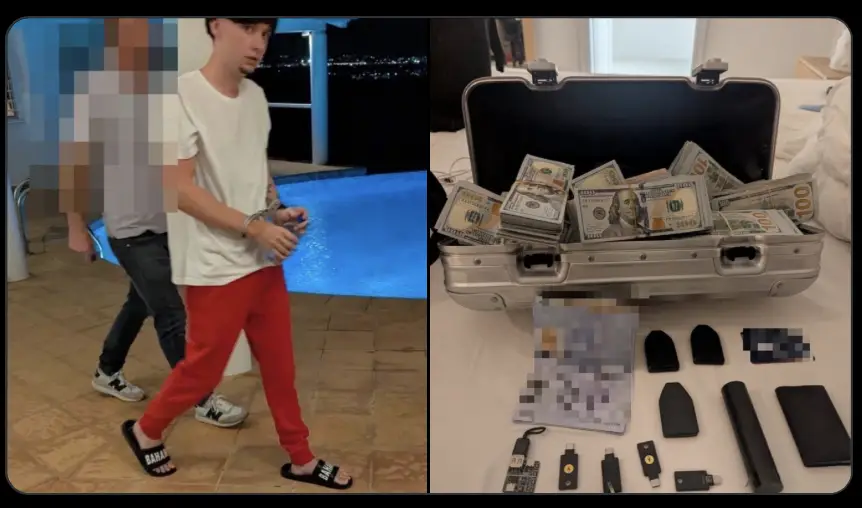
Daghita’s involvement in the theft of confiscated bitcoins was suspected after a public dispute with another hacker in a private Telegram chat. During the written exchange, an individual using the alias John shared a video of himself transferring $23 million between his own wallets.
An investigation by crypto detective ZachXBT revealed that Daghita is the son of Dean Daghita, the head of Command Services & Support. In 2024, this company secured a contract with the U.S. Marshals Service to manage confiscated crypto assets. Following the publication of the investigation’s findings, the CMDSS account on X, its website, and LinkedIn profile were taken down. It is believed that the bitcoins allegedly withdrawn by the suspect from government wallets are linked to the 2016 hack of the Bitfinex exchange.
Amid the hype surrounding the investigation, the address that blockchain detective ZachXBT associated with John Daghita launched a meme coin named John Daghita (LICK) on the Pump.fun platform. The token briefly reached a market capitalization of $915,000 but fell below $25,000 within a few hours.
Experts from the Swiss cybersecurity firm Global Ledger reported that hackers have learned to withdraw stolen cryptocurrencies within two seconds after breaching victims’ wallets. However, it typically takes them an average of ten days to reach final laundering destinations such as exchanges or mixers.
