Disclaimer: Information found on CryptoreNews is those of writers quoted. It does not represent the opinions of CryptoreNews on whether to sell, buy or hold any investments. You are advised to conduct your own research before making any investment decisions. Use provided information at your own risk.
CryptoreNews covers fintech, blockchain and Bitcoin bringing you the latest crypto news and analyses on the future of money.


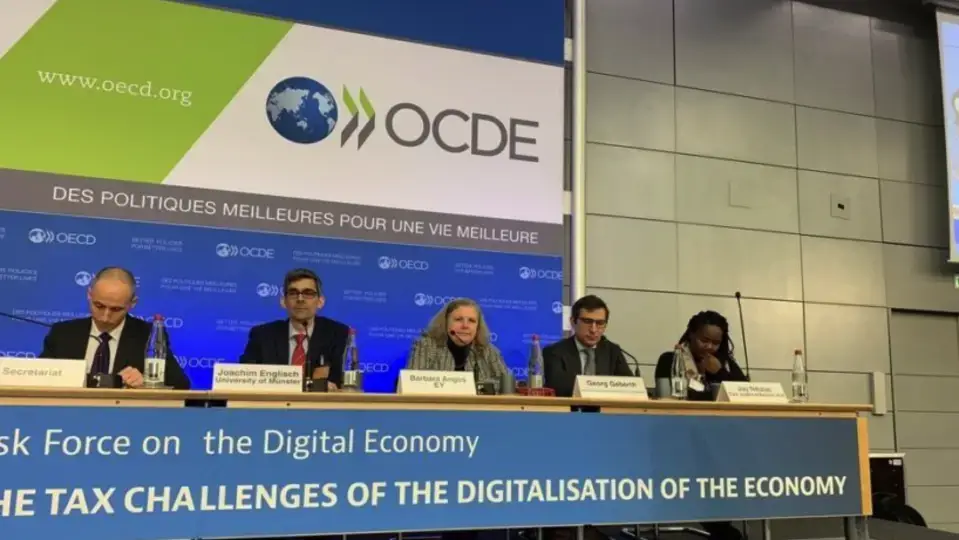
Crypto services in 48 countries around the world are required to begin collecting information on cryptocurrency transactions starting this year. Member States of the Organization for Economic Co-operation and Development (OECD) intend to exchange this data in order to increase tax collections and comply with the International Tax Framework (CARF). The standard was developed by the OECD.
The CARF Crypto Asset Tax Reporting System requires virtual asset service providers, whether they are exchanges, custodial services, crypto wallets, crypto ATMs or brokers, to report user transaction details, including sales, exchanges and transfers of cryptocurrencies, to tax authorities. If tax authorities are able to share this information internationally, crypto investors will be able to “meet their tax obligations more effectively,” making the fight against tax evasion more effective, the OECD said.
From 2027, tax authorities intend to exchange information received from crypto-services in all EU countries, as well as in the UK and Kazakhstan. From 2028, Azerbaijan, Mexico, Mongolia, Singapore, Switzerland, Thailand, the United Arab Emirates and Hong Kong (a special region of China), and from 2029 – the United States, intend to join the initiative.
Related Posts
As for Argentina, El Salvador, Georgia, India and Vietnam, these OECD member countries have not yet committed to implementing the CARF standard, representatives of the organization clarified. These states are especially noted in the document because they have not signed an agreement on the implementation of CARF, despite the high level of use of cryptocurrencies. In El Salvador, Bitcoin is completely recognized as legal tender, and the state bases its policy on the idea of financial freedom from the dictates of the OECD or the International Monetary Fund (IMF).
Russia does not participate in the implementation of the CARF standard, since it is not a member of the OECD. The country interacted with the organization until 2014. In 2023, the Financial Action Task Force (FATF) removed Russia from its membership, and in 2024, the FATF downgraded Russia due to a lack of regulation of cryptocurrencies.
Against the background of sanctions from the United States, the European Union, the UK and other countries, OECD participants are not going to transfer data on crypto transactions to the Federal Tax Service of Russia (FTS). Other sanctioned countries, including the DPRK, also do not participate in the automatic exchange of financial information.
In December, the Brazilian tax authority announced stricter reporting requirements for crypto assets, citing a rise in monthly transaction volume in the local crypto market to $6-8 billion.
