Disclaimer: Information found on CryptoreNews is those of writers quoted. It does not represent the opinions of CryptoreNews on whether to sell, buy or hold any investments. You are advised to conduct your own research before making any investment decisions. Use provided information at your own risk.
CryptoreNews covers fintech, blockchain and Bitcoin bringing you the latest crypto news and analyses on the future of money.


A new cryptocurrency wallet has recently been introduced in Apple’s App Store that employs Web2 techniques to eliminate the need for users to engage with seed phrases or passwords.
As per a May 11 announcement from the app’s creator, Kresus, the wallet secures users’ private keys within an Amazon Web Services Hardware Security Module (HSM) and utilizes “magic links” along with two-factor authentication (2FA) for user verification.
Typically, most cryptocurrency wallets require users to document a recovery phrase or “seed words” during account setup. If a user misplaces their recovery phrase and their device fails, they permanently lose access to their account.
This concern has led some cryptocurrency users to prefer storing their assets in an exchange account. However, incidents like the downfall of FTX have raised apprehensions about the safety of keeping cryptocurrency on exchanges.
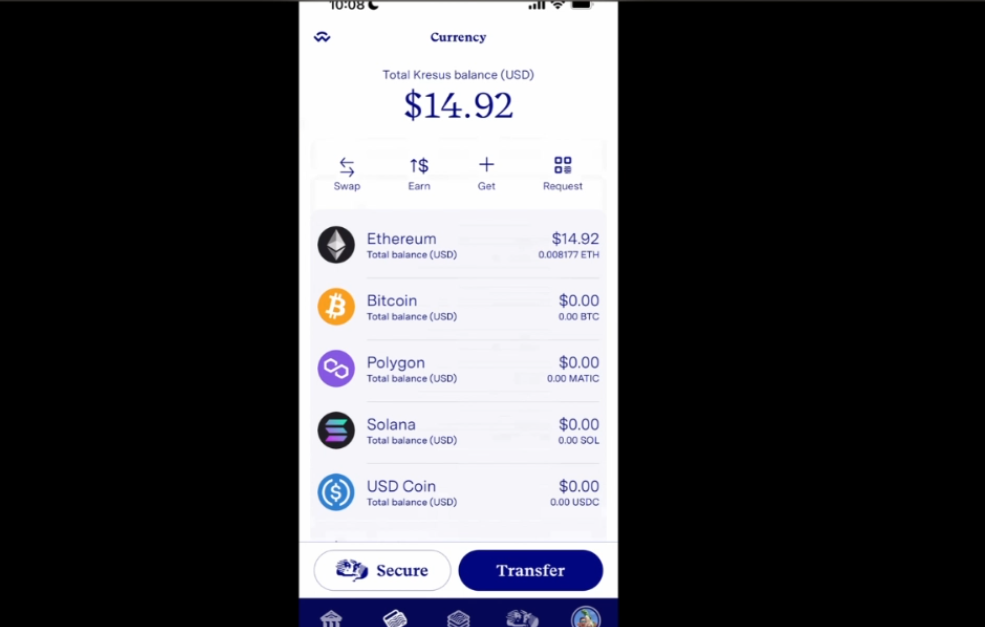 A screenshot of the Kresus iOS app. Source: Kresus Labs
In an interview with Cointelegraph, the Kresus team explained that their new wallet application aims to address this issue by utilizing a wallet infrastructure and software development kit (SDK) known as “Magic,” which securely stores the user’s private key on an Amazon Web Services computer designed for safeguarding highly sensitive data.
The AWS computer encrypts the user’s key with a Master Key that remains within the hardware module, similar to the functionality of a hardware wallet. This approach removes the necessity for seed words or private keys to be saved on the device or maintained as a paper backup, according to the team.
In contrast to a centralized exchange, Kresus does not rely on passwords for user authentication, as obtaining password hashes and deciphering them is a prevalent method employed by hackers to gain access to online accounts. Instead, users must click a link sent via email each time they attempt to log in.
Related Posts
The application also incorporates 2FA to safeguard the account in the event that the user’s email address is compromised.
When it comes to transferring cryptocurrency, users are not required to copy and paste crypto addresses on Kresus. The app enables each user to register for a complimentary .kresus domain name through Unstoppable Domains, which can be utilized to send cryptocurrency to others.
“We’re really trying to offer something that is truly a better mousetrap for any Web3 user,” Kresus CEO Trevor Traina told Cointelegraph. “Where you can move all of your things from multiple places into one place, have it be very accessible but highly secure […] but also a gateway portal for people who aren’t comfortable yet on Web3 because they’re terrified they’ll be locked out.”
The Kresus team indicated that due to the operational nature of the Magic infrastructure, neither they nor the Magic development team can view the user’s private key during account setup or login, preventing them from executing unauthorized transactions.
Related: Human ID project ‘Worldcoin’ launches gas-free wallet only for humans
The Web3 app developer secured $25 million in funding in March to facilitate the development of its so-called SuperApp.
Web3 superapp @Kresusofficial raised $25M in a Series A funding round led by @LCVentures, with participation from @FTI_US and JetBlue Ventures.https://t.co/ymXkN5DBAx pic.twitter.com/Cgw30Hvimo
— Crypto Fundraising #StandWithUkraine (@Crypto_Dealflow) March 7, 2023
Kresus is not the sole wallet providing seedless onboarding through the Magic SDK. Web3 gaming firm Immutable informed Cointelegraph that it is also working on a seedless wallet named “Immutable Passport” that utilizes the same infrastructure. Passport will function on the Immutable X and Immutable zkEVM networks and will be employed to onboard players of Immutable’s Web3 games, such as Gods Unchained and Guild of Guardians.
