Disclaimer: Information found on CryptoreNews is those of writers quoted. It does not represent the opinions of CryptoreNews on whether to sell, buy or hold any investments. You are advised to conduct your own research before making any investment decisions. Use provided information at your own risk.
CryptoreNews covers fintech, blockchain and Bitcoin bringing you the latest crypto news and analyses on the future of money.


As it continues to expand, liquid staking presents significant risks to the sector and requires enhanced decentralization, as indicated by a report from digital asset firm HashKey Capital.
The report highlights that the total liquid staking derivatives (LSD) market has grown to over $22 billion in total value locked in 2023. Additionally, the market capitalization of LSD projects has reached $18 billion.
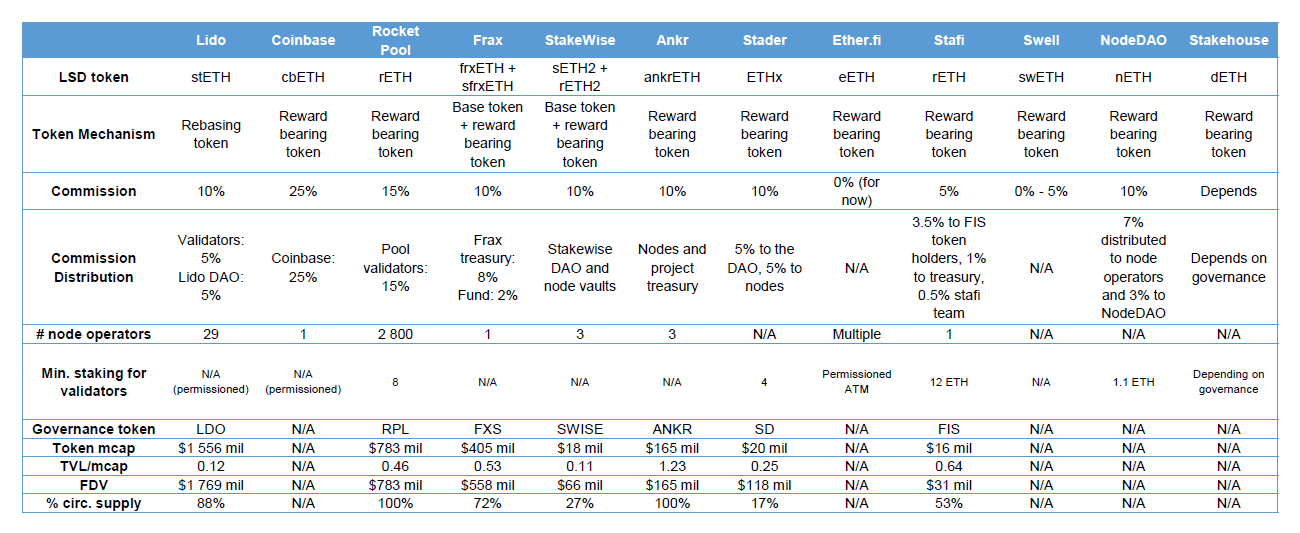 Overview of the liquid staking derivatives market in 2023. Source: HashKey Capital
While the expansion of LSD protocols may benefit their respective communities and token holders, it could also pose risks. The report suggests that it may negatively impact the Ethereum ecosystem in several ways.
As illustrated in the table above, numerous LSD protocols depend on a limited number of node operators, which centralize a significant portion of validator nodes. The report states that the quantity of node operators should be a “point of concern for centralization.”
Related: Liquid staking claims top spot in DeFi: Binance report
Related Posts
The report emphasizes that centralization in liquid staking can lead to various detrimental effects on the ecosystem, including diminished competition and heightened risk of censorship. The report states:
“There is a heightened possibility of censorship with centralized staking players, as they may be subject to incentives or regulatory pressure to censor transactions. This can potentially result in a disruption of the trust within the network.”
Furthermore, as centralization increases, there are risks associated with reduced security, as large staking entities can facilitate 51% attacks. Additionally, there is an elevated risk of collusion.
“Centralized stakers can collude to carry out actions that go against the decentralization ethos and against the users, such as malevolent MEV extraction and frontrunning,” the report states.
Despite the risks of centralization, HashKey acknowledges that many protocols are relatively new and have plans to decentralize and incorporate distributed validator technology into their systems for improved decentralization and resilience.
Magazine: SEC reviews Ripple ruling, US bill seeks control over DeFi, and more: Hodler’s Digest, July 16-22
