Disclaimer: Information found on CryptoreNews is those of writers quoted. It does not represent the opinions of CryptoreNews on whether to sell, buy or hold any investments. You are advised to conduct your own research before making any investment decisions. Use provided information at your own risk.
CryptoreNews covers fintech, blockchain and Bitcoin bringing you the latest crypto news and analyses on the future of money.


The price of Ether (ETH) has fallen by 14.7% from its high of $2,120 on April 16, 2023. Nonetheless, two derivatives metrics suggest that investor confidence has not been this strong in over a year. This contrast prompts a closer examination of whether the recent optimism is a wider reaction to Bitcoin (BTC) surpassing $34,000 on October 24.
A likely reason for the heightened enthusiasm among investors utilizing ETH derivatives is the general market’s anticipation surrounding the potential approval of a spot Bitcoin exchange-traded fund (ETF) in the United States. Analysts from Bloomberg have noted that the ongoing modifications to the spot Bitcoin ETF proposals can be interpreted as a “positive sign” of progress and forthcoming approvals. This development is expected to propel the entire cryptocurrency market to increased price levels.
Notably, remarks made by U.S. SEC Chair Gery Gensler in 2019 provide insight into his viewpoint. At the 2019 MIT Bitcoin Expo, Gensler described the SEC’s stance at that time as “inconsistent,” as they had rejected multiple spot Bitcoin ETF applications while futures-based ETF products, which do not involve physical Bitcoin, have been available since December 2017.
Another factor contributing to the optimism among Ethereum investors using derivatives could be the anticipated Dencun upgrade, set for the first half of 2024. This upgrade aims to improve data availability for layer-2 rollups, ultimately reducing transaction costs. Additionally, it will prepare the network for the future implementation of sharding (parallel processing) as a part of the blockchain’s “Surge” roadmap.
Ethereum co-founder Vitalik Buterin emphasized in his statement on October 31 that independent layer-1 projects are slowly transitioning and potentially integrating as layer-2 solutions within the Ethereum ecosystem. Buterin also remarked that current rollup fees are not reasonable for most users, especially for non-financial applications.
Challenges for Ethereum competitors
Competitors of Ethereum are encountering difficulties as software developers come to understand the costs involved in maintaining a comprehensive record of a network’s transactions. For example, SnowTrace, a widely used blockchain explorer tool for Avalanche (AVAX), announced its shutdown allegedly due to high costs.
Phillip Liu Jr., who leads strategy and operations at Ava Labs, highlighted the challenges that users face when trying to self-validate and store data on single-layer chains. As a result, the significant processing capacity required often leads to unforeseen complications.
For instance, on October 18, the Theta Network team faced an “edge case bug” following a node upgrade, which caused blocks on the main chain to cease production for several hours. Similarly, the layer-1 blockchain Aptos Network (APT) suffered a five-hour outage on October 19, halting deposits and withdrawals on exchanges.
In short, while the Ethereum network may not currently provide a remedy for its high fees and processing capacity issues, it does boast an eight-year history of ongoing upgrades and enhancements aimed at that goal with minimal major disruptions.
Related Posts
Assessing bullish sentiment in ETH derivatives markets
After analyzing the fundamental factors surrounding the Ethereum network, it’s crucial to assess the bullish sentiment among ETH traders in the derivatives markets, despite the negative performance of ETH, which has decreased by 14.7% since its peak of $2,120 in April.
The Ether futures premium, which gauges the difference between two-month contracts and the spot price, has attained its highest level in over a year. Typically, in a healthy market, the annualized premium, or basis rate, should range from 5% to 10%.
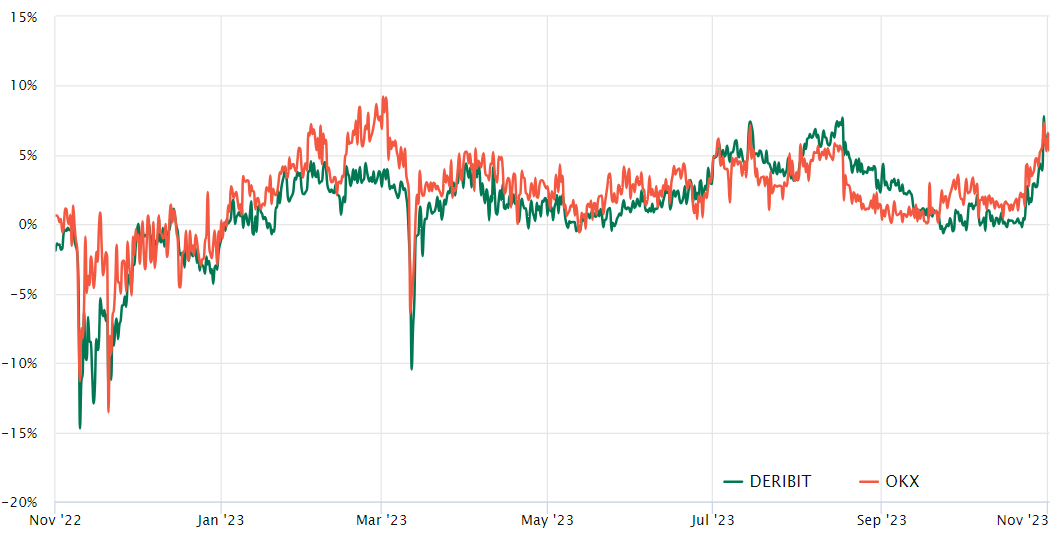
This data indicates a rising demand for leveraged ETH long positions, as the futures contract premium increased from 1% on October 23 to 7.4% on October 30, surpassing the neutral-to-bullish threshold of 5%. This rise in the metric followed a 15.7% increase in ETH’s price over two weeks.
Examining the options markets offers additional insights. The 25% delta skew in Ether options serves as a useful gauge of when arbitrage desks and market makers charge excessively for upside or downside protection. When traders foresee a decline in Ether’s price, the skew metric climbs above 7%. In contrast, periods of enthusiasm typically show a negative 7% skew.
Related: 3 reasons why Ethereum price is down against Bitcoin
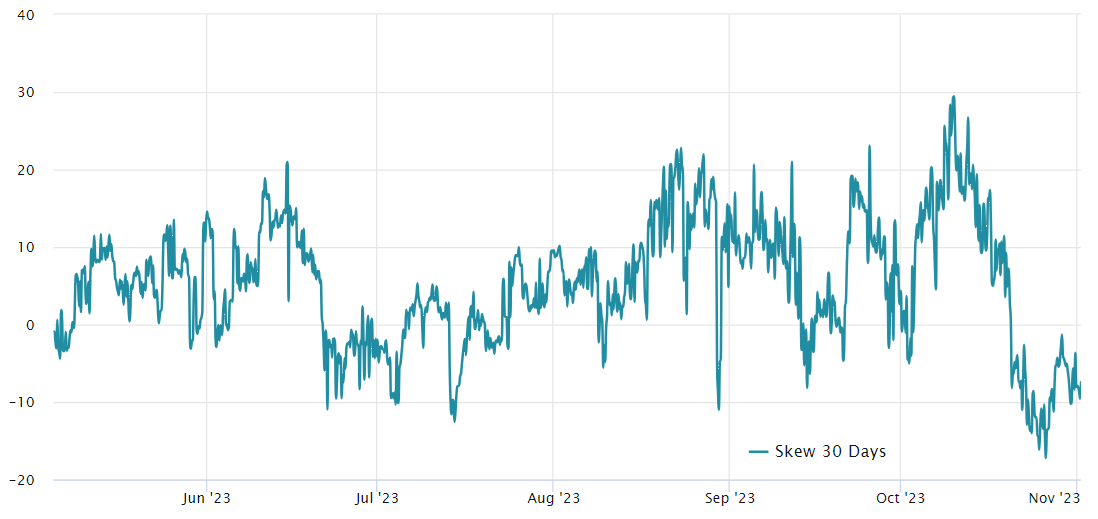
It is noteworthy that the Ether options 25% delta skew reached a negative 16% level on October 27, marking the lowest point in over 12 months. During this timeframe, protective put (sell) options were being traded at a discount, indicative of excessive optimism. Furthermore, the current 8% discount for put options represents a complete shift from the 7% or greater positive skew that persisted until October 18.
In conclusion, the factors contributing to the bullish sentiment among Ether investors in derivatives markets remain somewhat unclear. Traders may be anticipating approval for Ether spot ETF instruments following Bitcoin’s potential approval, or they might be relying on planned upgrades aimed at lowering transaction costs and removing the competitive edge of other blockchain platforms like Solana (SOL) and Tron (TRX).
This article does not provide investment advice or recommendations. All investment and trading activities involve risks, and readers should perform their own research before making decisions.
