Disclaimer: Information found on CryptoreNews is those of writers quoted. It does not represent the opinions of CryptoreNews on whether to sell, buy or hold any investments. You are advised to conduct your own research before making any investment decisions. Use provided information at your own risk.
CryptoreNews covers fintech, blockchain and Bitcoin bringing you the latest crypto news and analyses on the future of money.


Following a brief spike above $2,000 on May 6, the price of Ether has reverted to a narrow range between $1,820 and $1,950, which has been consistent for the last three weeks.
Recent data on Ether (ETH) futures and options indicates that the likelihood of the Ether price falling below the $1,820 support level is increasing, as professional traders have shown reluctance to establish neutral-to-bullish positions through derivatives contracts.
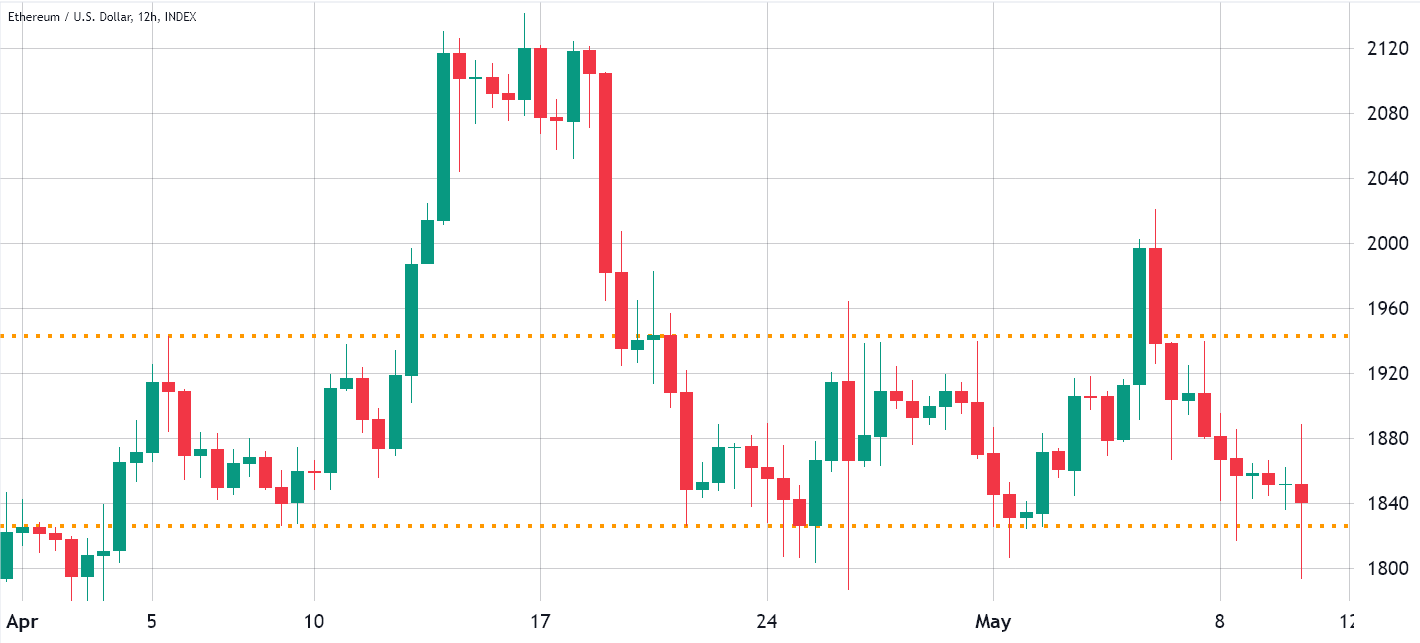 Ether price in USD, 12-hour chart. Source: TradingView
Even the surge in memecoin activity that heightened demand for the Ethereum network failed to boost investor confidence. The average transaction fee on the Ethereum network soared to $27.70 on May 6, marking the highest level in a year, according to data from BitInfoCharts. As noted by Cointelegraph, a significant factor behind this rise was the overwhelming demand for Pepe (PEPE) and other memecoins.
Additionally, the rising gas fees have pushed users towards layer-2 solutions, which may be seen as a sign of weakness. This shift can lead to a decrease in the total value locked as deposits are withdrawn from the Ethereum chain, particularly in decentralized finance applications.
Some analysts suggest that the $30 million Ether sale by the Ethereum Foundation played a role in preventing ETH from surpassing the $2,000 mark, as nearly 20,000 ETH were transferred to the Kraken cryptocurrency exchange. The foundation’s last significant transfer occurred in November 2021, when the price peaked around $4,850 before experiencing an 80% decline.
On the macroeconomic front, the United States’ consumer price index (CPI) data for April, reported at 4.9% on May 10 and slightly below expectations, has heightened investor anticipation for stable interest rates at the upcoming Federal Reserve meeting in June. The CME Group’s FedWatch Tool indicated a 94% probability of maintaining the current range of 5% to 5.25%.
Consequently, with no indications of a Federal Reserve pivot in sight, the demand for risk-on assets like cryptocurrencies is likely to remain subdued. However, if investors perceive that Ether has a greater chance of breaking the three-week sideways trend to the downside, this should be reflected in the ETH futures contract premium and increased costs for protective put options.
Ether futures indicate weak demand from longs
Ether quarterly futures are favored by whales and arbitrage desks. Nonetheless, these fixed-month contracts generally trade at a slight premium to spot markets, suggesting that sellers are requesting more compensation to postpone settlement.
In healthy markets, ETH futures contracts should typically trade at a 5% to 10% annualized premium — a condition referred to as contango, which is not exclusive to cryptocurrency markets.
Related Posts
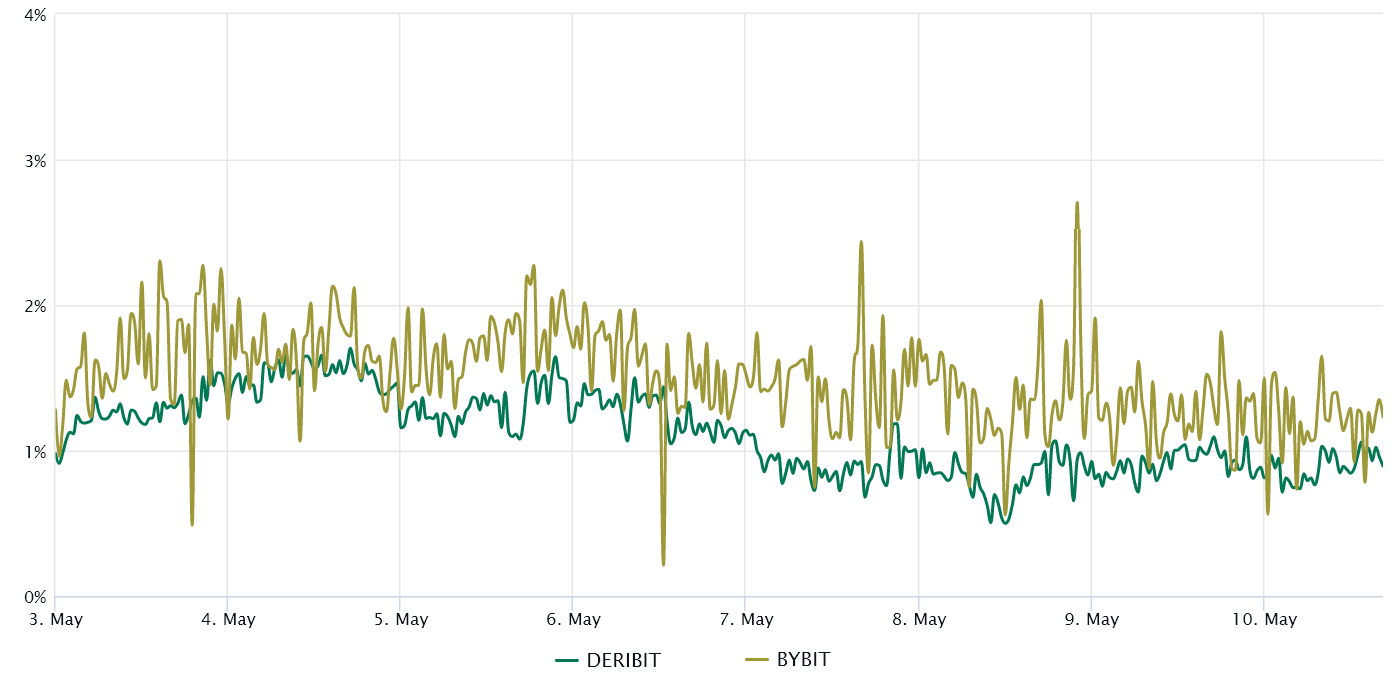 Ether three-month futures annualized premium. Source: Laevitas
Ether traders have exhibited considerable caution over the past week, as there was no notable increase in demand for leveraged longs during the rally above $2,000 on May 6. Currently at 1.4%, the ETH futures premium reflects a total lack of interest from buyers utilizing derivatives contracts.
Ether options risk metric remains neutral
Traders should also examine options markets to determine whether the recent correction has led to increased optimism among investors. The 25% call-to-put delta skew serves as a significant indicator when arbitrage desks and market makers charge more for upside or downside protection.
In summary, if traders expect a decline in Ether’s price, the skew metric will fall below 7%, while periods of enthusiasm tend to exhibit a positive 7% skew.
Related: Arbitrum’s DAO to receive over 3,350 ETH revenue from transaction fees
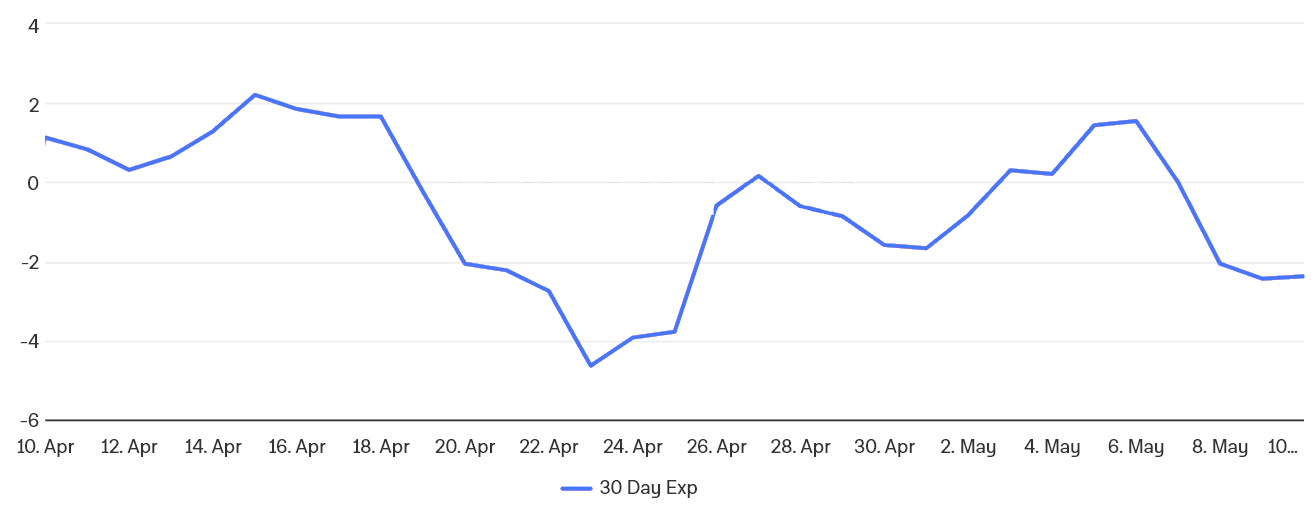 Ether 30-day options 25% delta skew. Source: Amberdata & The Block
As illustrated above, the ETH options’ 25% call-to-put delta skew has remained neutral for the past two weeks, as protective put options were priced fairly in comparison to similar neutral-to-bullish call options.
The Ether options and futures markets indicate that professional traders lack confidence, particularly in light of the 10.6% rally from May 2-6. Therefore, the weak indicators in derivatives are more likely to turn bearish if the three-week sideways trend breaks to the downside.
In other words, should Ether’s price fall below $1,820, traders can anticipate a significantly higher demand for bearish positions using ETH derivatives, signaling a lack of trust and diminished interest in long positions.
This article is for informational purposes only and is not intended to serve as legal or investment advice. The views, thoughts, and opinions expressed herein are solely those of the author and do not necessarily reflect or represent the views and opinions of Cointelegraph.
