Disclaimer: Information found on CryptoreNews is those of writers quoted. It does not represent the opinions of CryptoreNews on whether to sell, buy or hold any investments. You are advised to conduct your own research before making any investment decisions. Use provided information at your own risk.
CryptoreNews covers fintech, blockchain and Bitcoin bringing you the latest crypto news and analyses on the future of money.

XRP declines by 4% as the network experiences its largest increase in realized losses since 2022.

Previous capitulation phases have often led to significant recoveries, but currently, the price continues to encounter technical resistance despite a rise in ledger activity.
Key points:
- XRP has experienced approximately $1.93 billion in weekly realized losses, marking its highest increase since 2022, indicating significant panic selling.
- In the past, similar capitulation occurrences have indicated market bottoms, as assets transition from short-term traders to long-term holders, establishing a more stable price foundation.
- While this surge in losses suggests that sellers may be nearing exhaustion, any sustainable recovery will hinge on improved demand and reduced selling pressure amidst ongoing macroeconomic and regulatory uncertainties.
XRP has recently recorded its most substantial weekly realized loss increase since 2022, suggesting that panic selling may have reached a peak.
On-chain analytics indicate approximately $1.93 billion in realized losses within a week, reflecting that coins were sold at prices lower than their initial purchase values. The last time such significant losses were noted, nearly 39 months ago, XRP subsequently surged by 114% over the next eight months.
STORY CONTINUES BELOWDon’t miss another story.Subscribe to the Crypto Daybook Americas Newsletter today. See all newslettersSign me up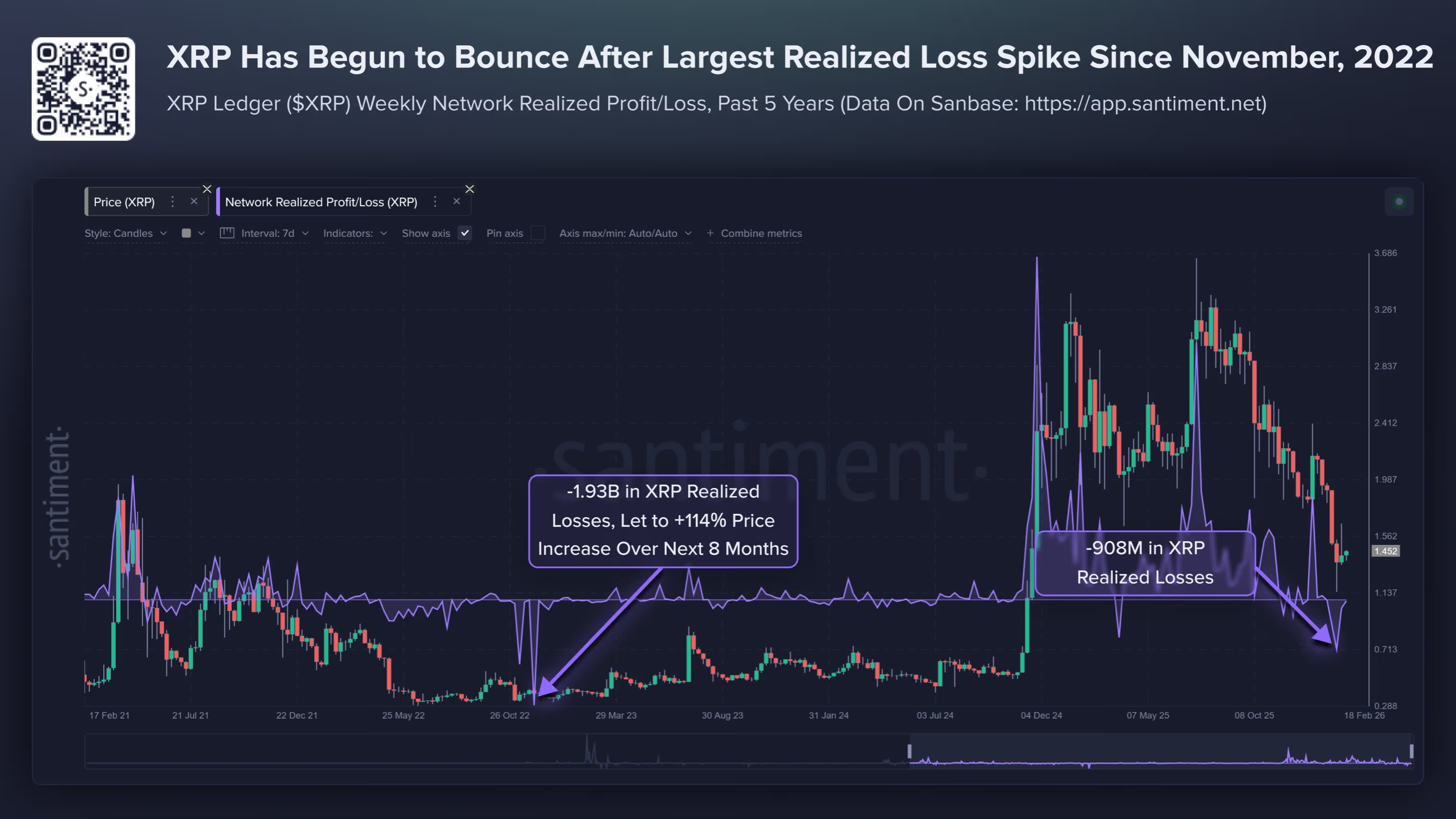
Related Posts
Realized losses reflect actual losses, not just paper declines. They increase when holders capitulate, opting to accept losses rather than wait for a recovery. Unlike unrealized losses, which may disappear if prices bounce back, realized losses signify final choices.
This aspect of absorption is significant.
For realized losses to escalate into the billions, there must be substantial selling pressure, accompanied by buyers willing to take the opposite position. Major capitulation events typically align with liquidity entering at lower price levels. Historically, these instances tend to cluster around market bottoms as much of the weaker positioning is eliminated in one swift action.
When weaker hands are removed, the makeup of holders changes. The coins exchanged during capitulation generally transfer from short-term, emotionally influenced traders to long-term investors with stronger conviction or improved cost bases. This redistribution can form a more stable price foundation.
Nevertheless, context remains crucial. The 2022 spike followed an extended downturn and wider crypto deleveraging. The current situation features macro uncertainty, evolving regulatory narratives, and still high volatility across major assets. A spike in realized losses increases the likelihood that sellers are worn out, but it does not negate macro challenges.
Another factor to monitor is the follow-through. In previous cycles, sustained recoveries required not just a singular capitulation event but also stabilization in spot demand and diminishing selling pressure in the subsequent weeks. If realized losses stay high or quickly rise again, it would indicate that distribution may not be complete.
At this moment, the data suggests emotional extremes. Historically, such conditions have been conducive to rebounds. Whether this leads to a lasting trend shift will depend on subsequent developments as the panic diminishes.
