Disclaimer: Information found on CryptoreNews is those of writers quoted. It does not represent the opinions of CryptoreNews on whether to sell, buy or hold any investments. You are advised to conduct your own research before making any investment decisions. Use provided information at your own risk.
CryptoreNews covers fintech, blockchain and Bitcoin bringing you the latest crypto news and analyses on the future of money.

WLFI, supported by Trump, approves plan allowing $5 million investors to purchase ‘direct access’ to the team.

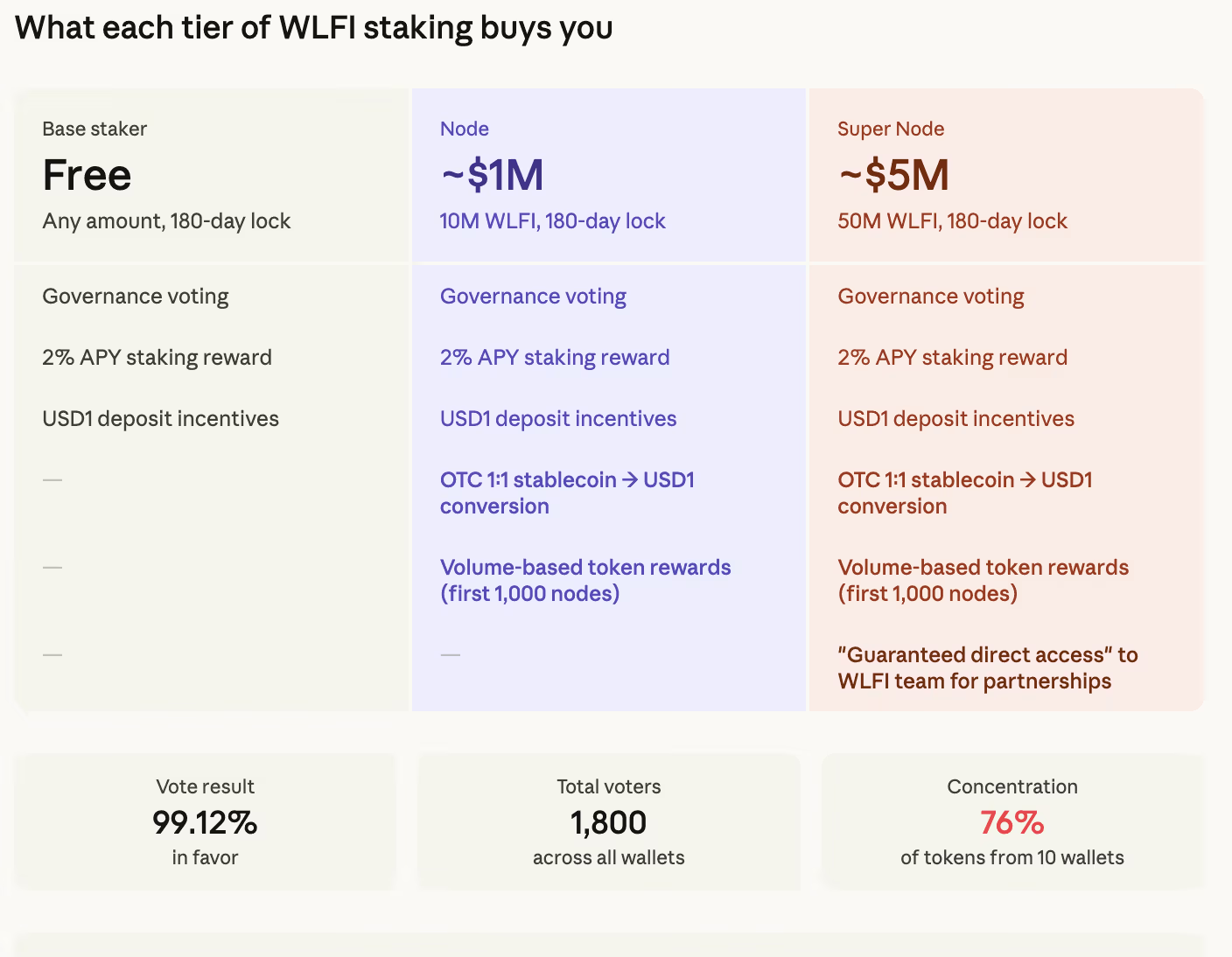
The governance vote was approved with 99.12% support from 1,800 participants, with 76% of tokens originating from merely 10 wallets.
 The WLFI governance vote was nearly unanimous. (Lisa-S/Shutterstock modified by CoinDesk)
Key Points:
- World Liberty Financial token holders authorized a three-tier staking system, necessitating up to a $5 million WLFI lockup for maximum benefits, including assured access to the project’s team.
- The newly established Node and Super Node tiers shift arbitrage and subsidy economics from market makers to significant stakers, while effectively establishing a paywall for projects aiming for partnership discussions.
- The vote achieved 99.12% approval, heavily reliant on a small number of wallets, as WLFI seeks to expand its aspirations, which include acquiring a national trust bank charter and tokenizing real estate and energy assets.
World Liberty Financial, the decentralized finance (DeFi) protocol associated with the family of U.S. President Donald Trump, set a $5 million requirement for ‘direct access’ to team members during an almost unanimous governance vote.
Token holders of the venture, supported by Eric and Barron Trump, approved a proposal on Friday that establishes a three-tier staking system for its WLFI governance token.
The Base tier necessitates a 180-day lock-up to participate in voting. The Node tier demands staking 10 million WLFI, approximately $1 million, and allows the conversion of stablecoins to WLFI’s USD1 at a 1:1 ratio through licensed market makers. The Super Node tier requires 50 million WLFI, about $5 million, and offers “guaranteed direct access to the WLFI team for partnership discussions.”
Related Posts
The vote garnered 99.12% in favor out of 1,800 total votes. More than 76% of the tokens utilized for voting were attributed to only 10 wallets.
WLFI representative David Wachsman informed Reuters on Sunday that the “direct access” pertains to the business development team and executives, not specific founders, and does not assure a partnership.
The company’s Gold Paper, however, mentions co-founders Eric Trump, Barron Trump, and Steven Witkoff’s sons Zach and Alex as part of the team “supporting the WLF commitment.”
The proposal’s articulated aim is to redirect value from market makers to long-term participants.
WLFI indicated that during its USD1 stablecoin expansion, market makers secured millions through arbitrage at approximately 15 basis points per cycle, while WLFI incurred additional costs in redemption subsidies. The Node and Super Node framework reallocates these economics to substantial stakers instead.
The Super Node tier extends the proposal beyond governance mechanics. WLFI currently experiences “more partnership inquiries than it can productively handle,” according to the proposal.
The $5 million staking prerequisite “functions as a filter to prioritize projects and platforms that are actively supporting and engaging in the WLFI ecosystem, rather than those pursuing partnership on a purely opportunistic basis.”
Projects interested in consulting with the team now must invest in WLFI tokens and lock them for six months. This creates upward pressure on the token, reduces circulating supply, and establishes a committed audience of large holders who are financially invested in the protocol’s success prior to any partnership discussions.
Simultaneously, WLFI is also pursuing a national trust bank charter through the OCC, examining the tokenization of real estate and oil and gas assets, and considering the formation of a publicly traded company to hold WLFI tokens.
