Disclaimer: Information found on CryptoreNews is those of writers quoted. It does not represent the opinions of CryptoreNews on whether to sell, buy or hold any investments. You are advised to conduct your own research before making any investment decisions. Use provided information at your own risk.
CryptoreNews covers fintech, blockchain and Bitcoin bringing you the latest crypto news and analyses on the future of money.


The recent rise in oil and gas prices has escalated inflation expectations, prompting adjustments in market forecasts regarding Federal Reserve rate cuts, with traders now estimating nearly a 40% likelihood of no rate cuts occurring this year.
 (Kanchanara/Unsplash)
What to know:
- Asset manager Bitwise indicates that bitcoin might have already absorbed the impacts of stricter monetary policy, leaving stocks more susceptible to macroeconomic disturbances.
- The notable increase in oil and gas prices has raised inflation expectations, leading markets to revise their forecasts on Federal Reserve rate cuts, with traders now assigning a near-40% probability that no rate cuts will happen this year.
- Bitwise contends that bitcoin has already adapted to stricter financial conditions, while stocks have only recently begun to decline, rendering them more exposed to adverse macroeconomic factors.
Bitcoin might have already factored in the ramifications of tighter monetary policy, resulting in stocks being more vulnerable to recent macroeconomic shocks, as stated by asset manager Bitwise.
The firm’s remarks emerge as the cryptocurrency continues to decline below $70,000, down more than 23.7% year-to-date.
Geopolitical tensions and energy supply disruptions, especially due to the U.S.-Iran conflict affecting the Strait of Hormuz, have contributed to rising oil and gas prices in recent weeks. This increase has exerted pressure on inflation expectations, leading markets to retract earlier predictions about Federal Reserve rate cuts.
On prediction markets such as Polymarket and Kalshi, the perceived likelihood of the Fed lowering interest rates this year shifted from near certainty to skepticism. Traders now estimate a nearly 40% chance that rates will not be cut at all, up from less than 3%.
Related Posts
“Energy prices remain closely connected to inflation expectations,” remarked Luke Deans, senior research associate at Bitwise. “The recent surge has caused a significant shift in monetary policy forecasts, with previously anticipated Federal Reserve rate cuts for the year largely reverting toward expectations of renewed tightening.”
While equities have begun to decline in response, with the S&P 500 index dropping nearly 8% over the last month, Bitwise asserts that bitcoin has already adjusted. The cryptocurrency has been trending lower since October 2025, indicating its sensitivity to liquidity and investor risk appetite.
“Bitcoin, an asset highly responsive to liquidity and risk appetite, tends to react earlier to changes in risk sentiment,” Deans stated. This implies that digital assets started to reflect tighter financial conditions before many traditional risk assets did. Relative valuation indicators further support this trend.”
One indicator, the Mayer Multiple, which compares bitcoin’s current price to its 200-day average, has remained in the lower percentiles of its historical range since January, according to Deans. This suggests BTC has already experienced a substantial reset in expectations.
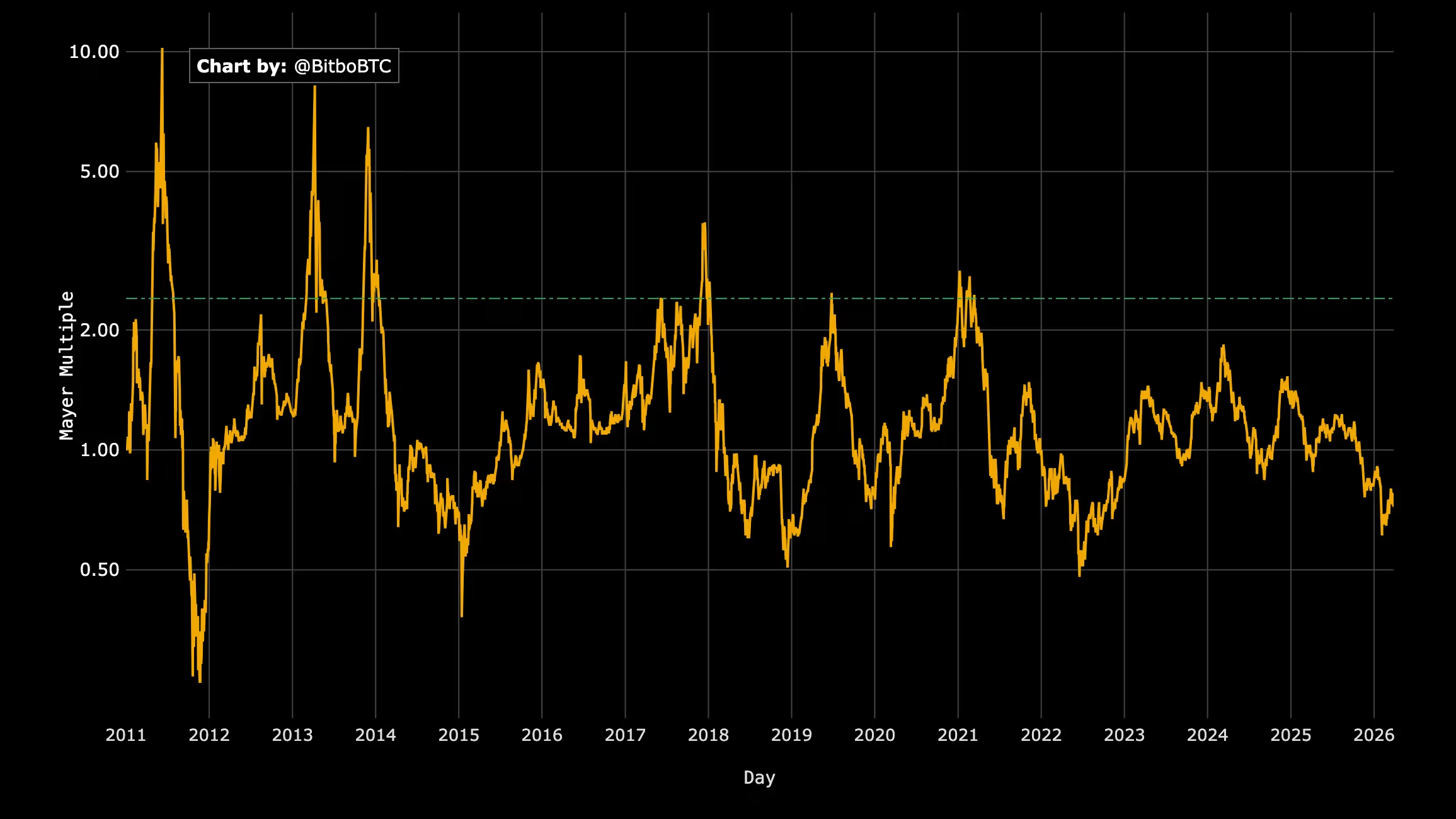
Conversely, he noted, equities began the year “at high valuation levels and have only recently started to reprice as macro conditions have worsened.”
“Historically, assets that have experienced significant valuation compression tend to show diminished downside sensitivity as leverage and speculative positioning are gradually unwound,” Deans informed CoinDesk. “In contrast, markets trading closer to cyclical peaks often exhibit greater susceptibility to negative macroeconomic catalysts.”
Within the crypto space, bitcoin’s dominance has tightened the market structure. Bitwise observed that correlations among altcoins have surged, indicating a single-factor environment driven by BTC’s price.
