Disclaimer: Information found on CryptoreNews is those of writers quoted. It does not represent the opinions of CryptoreNews on whether to sell, buy or hold any investments. You are advised to conduct your own research before making any investment decisions. Use provided information at your own risk.
CryptoreNews covers fintech, blockchain and Bitcoin bringing you the latest crypto news and analyses on the future of money.

Washington files lawsuit against Kalshi as states increase legal scrutiny on prediction markets.

The attorney general of Washington state claimed on Friday that Kalshi provides "gambling products" masquerading as prediction markets in a lawsuit.
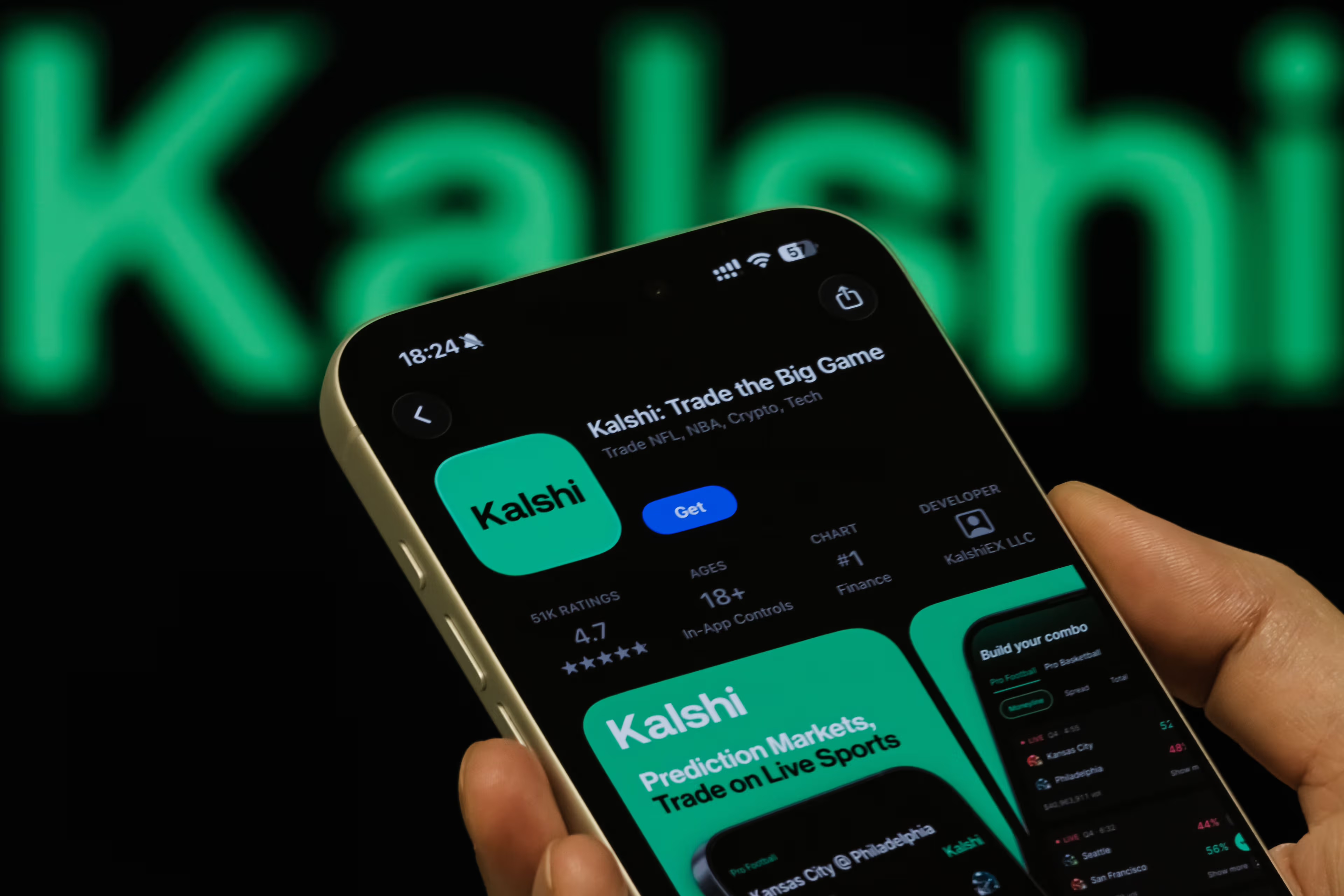 Kalshi App (Getty Images)
What to know:
- Washington state has initiated a lawsuit against prediction market provider Kalshi, claiming the company has breached state regulations.
- This legal action follows a week after Nevada obtained a temporary restraining order requiring Kalshi to cease offering sports, election, and entertainment products in that jurisdiction.
- Nevada also achieved a preliminary injunction against Coinbase’s prediction markets, which included sports, election, and entertainment wagers.
The state of Washington has taken legal action against a prediction market provider, asserting on Friday that Kalshi has contravened state gambling laws through its offerings.
As per the allegations, Washington maintains a strictly regulated gambling framework, which includes a prohibition on online gambling, yet Kalshi’s offerings circumvent these rules.
"Kalshi’s website and application present users with a variety of events to wager on and the odds associated with these events, influencing the payout for bettors if the event occurs," a statement from the state indicated. "This is precisely how sportsbooks and other gambling entities operate. Kalshi claims that they enable users to ‘bet on anything’ by merely labeling their service a ‘prediction market’ instead of ‘gambling.’"
The lawsuit noted that Kalshi’s promotions referenced "legal betting" and contended that the company’s operations aligned with state definitions of "gambling," "professional gambling," "bookmaking," and other significant state regulations. It also included an assertion that Kalshi’s products contributed to gambling addiction and particularly targeted college students.
Kalshi has requested to transfer the case to federal court, citing ongoing litigation regarding these matters in other federal jurisdictions and stating that it had received "no warning or dialogue" from Washington before the lawsuit was filed.
Washington’s lawsuit marks a continuing trend of state resistance against prediction market providers. Advocates for prediction market operators, including Commodity Futures Trading Commission Chair Mike Selig, maintain that these entities provide derivatives contracts that are suitably overseen at the federal level. Conversely, states contend that these businesses are presenting gambling products disguised as something else and should therefore adhere to state gambling regulations.
Related Posts
While both prediction market operators and states have experienced some initial judicial wins, legal experts have indicated to CoinDesk that this dispute is likely to escalate to the U.S. Supreme Court.
Nevada actions
The lawsuit was filed a week after Nevada secured an appeals court ruling that permitted it to apply for a temporary restraining order against Kalshi, compelling the company to withdraw its sports, entertainment, and election contracts from the state for at least two weeks. A hearing is scheduled for the conclusion of that two-week period on Friday, April 3, when a state judge will determine whether to prolong the restriction.
Trade publication Gambling Insider reported on Friday that Kalshi’s users in Nevada still had access to the platform after the temporary restraining order was implemented.
Nevada also obtained a preliminary injunction against Coinbase, mandating it to maintain a suspension of its prediction market services in the state as per an order dated Thursday, March 26, following an earlier temporary restraining order issued in early February.
In the Thursday order, Nevada District Judge for the First Judicial District Court Kristin Luis noted that Coinbase did not contest that it offered ""event-based contracts" related to sporting and other events, including college basketball games, college and professional football games, and elections," which align with the definition of "sports pools" as defined under Nevada law.
The judge acknowledged Coinbase’s partnership with Kalshi. Similar to the Kalshi order, this directive prohibits Coinbase from providing sports, election, or entertainment contracts in Nevada, at least until a more extensive court case is resolved.
The judge granted Coinbase 60 days to "implement technological improvements" to comply with the order.
Nevada and Washington’s federal district courts are both situated within the Ninth Circuit Court of Appeals.
Read more: Kalshi secures license to offer margin trading to institutional investors
