Disclaimer: Information found on CryptoreNews is those of writers quoted. It does not represent the opinions of CryptoreNews on whether to sell, buy or hold any investments. You are advised to conduct your own research before making any investment decisions. Use provided information at your own risk.
CryptoreNews covers fintech, blockchain and Bitcoin bringing you the latest crypto news and analyses on the future of money.

Warren Buffett sells $13.3 billion in stocks — A potential indicator for Bitcoin and risk-related assets?

Warren Buffett’s shift towards cash indicates that he is preparing for a potential downturn in risk-on asset values. With Bitcoin (BTC) having risen 70% year-to-date and showing a correlation with equities, should BTC investors also brace for a possible stock market decline?
Buffett states “incredible period” has ended
Warren Buffett’s Berkshire Hathaway sold off $13.30 billion in equities and increased its cash and U.S. Treasuries holdings in the first quarter, as revealed in its latest quarterly earnings report. Additionally, it allocated $4.4 billion to buy back its own shares and $2.9 billion on the stocks of other publicly traded companies.
Related Posts
The market views Berkshire Hathaway’s performance as a significant indicator for assessing the health of the U.S. economy, given the company’s diverse holdings, which include American railroads, electric utilities, and retail sectors.
However, the 92-year-old investor, who has previously attributed Berkshire Hathaway’s success to the growth of the U.S. economy, is no longer optimistic.
“Most of our businesses will report lower earnings this year compared to last year,” Buffett remarked last weekend at an event. He added that the “incredible period” for the U.S. economy has been winding down over the past six months.
Berkshire increased its cash reserves by $2 billion to $130.60 billion in Q1/2023, marking the highest level since the end of 2021 when equities entered a bear market. Furthermore, the company holds a significant portion of its cash in short-term Treasury bills and bank deposits, benefiting from interest rates nearing 5%.
In essence, Buffett is preparing for a potential stock market downturn, especially as the U.S. banking crisis continues to develop (e.g., PacWest Bancorp and Western Alliance Bancorp).
Bitcoin price remains linked to Nasdaq
The growing likelihood of a global recession also poses a risk of downward pressure on Bitcoin, which has seen its 100-week correlation with the Nasdaq reach approximately 0.42%.
Additionally, Bloomberg Intelligence analyst Mike McGlone anticipates that BTC price may serve as a leading indicator for a stock market crash.
"Bitcoin could lead declines for risk assets — If the worst is not over for risk assets, Bitcoin may pave the way downward," McGlone noted, adding:
"Bitcoin is up about 70% in 2023 to May 2 compared to 20% for the stock index, and these may just be rebounds within broader bear markets. The Fed [is] still tightening in May, and [is] more likely to maintain its course unless risk assets decline to alleviate inflation, which may indicate a lose-lose situation."
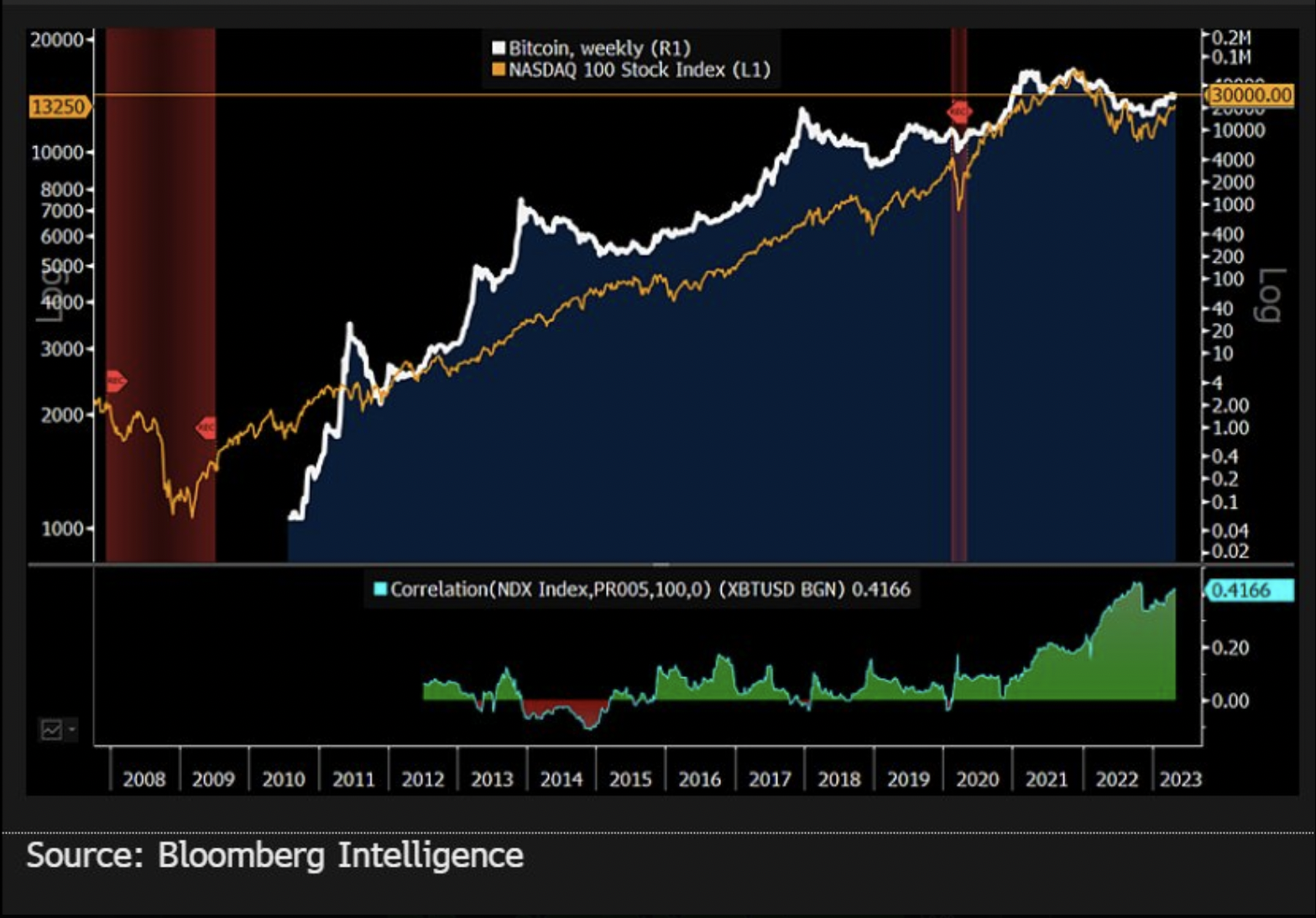 Bitcoin-NASDAQ correlation index
In the near term, expectations from the U.S. consumer price index report on May 10 regarding easing inflation in April are low. According to Bloomberg’s survey, economists predict core CPI to remain stable at around 5%, suggesting further rate hikes ahead.
Conversely, a significant drop in inflation could lead the Fed to contemplate pausing or even reducing interest rates in an extreme scenario.
Currently, Fed funds futures data indicates that at least five rate cuts between May 2023 and January 2024 are probable — a situation that may undermine Buffett’s risk-off strategy.
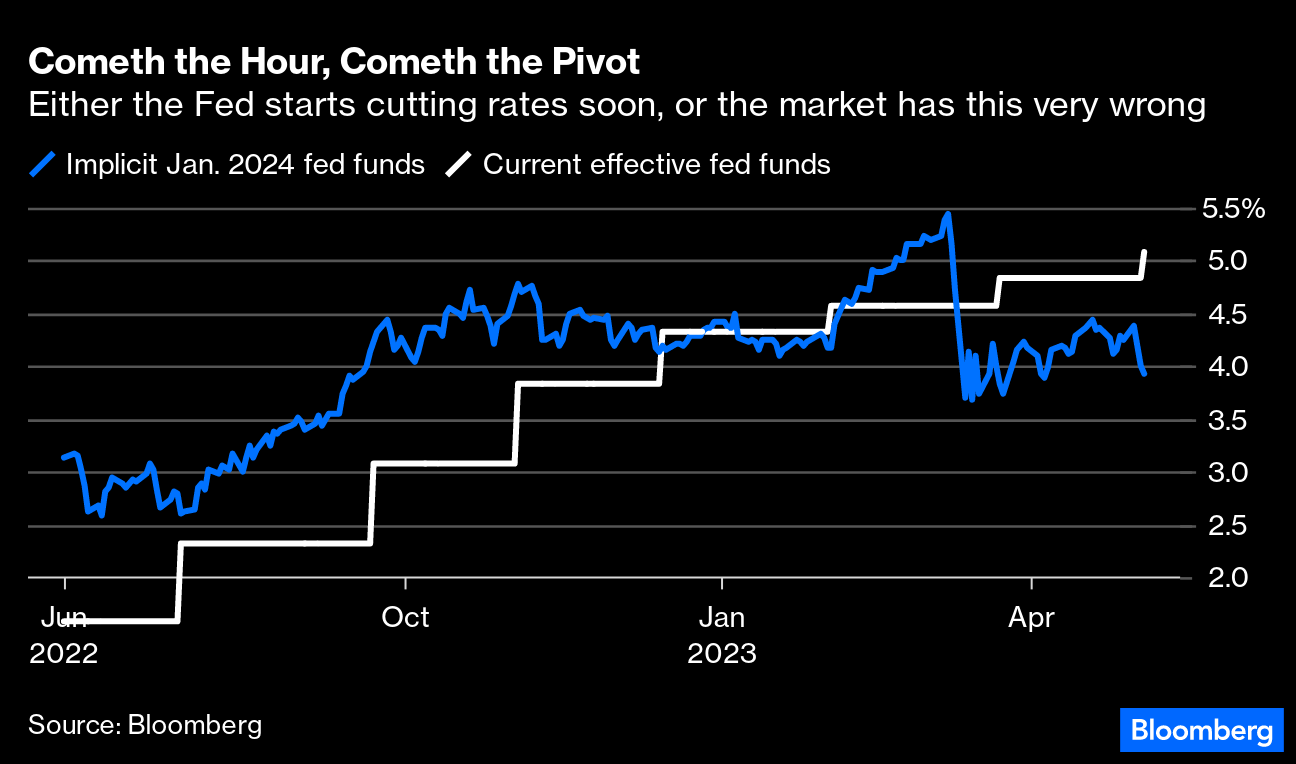 Fed funds rate projections. Source: Bloomberg
Could Bitcoin price dip below $25K again?
Bitcoin’s price has fallen approximately 6% over the past week, trading as low as $27,350 on May 9.
This decline has brought BTC’s price below its 50-day exponential moving average (50-day EMA; the red wave) near $27,950.
Bitcoin bears are now targeting $27,000 as the next downside level based on recent historical data.
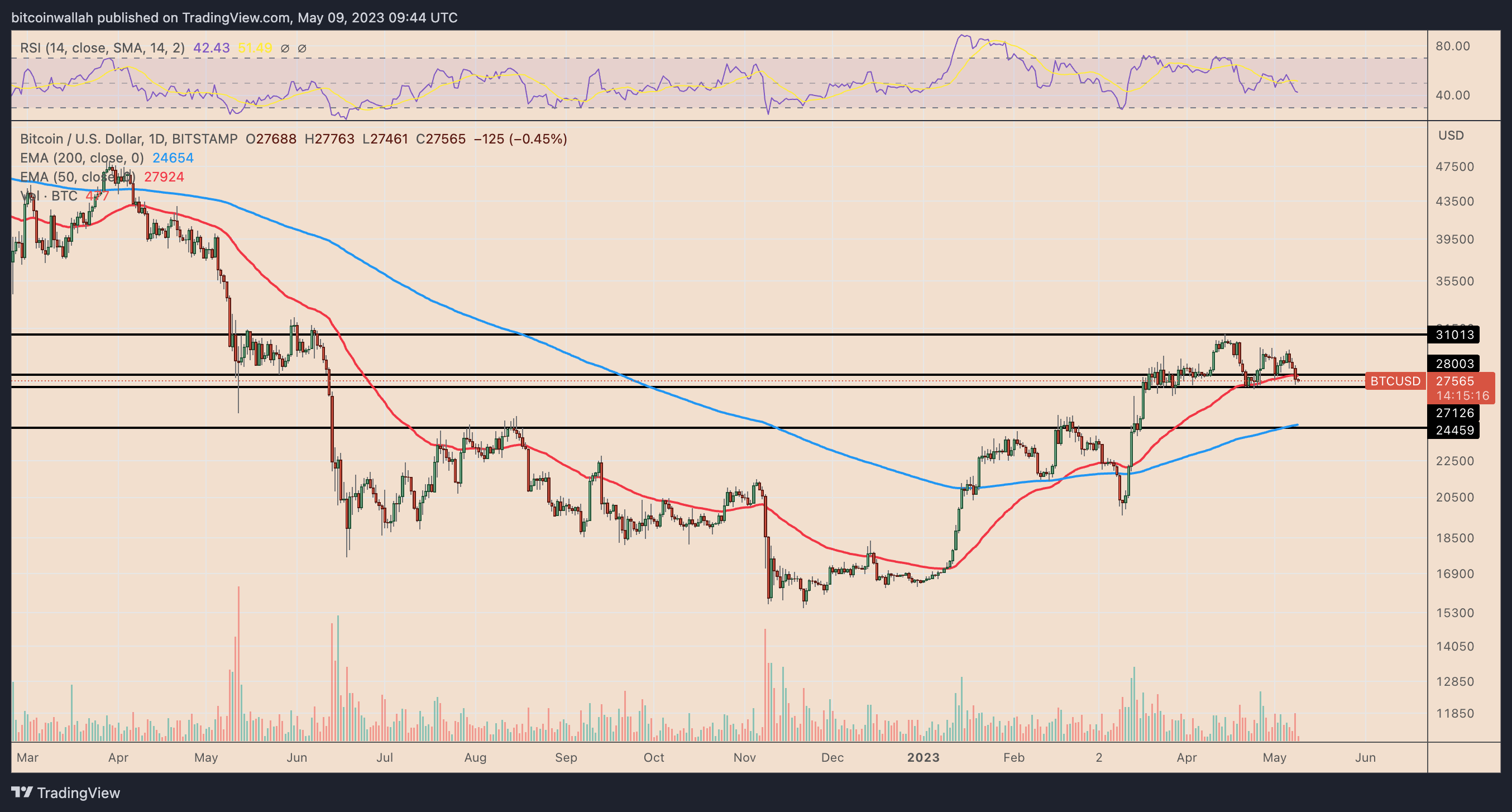 BTC/USD daily price chart. Source: TradingView
A decisive break below the $27,000 support, particularly in the event of additional rate hikes, could drive BTC/USD down to its 200-day EMA (the blue wave) near $24,600. This would represent a potential 10% decline by June.
On the other hand, a rebound from $27,000 could enhance the likelihood of BTC price retesting $30,000 as resistance, potentially resuming the upward trend observed in recent months.
Related: Analysts at odds over Fed, US debt ceiling impact on Bitcoin price
This article does not provide investment advice or recommendations. Every investment and trading decision carries risk, and readers should perform their own research before making any choices.
