Disclaimer: Information found on CryptoreNews is those of writers quoted. It does not represent the opinions of CryptoreNews on whether to sell, buy or hold any investments. You are advised to conduct your own research before making any investment decisions. Use provided information at your own risk.
CryptoreNews covers fintech, blockchain and Bitcoin bringing you the latest crypto news and analyses on the future of money.


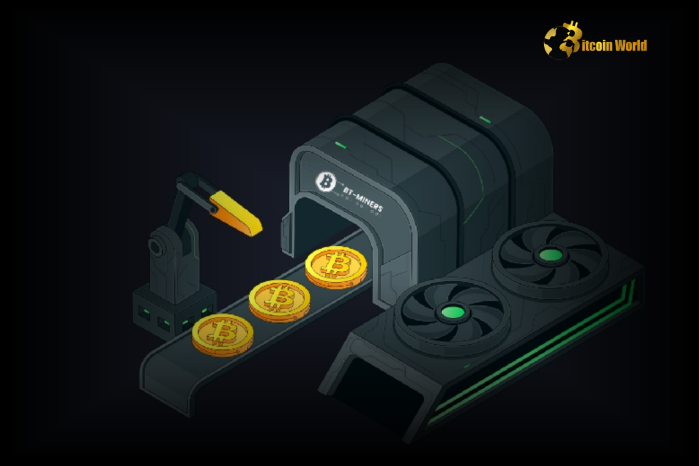
How Bitcoin Mining Works: Everything You Need to Know
Bitcoin mining serves as a fundamental element of the cryptocurrency framework. It guarantees the network’s security, facilitates transaction processing, and brings new Bitcoins into the market. If you have ever asked, “how does Bitcoin mining function?” or “what is the duration to mine 1 Bitcoin?”, this guide will clarify the basics, procedures, and tools necessary to begin.
What is Bitcoin Mining?
Bitcoin mining refers to the method of confirming and incorporating transactions into the Bitcoin blockchain while creating new Bitcoins. Miners utilize specialized equipment to tackle intricate mathematical challenges. Successfully resolving these challenges rewards the miner with a prize, known as the block reward, which is currently set at 6.25 BTC per block (as of 2024).
Key Functions of Bitcoin Mining
- Transaction Validation: Miners authenticate transactions to avert fraud, such as double-spending.
- Network Security: Mining guarantees the decentralized Bitcoin network’s security.
- Bitcoin Creation: Mining introduces new Bitcoin into circulation, limited to 21 million coins.
How Does Bitcoin Mining Work?
Bitcoin mining operates on the Proof-of-Work (PoW) system, necessitating miners to compete in solving cryptographic puzzles. Here’s the process:
- Transaction Collection
Miners compile pending transactions from the Bitcoin network into a block. - Puzzle Solving
Miners vie to solve a mathematical challenge, or “hash.” The objective is to discover a number (referred to as a nonce) that generates a hash fulfilling specific criteria. - Block Validation
After a miner solves the puzzle, the block is shared with the network for validation by other nodes. - Block Addition
Following validation, the block is appended to the blockchain, and the miner receives the block reward along with transaction fees.
How Long Does it Take to Mine 1 Bitcoin?
The duration needed to mine 1 Bitcoin is influenced by various factors, including hardware efficiency, electricity expenses, and mining difficulty.
Current Metrics
- Average Block Time: Bitcoin blocks are mined approximately every 10 minutes.
- Mining 1 Bitcoin: Given that each block contains a reward of 6.25 BTC, mining 1 BTC takes around 1.6 minutes (assuming proportional effort in a mining pool).
- Solo Mining: For individual miners, mining 1 Bitcoin may take months or even years, depending on computational capacity.
Can You Mine Bitcoin on a Laptop?
Although it is technically feasible, mining Bitcoin on a laptop is extremely inefficient. Contemporary mining necessitates ASIC (Application-Specific Integrated Circuit) devices, which are significantly more powerful and energy-efficient than laptops or GPUs.
What is a Bitcoin Miner?
A Bitcoin miner can denote:
- Hardware: Specialized machines, such as ASIC miners, designed for Bitcoin mining.
- Individual or Entity: Individuals or organizations operating mining hardware to engage in the Bitcoin network.
Popular Mining Hardware
- Antminer Series: Recognized for high efficiency and performance.
- WhatsMiner Series: A favored option among professional miners.
- GPU Rigs: More adaptable but less efficient compared to ASICs.
How to Start Bitcoin Mining
If you are keen on mining Bitcoin, follow these steps to begin:
1. Acquire Mining Hardware
Invest in ASIC miners for optimal performance. Research models like Antminer S19 or WhatsMiner M50 for high hash rates and energy efficiency.
2. Choose Mining Software
Install mining software to connect your hardware to the Bitcoin network. Popular choices include:
- CGMiner
- BFGMiner
- EasyMiner
3. Join a Mining Pool
Related Posts
Mining pools aggregate resources from multiple miners to enhance the likelihood of earning rewards. Well-known pools include:
- Slush Pool
- F2Pool
- Antpool
4. Set Up Wallet
Protect your earnings by establishing a Bitcoin wallet. Options include hardware wallets (e.g., Ledger, Trezor) or software wallets like Exodus or Electrum.
5. Monitor and Optimize
Utilize mining management software to track performance, adjust settings, and ensure profitability.
How Many Sats in a Bitcoin?
Bitcoin can be divided into smaller units known as Satoshis (Sats), named after its pseudonymous creator, Satoshi Nakamoto.
Conversion
- 1 Bitcoin (BTC) = 100,000,000 Sats
This divisibility enables Bitcoin to facilitate microtransactions and enhances its usability as a currency.
Challenges of Bitcoin Mining
Although Bitcoin mining can yield rewards, it presents considerable challenges:
1. High Energy Costs
Mining demands significant electricity, making it costly in areas with elevated power prices.
2. Increasing Difficulty
Bitcoin’s mining difficulty adjusts roughly every two weeks, ensuring blocks are mined every 10 minutes. As difficulty escalates, miners require more powerful hardware.
3. Environmental Concerns
Critics frequently highlight the environmental impact of Bitcoin mining due to its substantial energy consumption. Initiatives to adopt renewable energy sources are gaining traction within the sector.
FAQs About Bitcoin Mining
1. How does Bitcoin mining work?
Bitcoin mining entails solving intricate cryptographic puzzles to validate transactions and add blocks to the blockchain. Successful miners receive Bitcoin as a reward.
2. How long does it take to mine 1 Bitcoin?
Mining 1 Bitcoin takes approximately 1.6 minutes in a pool setup but may require significantly longer for solo miners.
3. Can I mine Bitcoin on a laptop?
Mining on a laptop is inefficient and unprofitable due to the computational power necessary for contemporary Bitcoin mining.
4. How much does mining hardware cost?
ASIC miners range from $2,000 to $10,000, depending on their hash rate and efficiency.
5. How many Satoshis are in a Bitcoin?
There are 100,000,000 Sats in 1 Bitcoin, making it highly divisible.
Conclusion
Bitcoin mining is a vital process that maintains network security, validates transactions, and introduces new coins into circulation. While it can be lucrative, it necessitates considerable investment in hardware, electricity, and expertise.
Whether you are a novice or an experienced miner, comprehending the mechanics of Bitcoin mining is essential for maximizing efficiency and profitability. Begin your mining journey today with the appropriate tools and knowledge.
For further insights, explore our guide on Best Bitcoin Mining Practices for Beginners.
