Disclaimer: Information found on CryptoreNews is those of writers quoted. It does not represent the opinions of CryptoreNews on whether to sell, buy or hold any investments. You are advised to conduct your own research before making any investment decisions. Use provided information at your own risk.
CryptoreNews covers fintech, blockchain and Bitcoin bringing you the latest crypto news and analyses on the future of money.

U.S. Supreme Court ruling on Trump’s tariffs is unlikely to significantly impact cryptocurrency — for now.

The more significant outcome of the U.S. Supreme Court’s dismissal of President Donald Trump’s trade tariffs may have political ramifications that could impact the industry.
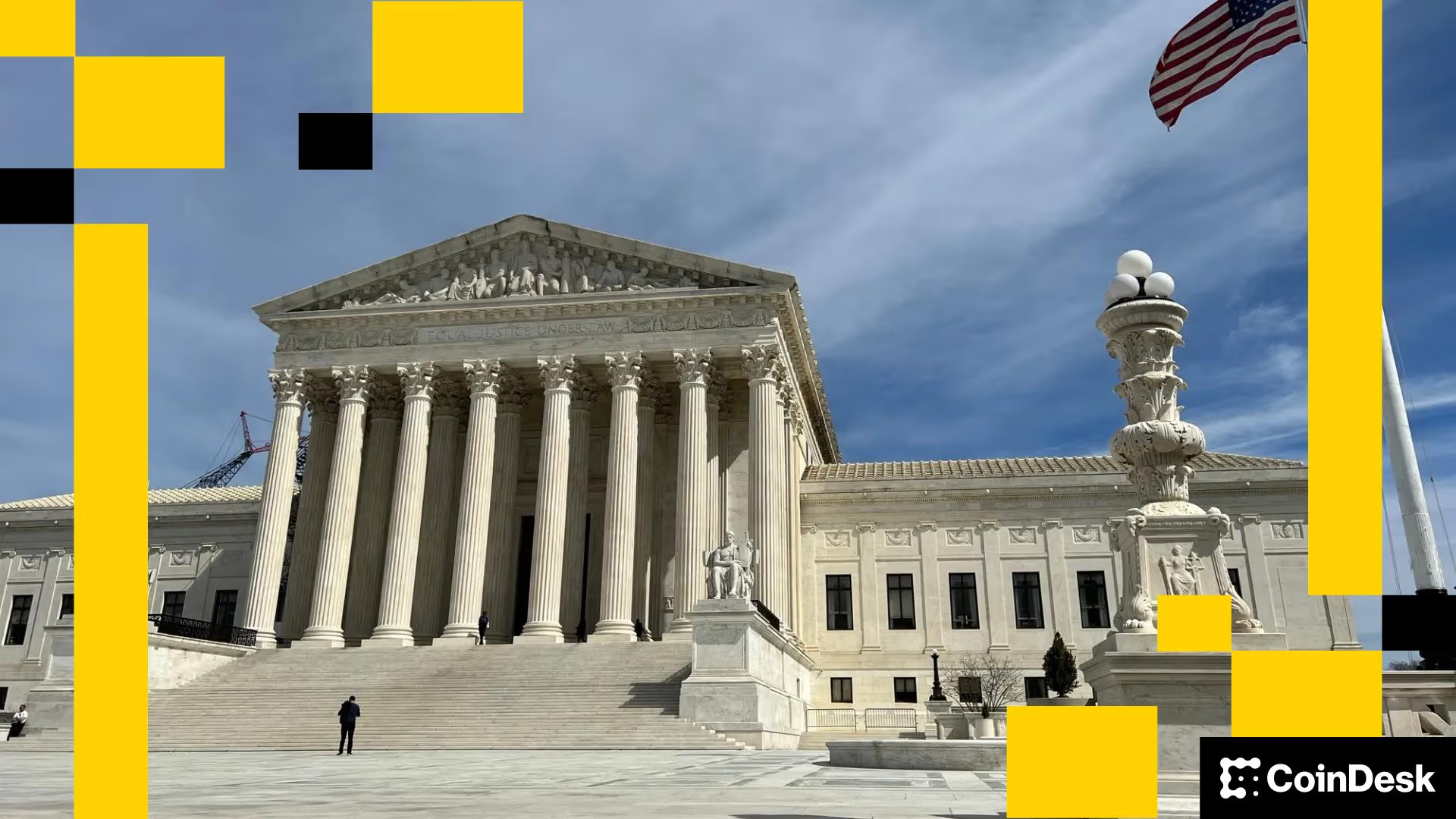 The U.S. Supreme Court’s decision indicates that President Donald Trump lacked the authority to implement tariffs as he did. Although the markets have reacted calmly to this ruling, the potential effects on the cryptocurrency sector are expected to be limited — at least for the time being — given the political factors that may shape the industry’s policy direction in Washington.
Related Posts
While Trump’s assertive and at times controversial imposition of tariffs under the International Emergency Economic Powers Act has been curtailed, he still has various alternatives available under different legal frameworks governing U.S. trade. In a press conference following the “deeply disappointing” ruling, he stated that “there are methods, practices, statutes and authorities, as recognized by the entire court in this terrible decision … that are even stronger than the IEEPA tariffs available to me as president of the United States.”
“Other alternatives will now be used to replace the ones that the court incorrectly rejected,” Trump remarked.
In the short term, any developments that engage policymakers in the upcoming weeks could divert attention from the already precarious timeline in the U.S. Senate to achieve the crypto industry’s primary objective: the passage of the Digital Asset Market Clarity Act, which would regulate U.S. crypto market structure.
Senator Bernie Moreno, a Republican from Ohio, a staunch Trump ally and a prominent advocate for crypto, expressed on social media platform X, “SCOTUS’s outrageous ruling handcuffs our fight against unfair trade that has devastated American workers for decades.”
Conversely, Senator Elizabeth Warren, the leading Democrat on the Senate Banking Committee, welcomed the Supreme Court’s 6-3 decision but indicated that it did not address the damage already inflicted on consumers. Earlier this month, the Tax Foundation estimated a per-household burden of $1,000 last year and $1,300 this year due to the tariffs.
“The court has struck down these destructive tariffs, but there is no legal mechanism for consumers and many small businesses to recoup the money they have already paid,” U.S. Senator Elizabeth Warren stated. “Instead, giant corporations with their armies of lawyers and lobbyists can sue for tariff refunds, then just pocket the money for themselves. It’s one more example of how the game is rigged.”
The Cato Institute, however, remains optimistic about the possibility of refunds for the “tens of billions” in customs duties collected under the tariffs.
“That refund process could be straightforward, but it seems more likely that additional litigation and paperwork will be necessary — a particularly unfair burden for smaller importers that lack the resources to pursue tariff refund claims yet have not committed any wrongdoing,” noted economists from the libertarian think tank in a statement issued on Friday.
The crypto bill impact
Despite the legal conclusion, the tariff dispute and its consequences are expected to be prominent in this year’s midterm congressional elections, which could significantly influence the crypto sector.
If Congress has not yet enacted a market structure bill by this summer, the industry’s policy initiatives will hinge on the results of those elections, especially if they alter the majority in the House of Representatives or in both chambers of Congress. Even if the crypto industry already has the Clarity Act in place by then, numerous other legislative measures related to taxation and bitcoin reserves will be in play.
The Supreme Court’s dismissal of Trump’s unlawful tariff regime could provide a boost to Democratic candidates in otherwise competitive races.
Democratic candidates will aim to persuade voters that they have been adversely affected by the tariffs, as Warren indicated. If a sufficient number of Democrats succeed in securing the House majority, they could complicate the current push for crypto policy, necessitating significant revisions that might impose additional restrictions on the sector.
Read More: Bitcoin pops then drops as Supreme Court strikes down Trump tariffs
