Disclaimer: Information found on CryptoreNews is those of writers quoted. It does not represent the opinions of CryptoreNews on whether to sell, buy or hold any investments. You are advised to conduct your own research before making any investment decisions. Use provided information at your own risk.
CryptoreNews covers fintech, blockchain and Bitcoin bringing you the latest crypto news and analyses on the future of money.


The Senate Banking Committee’s bipartisan “ROAD to Housing Act” features a clause prohibiting the Fed from launching a CBDC until 2031.
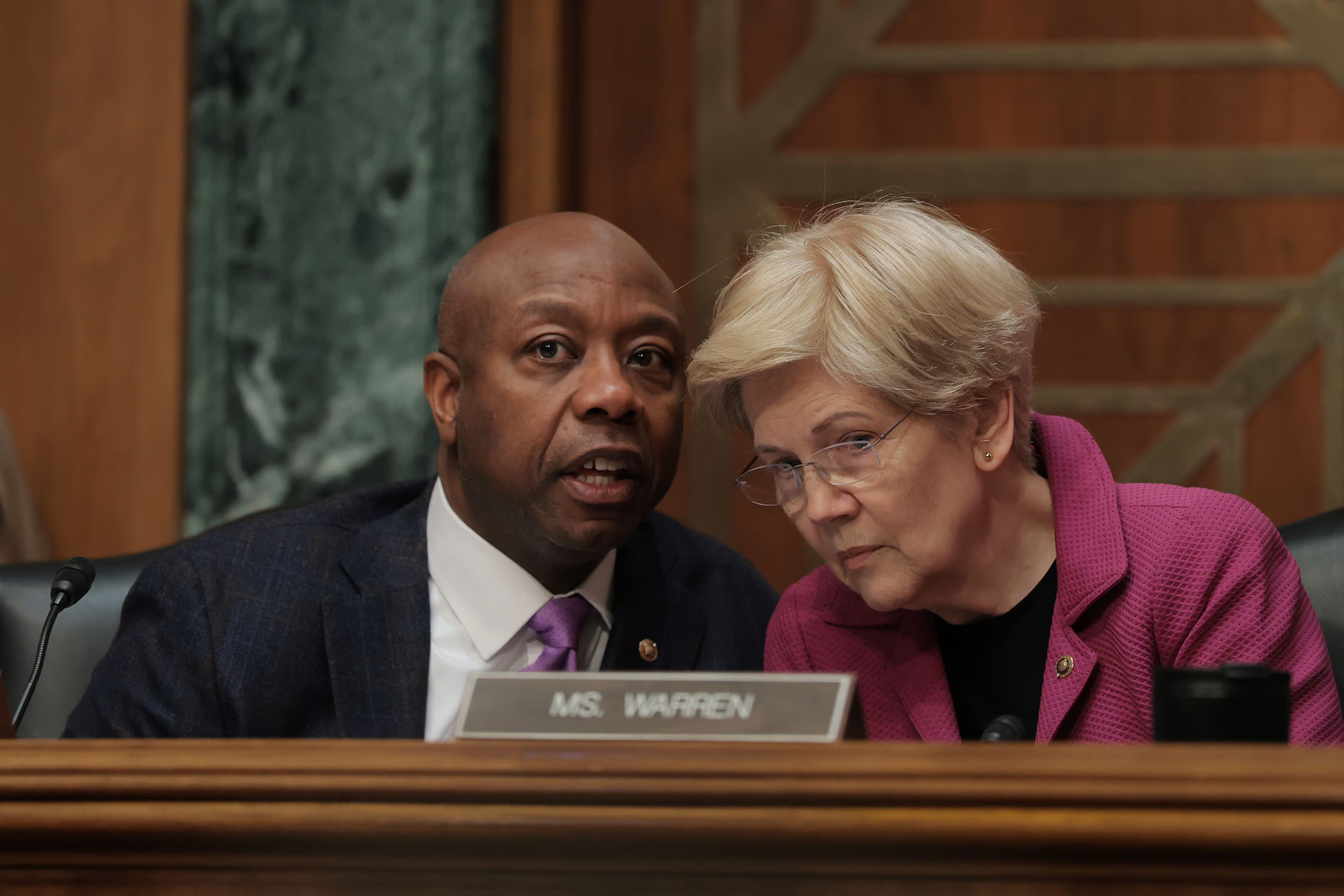 Senators Tim Scott and Elizabeth Warren (Anna Moneymaker/Getty Images)
The Senate Committee on Banking, Housing and Urban Development has incorporated a clause that temporarily prohibits the Federal Reserve from creating a central bank digital currency within its bipartisan legislation aimed at enhancing housing in the U.S.
The “21st Century ROAD to Housing Act,” presented on Monday by Committee Chairman Tim Scott and Ranking Member Elizabeth Warren, who are the leading Republican and Democrat on the committee, seeks to facilitate home construction in the U.S.
“This legislation not only focuses on eliminating regulatory obstacles, reducing expenses, and increasing housing availability without generating new spending, but it also aims to ensure that individuals, like the single mother who raised me in North Charleston, South Carolina, have improved access to economic opportunities and the American aspiration of homeownership,” Scott stated in a release.
Related Posts
“The package encompasses the majority of the Senate’s unanimously supported ROAD to Housing Act, integrates bipartisan housing initiatives from the House, and represents a significant initial measure to address corporate landlords that are displacing families from homeownership,” Warren remarked in her statement.
Neither senator referenced the CBDC prohibition, which is detailed across just two pages in the 303-page legislation. The ban has been included in prior proposals, and the House of Representatives passed it as an individual measure last year, but it has yet to progress fully through Congress.
“Except as specified in subsection (c), the Board of Governors of the Federal Reserve System or any Federal Reserve bank is prohibited from issuing or creating a central bank digital currency or any digital asset that is considerably similar to a central bank digital currency, either directly or indirectly through a financial institution or other intermediary,” the section states.
A sunset provision for December 31, 2030, is included, along with an exception for permissionless, private “dollar-denominated” currencies that “fully maintain the privacy protections” associated with physical currency.
The White House released a “Statement of Administration Policy” endorsing the bill, explicitly backing the CBDC clause in the brief statement.
“The Administration emphasizes the inclusion of presidential priorities … to halt the progress of a Central Bank Digital Currency that could pose significant risks to personal privacy and liberty,” the statement indicated.
