Disclaimer: Information found on CryptoreNews is those of writers quoted. It does not represent the opinions of CryptoreNews on whether to sell, buy or hold any investments. You are advised to conduct your own research before making any investment decisions. Use provided information at your own risk.
CryptoreNews covers fintech, blockchain and Bitcoin bringing you the latest crypto news and analyses on the future of money.

U.S. SEC Chair Atkins announced that collaboration with sister agency CFTC will involve shared meetings and examinations.

The SEC chairman emphasized that formal new connections between U.S. market regulators will be extensive, involving joint meetings with companies proposing products.
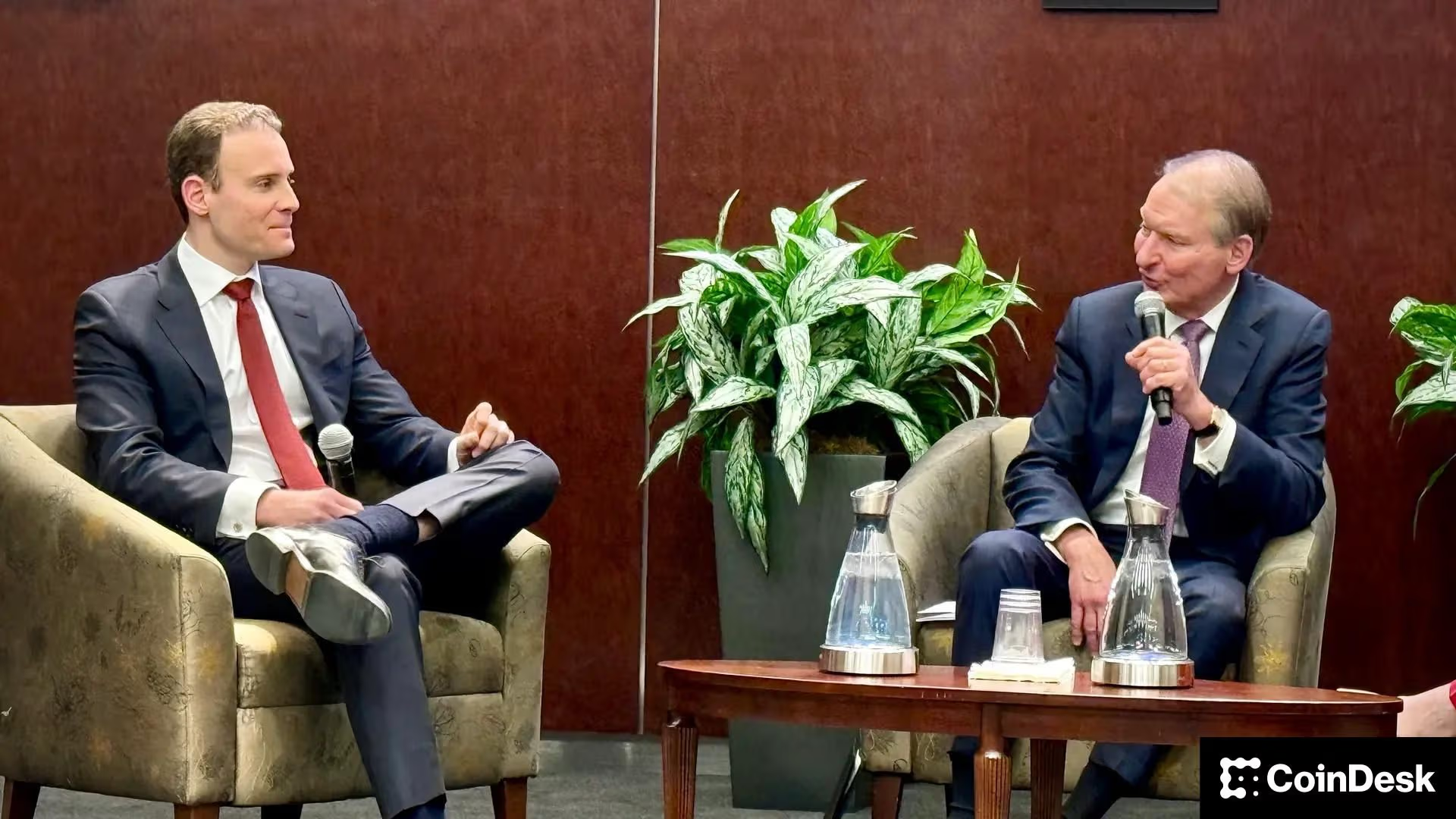 The leaders of the CFTC and SEC are collaborating on a memorandum of understanding to integrate their regulatory efforts, stated SEC Chairman Paul Atkins (right). (Jesse Hamilton/CoinDesk)
Related Posts
What to know:
- A new memorandum of understanding is being developed to enhance the synergy of oversight responsibilities at the Securities and Exchange Commission and the Commodity Futures Trading Commission, encompassing their initiatives on cryptocurrency, according to SEC Chairman Paul Atkins.
- The MOU is anticipated to encompass joint meetings regarding product applications, regulatory interpretations, enforcement actions, and evaluations of regulated entities, Atkins noted.
The U.S. Securities and Exchange Commission and the Commodity Futures Trading Commission — the sister agencies responsible for regulating the majority of U.S. cryptocurrency activity — have previously been in competition regarding cryptocurrency matters, but they are currently working on a formal memorandum of understanding to merge their agency efforts, as indicated by SEC Chairman Paul Atkins.
"We are reorienting our approach toward a new golden age of regulatory coherence," Atkins was expected to convey on Tuesday in prepared remarks for the FIA Global Cleared Markets Conference in Florida. "Beyond merely aligning our regulations, a harmonized framework also necessitates coordinating our responses to the firms operating within it, particularly those with queries about interpretations or seeking exemptive relief."
Atkins also mentioned that he has instructed his staff to initiate joint meetings with CFTC personnel regarding product applications, and a new "harmonization" website will facilitate firms in requesting coordinated discussions with both agencies.
"Firms should not be shifted between regulators when a product intersects with both regulatory frameworks," he stated. "Nor should clarity be contingent on which agency speaks first."
The division of responsibilities between the SEC, which oversees securities and the exchanges where they are traded, and the CFTC, the commodities regulator monitoring derivatives markets, has been a significant source of tension in the establishment of U.S. cryptocurrency trading. No formal regulations have been established to determine the classification of cryptocurrency products, leading to years of regulatory actions and legal conflicts.
Since the appointment of leaders by President Donald Trump, both agencies have adopted a collaborative approach to cryptocurrency policies as a priority, aligning with the president’s directives. They are currently developing various policies, including those to clarify how digital assets will be classified as securities or commodities.
The formalized collaboration will also extend to enforcement actions and regulatory examinations, which will become a more standard aspect for cryptocurrency firms as they engage more fully with federal oversight. This could alleviate the need for companies to endure repetitive evaluations.
"Coordinated exam planning for dually regulated entities should become standard practice," Atkins asserted. "Shared supervisory findings, subject to confidentiality assurances, should be the norm rather than the exception."
Atkins also reiterated his commitment to establishing a framework for super-apps that enable users to conduct transactions across both agencies’ jurisdictions.
"In the technology sector, a super-app consolidates multiple services into a unified interface," he explained. "The user does not have to switch between separate systems to accomplish related tasks. Instead, integration occurs seamlessly behind the scenes."
Read More: CFTC chair highlights wide crypto agenda, including rules on DeFi, prediction markets
