Disclaimer: Information found on CryptoreNews is those of writers quoted. It does not represent the opinions of CryptoreNews on whether to sell, buy or hold any investments. You are advised to conduct your own research before making any investment decisions. Use provided information at your own risk.
CryptoreNews covers fintech, blockchain and Bitcoin bringing you the latest crypto news and analyses on the future of money.


Cryptocurrency hardware wallet company Trezor is enhancing the privacy of Bitcoin (BTC) transactions through a partnership with the privacy-centric Wasabi Wallet.
Trezor has introduced the privacy-enhancing CoinJoin feature on its hardware wallets, enabling users to improve the privacy and security of their Bitcoin transactions.
In a statement released on April 19, Trezor confirmed that the new functionality is now active on the Trezor Model T wallet. The company intends to activate the CoinJoin feature for its initial hardware wallet, the Model One, in the near future.
CoinJoin is a technique utilized to anonymize Bitcoin transactions, allowing users to send their BTC as part of a larger collaborative transfer, thereby obscuring transaction history. This method was first proposed by former Bitcoin core developer Gregory Maxwell in August 2013, offering a means to conduct BTC transactions with greater privacy.
Trezor’s recent partnership with Wasabi facilitates the CoinJoin feature on its wallets, enabling users to conceal their transactions and balances while engaging in purchases, donations, and other Bitcoin transactions.
To activate CoinJoin, users must create a new CoinJoin account from the main Trezor menu. The new CoinJoin feature is listed alongside other account types, such as Segregated Witness (SegWit) and Bitcoin Taproot accounts.
To ensure optimal privacy, the CoinJoin feature on Trezor also encourages users to enable the anonymous communication protocol, Tor.
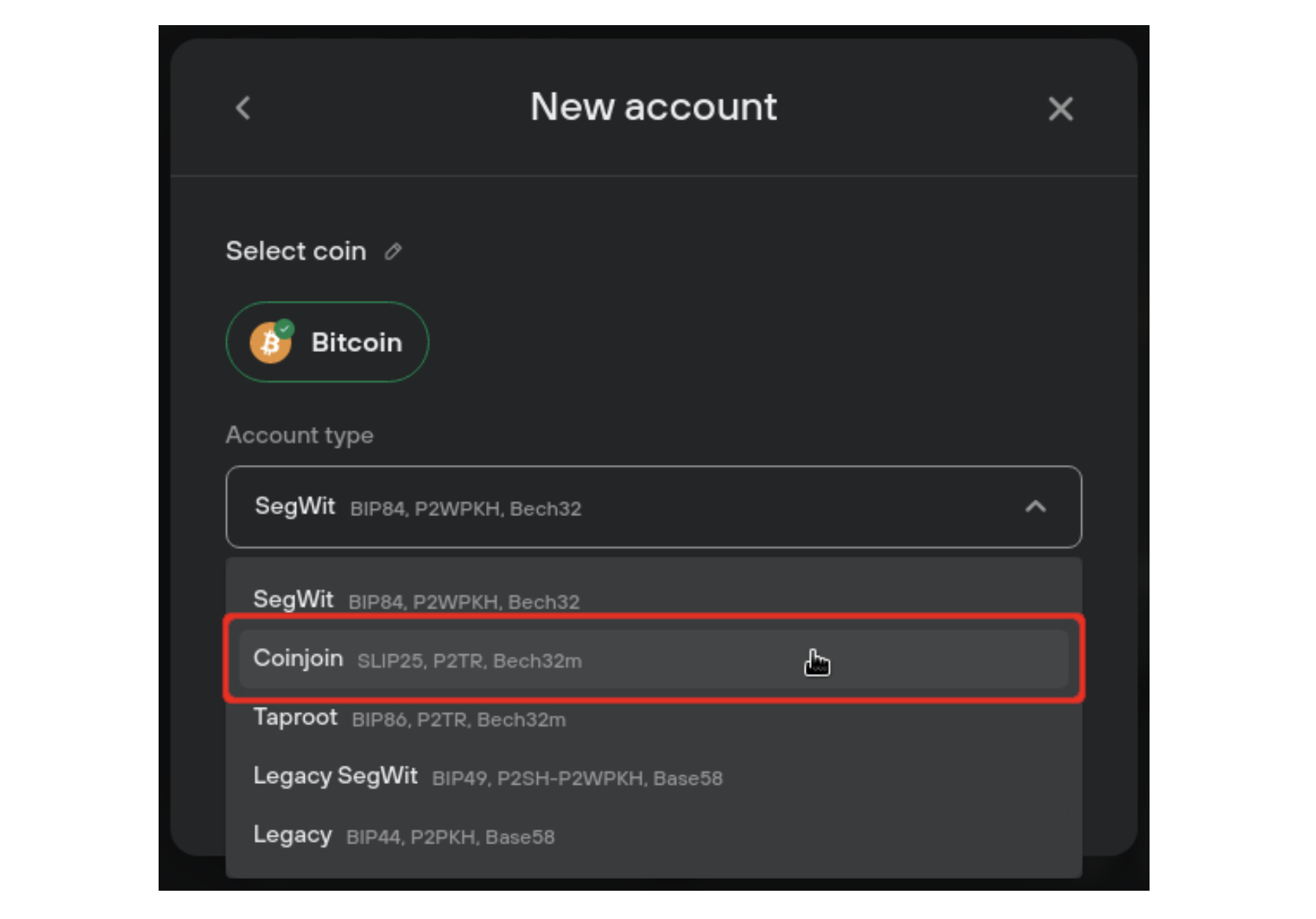 The procedure for establishing a CoinJoin account on a Trezor hardware wallet. Source: Trezor
Related Posts
“CoinJoin in Trezor is optional, and users must first transfer their coins to a designated CoinJoin account if they wish to utilize this feature. If users opt not to use CoinJoin, their experience remains unchanged,” stated Trezor’s Bitcoin analyst Josef Tetek in an interview with Cointelegraph.
While CoinJoin enhances privacy, coinjoined transactions are somewhat more expensive, as they necessitate users to pay a coordinator fee, Tetek explained, adding:
“When participating in a CoinJoin, users also incur a 0.3% coordinator fee along with the mining fee. Subsequent CoinJoin rounds, known as remixes, do not have a coordinator fee. There are no extra fees when spending coinjoined outputs.”
In contrast to the coordinator fee, mining fees apply to all other Bitcoin transactions. Therefore, users must pay a mining fee for each CoinJoin round.
In addition to fees, the CoinJoin feature is linked to extended transaction durations. Establishing a CoinJoin account may take considerably longer than standard account setup due to the need to download entire blocks and utilize a slower connection via Tor.
Related: Ethereum researcher indicates staking exposes IP address, raising privacy issues
“The CoinJoin process itself can take several hours. Once completed, the outputs can be spent just like any other Bitcoin outputs,” Tetek noted.
Trezor CEO Matěj Žák highlighted that Trezor prioritizes privacy as a fundamental asset for individuals. “As a result, we are pleased to have discovered a method for our community to maintain their Bitcoin history confidential,” he remarked. According to the company, Trezor is the first hardware wallet to incorporate CoinJoin, following the lead of software wallets such as Wasabi.
Magazine: ‘Account abstraction’ enhances Ethereum wallets: A guide for beginners
