Disclaimer: Information found on CryptoreNews is those of writers quoted. It does not represent the opinions of CryptoreNews on whether to sell, buy or hold any investments. You are advised to conduct your own research before making any investment decisions. Use provided information at your own risk.
CryptoreNews covers fintech, blockchain and Bitcoin bringing you the latest crypto news and analyses on the future of money.

The ‘time pain’ dilemma: reasons why bitcoin’s downturn may require additional months of stability to reach a genuine bottom.

Trends among long-term holders indicate a developing bear market, but prolonged consolidation may test the patience of investors.
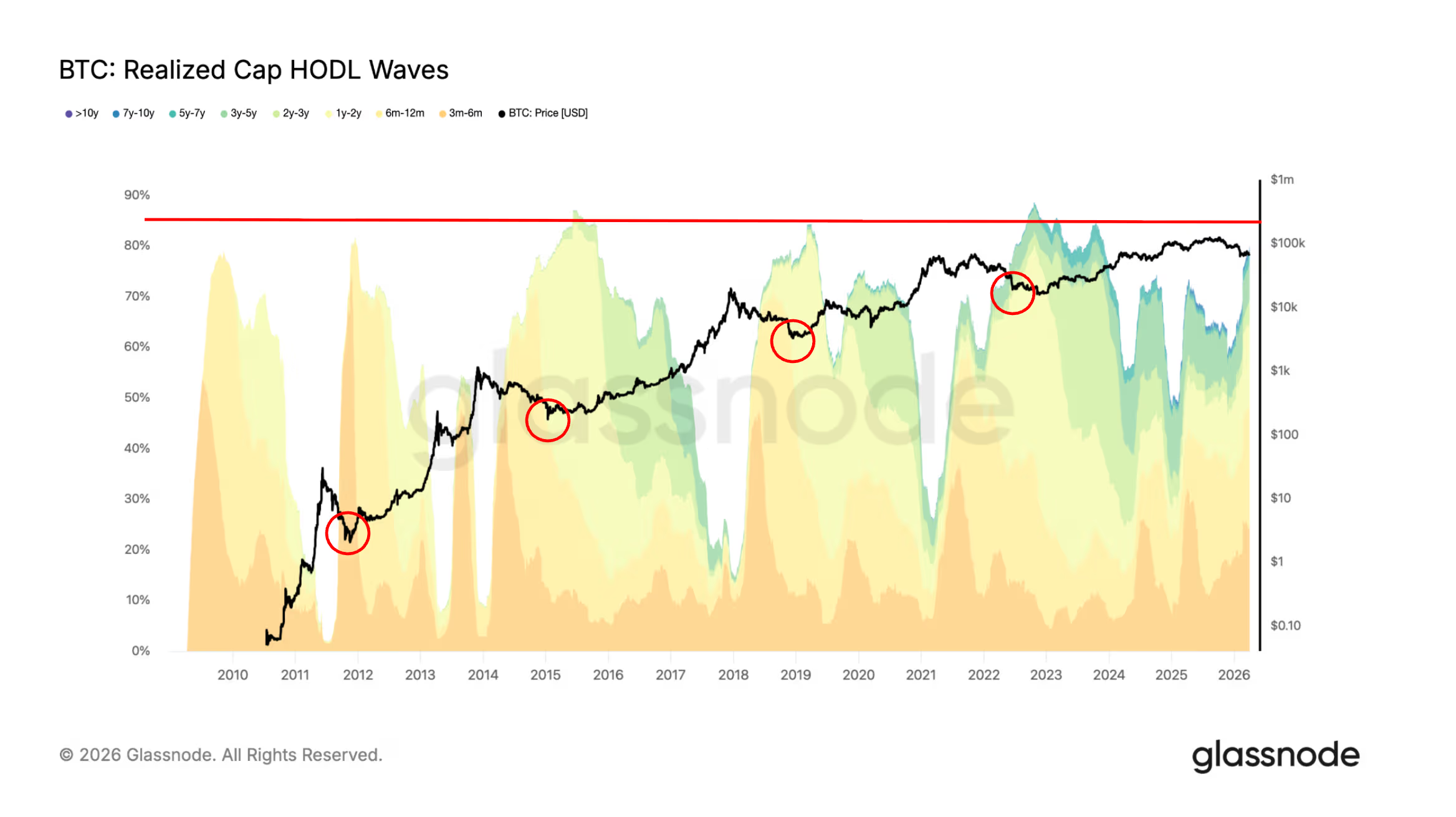 Realized Cap HODL Waves (Glassnode)
Essential information:
- Long-term holders currently possess around 80% of the bitcoin supply, nearing the historically observed 85% level at the bottoms of bear markets.
- Even if a price floor may be forming, previous cycles indicate that several months of sideways, range-bound trading are probable before a sustained recovery can commence.
Two primary concerns for cryptocurrency investors are how much further bitcoin can decline and the duration of this bear market.
Related Posts
The aspect of price suffering has been widely analyzed, but the time-related component poses a distinct inquiry.
Price suffering pertains to significant drawdowns or volatility that drive participants out of their positions, while time suffering represents slow, range-bound conditions that wear down both bulls and bears due to a lack of movement.
Currently, bitcoin is trading below $66,000, having fallen more than 3% in the last 24 hours and approximately 45% under its all-time high from October, marking nearly a six-month bear market.
An indicator suggesting ongoing time suffering is the Realized Cap HODL Waves from Glassnode. This metric categorizes bitcoin supply based on the last movement of coins, with each segment representing varying holding durations and weighted by realized price, which is the average price at which coins last transacted on the blockchain.
Historically, the bottoms of bear markets have coincided with long-term holders, those who have held for six months or longer, controlling at least 85% of the supply. Typically, price bottoms form first, with long-term holder supply reaching these significant levels several months later, reflecting that these investors acquired at lower prices and retained their holdings throughout the bear market.
At present, long-term holders represent about 80% of supply. If this pattern persists, the market may be approaching a bottoming phase, although several months of consolidation are likely still ahead.
