Disclaimer: Information found on CryptoreNews is those of writers quoted. It does not represent the opinions of CryptoreNews on whether to sell, buy or hold any investments. You are advised to conduct your own research before making any investment decisions. Use provided information at your own risk.
CryptoreNews covers fintech, blockchain and Bitcoin bringing you the latest crypto news and analyses on the future of money.

The period of low-cost financing has concluded as the conflict in Iran establishes a lasting ‘inflation baseline’.

The ongoing conflict in Iran is establishing a lasting inflation baseline that may signal the end of the era of inexpensive capital and highlight the vulnerability of global energy markets.
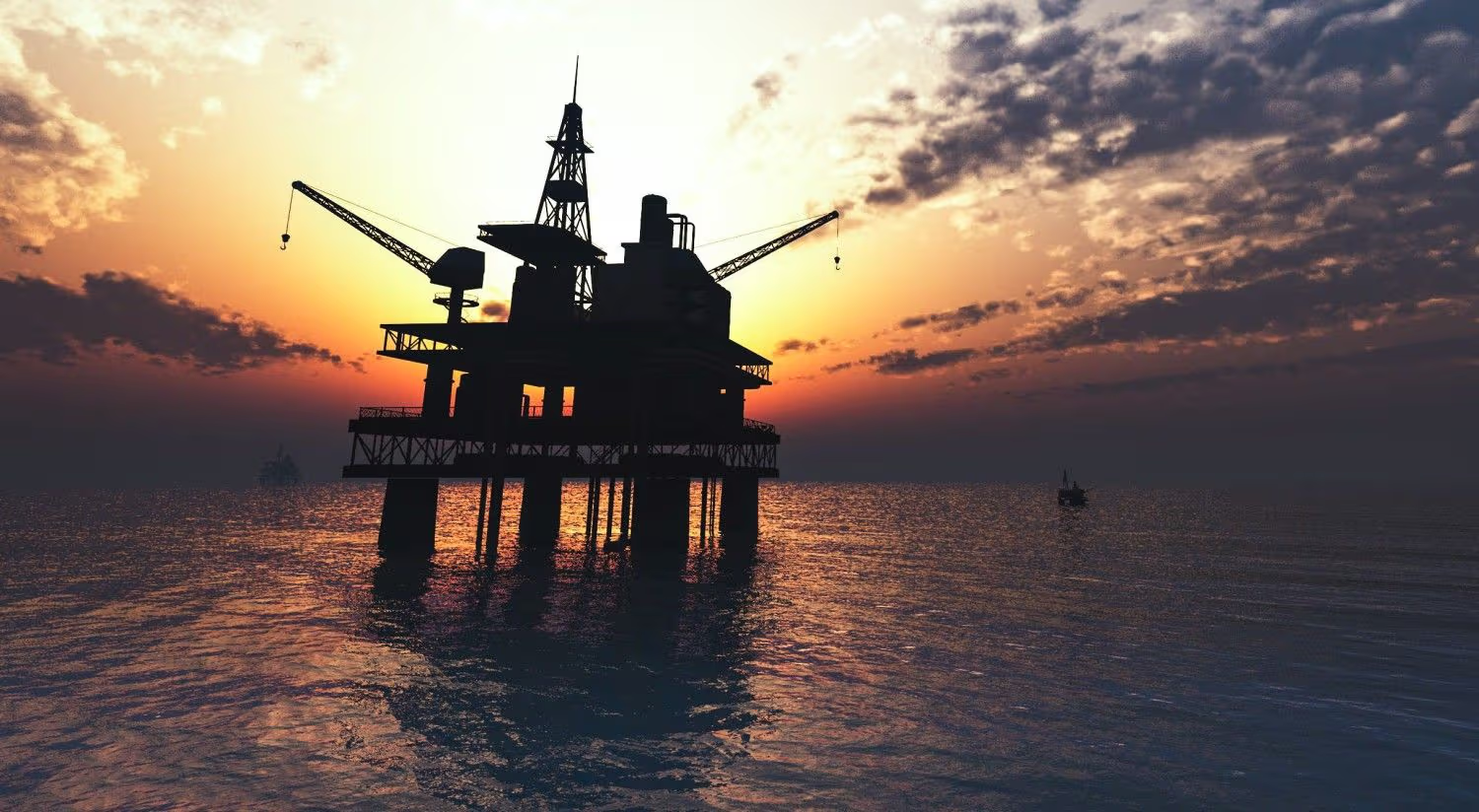 Central banks are losing their ability to support the stock market as energy prices remain persistently high. (Shutterstock)
Key points:
- The Iran conflict has unveiled the vulnerability of global energy markets, heightening the chance that oil price shocks and supply shortages will maintain inflation at structurally elevated levels for an extended period.
- As nations shift towards energy security and autonomy, analysts caution against de-globalized energy markets, which may lead to increased costs, reduced innovation, and the utilization of energy as a geopolitical tool.
- Prolonged high inflation could restrict central banks’ capacity to lower interest rates and inject liquidity, thereby limiting returns and increasing volatility across equities, bonds, cryptocurrencies, and other assets.
Since the onset of the Iran war, the prevailing market narrative has suggested that the surge in oil prices, inflationary pressure, and broader market fluctuations will be short-lived and will subside once the conflict ceases, enabling central banks to rejuvenate the economy and markets with accommodative monetary policies, similar to their actions following the 2008 crisis.
However, an alternative perspective posits that the repercussions of the Iran war will linger, establishing a consistently elevated global inflation threshold. This could affect returns across all asset categories, including equities, cryptocurrencies, and bonds.
The central takeaway from the Iran war is clear: energy markets are delicate, and major economies are susceptible to spikes in oil prices and disruptions in energy supply.
For many years, various nations, including key economies, depended on global energy supply chains, market-driven pricing, and comparative advantages. This model was effective but has now faltered due to the recent disturbances in the Strait of Hormuz, resulting in significant energy shortages worldwide, particularly in major economies such as India, Japan, and South Korea. Should the conflict continue, nations like China, which possess considerable reserves, may also experience hardships, including the United States, often deemed energy-independent.
The outcome: Moving forward, it is anticipated that every country will prioritize energy independence and security as a core component of its national security strategy.
Energy Market Expert Anas Alhajji notes that this trend will spur rapid de-globalization of energy markets, emphasizing control over cost and leading to sustained inflation.
Related Posts
"Once that mindset becomes prevalent, global energy markets will not revert to the previous model of open, price-driven, largely commercial trade. Instead, capitalist economies—historically dependent on market efficiency, global supply chains, and comparative advantages—will increasingly adopt a model similar to that of China: significant state intervention, strategic stockpiling, vertical integration, subsidies for domestic industries, and a focus on self-sufficiency/control over pure cost minimization," he explained in a discussion on X.
He further stated that most countries do not possess China’s centralized supply chain or industrial foundation, which may lead to slower innovation, fragmented markets, and elevated costs.
"The result: higher expenses, diminished innovation in certain sectors, fragmented markets, and reduced overall efficiency for Western-style economies, all in the name of ‘security.’ Energy transitions from being merely a commodity to becoming a geopolitical instrument and a domestic stronghold," he remarked.
In essence, the ramifications of the Iran war extend beyond short-term fluctuations in oil prices.
Indicators of widespread consequences are already emerging, impacting various sectors from fertilizers and food production to industrial output and potentially even the chipmaking and semiconductor industries, as the disruption in the Hormuz Strait restricts supplies of helium and sulfur, which are vital for chip manufacturing.
Additionally, the United Nations has already cautioned about rising food prices globally.
Effects on Assets
This situation implies that central banks may no longer possess the flexibility they once had to rapidly increase liquidity to bolster the economy and asset values.
From 2008 to 2021, the global consumer price index (CPI) or inflation rate averaged below 3% (briefly spiking to 8% in 2022, before falling back to 3% in 2024), as reported by the St. Louis Fed. This allowed central banks, including the Federal Reserve, Bank of Japan, and others, to implement ultra-loose monetary policies, setting interest rates at or below zero, and injecting liquidity through aggressive bond purchases or quantitative easing, resulting in remarkable gains across all markets. Bitcoin, for instance, surged from a single-digit dollar price in 2011 to $126,000 in October of the previous year.
However, with an anticipated structurally higher inflation threshold, this paradigm is shifting. Central banks can no longer assume they can consistently reduce rates to stimulate growth. Liquidity may be more limited, constraining returns across various asset classes.
The message is unambiguous: Investors should prepare for a landscape characterized by persistent inflation, less accommodating monetary policy, and heightened market volatility as the new standard.
