Disclaimer: Information found on CryptoreNews is those of writers quoted. It does not represent the opinions of CryptoreNews on whether to sell, buy or hold any investments. You are advised to conduct your own research before making any investment decisions. Use provided information at your own risk.
CryptoreNews covers fintech, blockchain and Bitcoin bringing you the latest crypto news and analyses on the future of money.


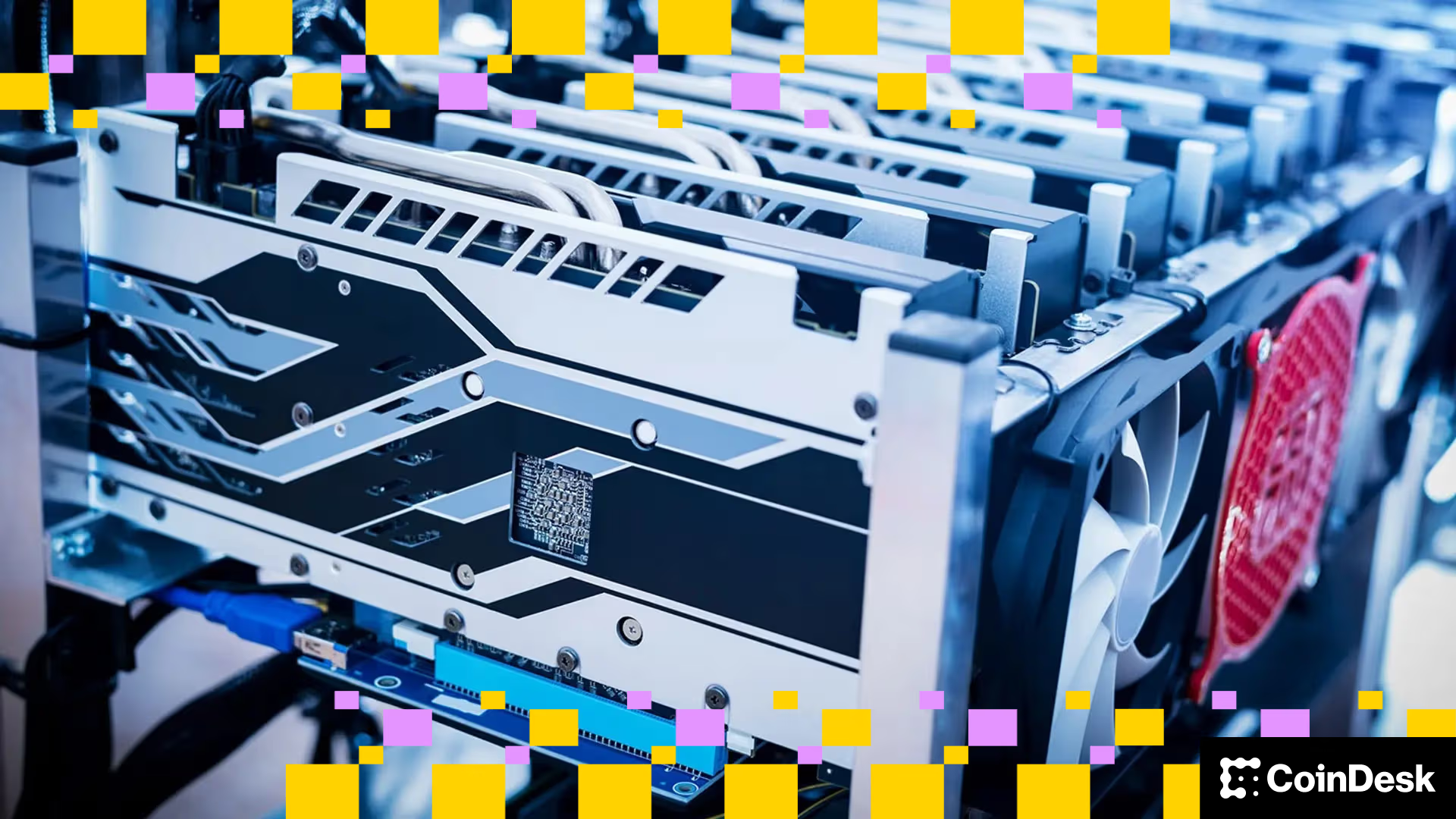
Stablecoin provider Tether announced that its new MiningOS is a modular, self-hosted software stack designed to facilitate mining operations, ranging from small home rigs to expansive industrial setups.
Key Points:
- Tether has unveiled MiningOS, a modular, open-source operating system for bitcoin mining that seeks to streamline infrastructure management and lessen reliance on proprietary vendor software.
- This self-hosted platform employs a peer-to-peer structure, enabling operators to oversee mining activities without centralized services and to scale from residential setups to industrial operations at multiple sites.
- Launched under the Apache 2.0 license and built on Holepunch peer-to-peer protocols, MiningOS is intended to be hardware-agnostic, positioning Tether alongside other companies advocating for open-source mining solutions, such as Jack Dorsey’s Block.
Tether has introduced an open-source operating system for bitcoin mining, promoting it as a means to simplify the management of mining infrastructure while reducing dependence on proprietary software from third-party vendors.
The stablecoin issuer announced on Monday that it has rolled out MiningOS (MOS), characterizing it as a modular, scalable mining operating system suitable for everyone from hobbyist miners to large organizations.
STORY CONTINUES BELOWDon’t miss another story.Subscribe to The Protocol newsletter today. View all newslettersSign me up
Related Posts
The stack aims to eliminate the “black box” phenomenon associated with many mining configurations, where hardware and monitoring tools are closely linked to proprietary systems.
“MiningOS addresses this issue — bringing transparency, openness, and collaboration to the core of Bitcoin infrastructure,” Tether stated on the project’s website, adding that the system is designed with “no lock-in.”
According to Tether, MOS utilizes a self-hosted architecture and interacts with connected devices through an integrated peer-to-peer network, enabling operators to control mining activities without relying on centralized services. The company noted that miners can modify settings via a companion platform based on their operational scale and output needs.
CEO Paolo Ardoino referred to MOS as a “comprehensive operational platform” that can scale from a home setup to an “industrial-grade” site distributed across various regions.
Tether ❤️ Bitcoin
Tether Mining OS is now fully opensource.
A complete operational platform that can scale from a home setup to industrial grade site, even across multiple geographies.
Super modular, P2P encrypted networking layer.
It supports a long list of miners,… https://t.co/VzXywA6IZc— Paolo Ardoino 🤖 (@paoloardoino) February 2, 2026
Tether initially showcased plans for an open-source mining OS in June of the previous year, asserting that new miners should have the ability to compete without relying on costly third-party vendors for software and management solutions.
The launch positions Tether alongside other cryptocurrency companies that have advocated for open-source mining infrastructures, including Jack Dorsey’s Block.
MOS is available under the Apache 2.0 license and built on Holepunch peer-to-peer protocols, with the goal of keeping the stack free from third-party dependencies.
