Disclaimer: Information found on CryptoreNews is those of writers quoted. It does not represent the opinions of CryptoreNews on whether to sell, buy or hold any investments. You are advised to conduct your own research before making any investment decisions. Use provided information at your own risk.
CryptoreNews covers fintech, blockchain and Bitcoin bringing you the latest crypto news and analyses on the future of money.


Sweden has embraced a hydro-powered Bitcoin (BTC) mining data center.
Genesis Digital Assets Limited (GDA), a company specializing in mining and data centers with a global power generation capacity exceeding 400 megawatts (MW), has launched a new data center in Sweden, motivated by the country’s growing renewable energy surplus.
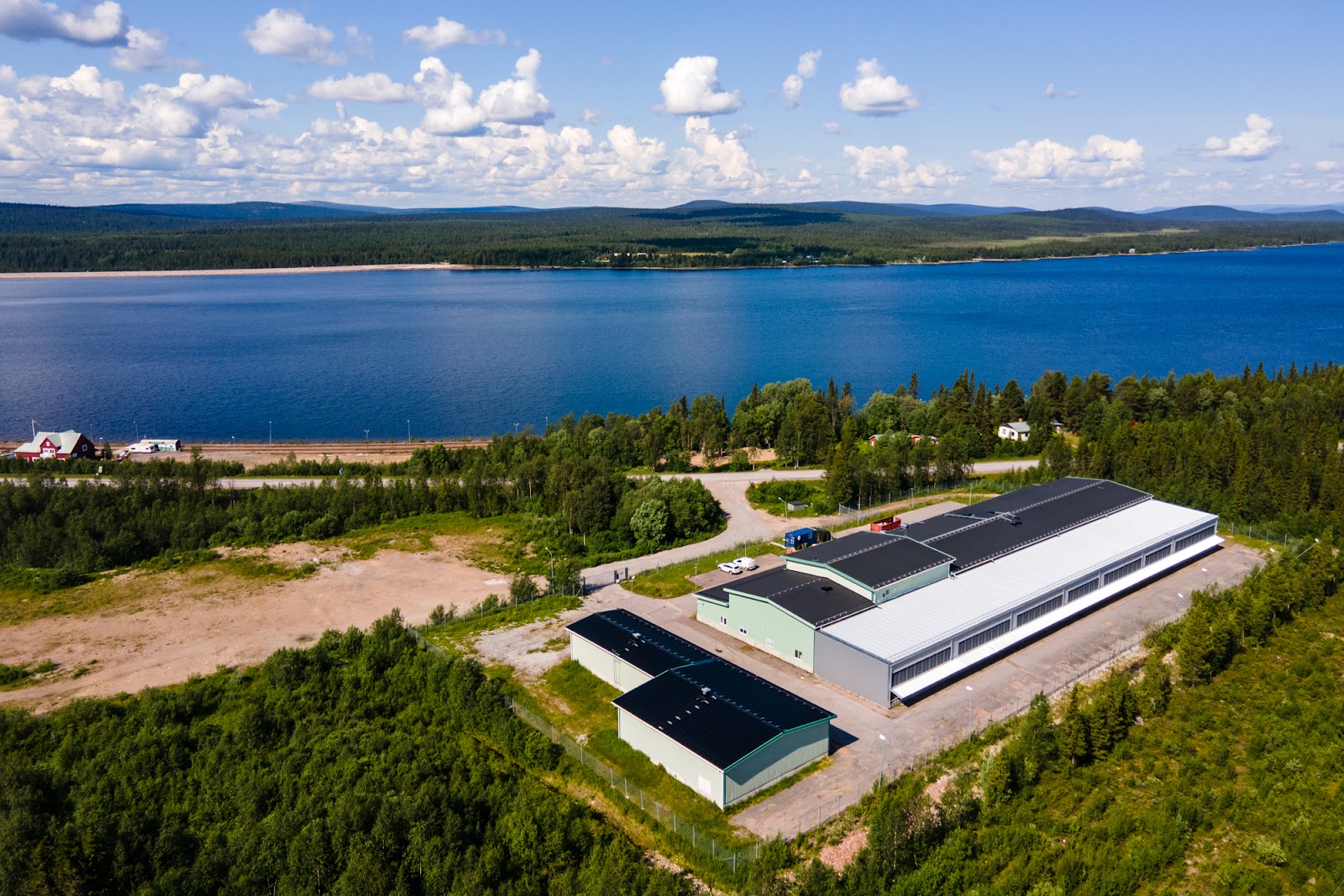
This new facility is situated in the northernmost part of Sweden, where hydroelectric power is the primary energy source. Abdumalik Mirakhmedov, the founder and executive president of GDA, informed Cointelegraph that the data center is positioned near the Porjus Hydroelectric Power Station:
“Given the proximity to the hydroelectric power station, we expect all of our electricity consumption to be powered by renewable energy.”
The data center has a total capacity of around 8 MW and is anticipated to achieve a hash rate of approximately 155 petahashes per second. GDA communicated to Cointelegraph that there are 1,900 Bitcoin mining machines operational at the Porjus data center.
According to Jaran Mellerud, a business developer at Luxor Mining and a regular contributor to Cointelegraph, Sweden generates nearly all of its electricity from nuclear and hydropower, especially in the northern regions.
Mellerud, who is originally from nearby Norway, noted that renewable energy is also plentiful:
“Sweden is an electricity powerhouse, generating the fifth-most electricity per capita globally in 2021.”
GDA’s strategic growth aligns with a wider trend in the Bitcoin mining sector across Northern Europe. Christian Anders, founder of BT.CX — a Swedish Bitcoin exchange established in January 2012 — mentioned to Cointelegraph that Bitcoin mining is not widespread due to elevated energy costs.
Nonetheless, the Nordic countries stand out, Anders remarked to Cointelegraph:
“Sweden, Finland and Norway have a surplus of energy and negative energy prices from time to time, and primarily renewable energy in the form of hydropower in a remote location which is hard to distribute.”
Untapped, stranded, and renewable energy sources are favorable for Bitcoin mining, as they are typically the most economical. Mirakhmedov stated, “Sweden also has abundant clean energy sources, which is an important factor we consider in our operations.”
Related Posts
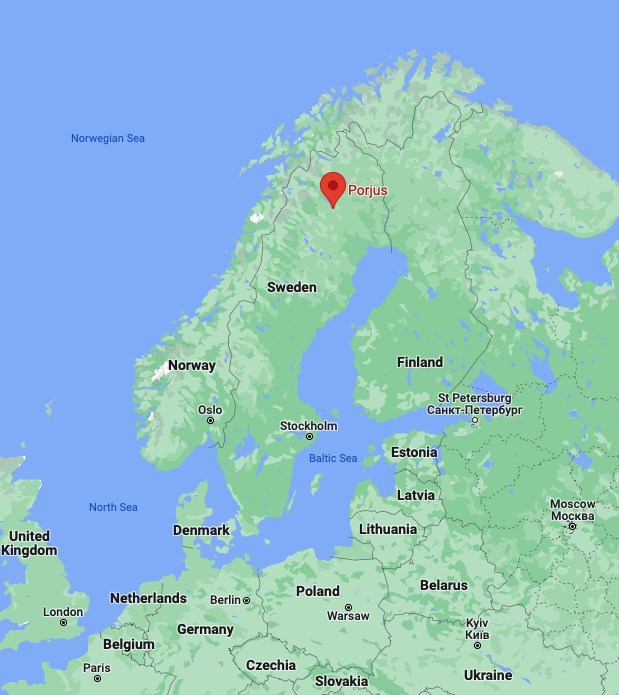 Porjus is in the far north of Sweden where renewable energy is abundant.
Furthermore, while some Scandinavians hold a negative view of Bitcoin, Anders conveyed to Cointelegraph that energy companies are beginning to recognize the benefits of Bitcoin mining: “The CEO of the largest energy producer in Sweden, Vattenfall, is pro-Bitcoin mining and its use case for grid balancing.” The use of Bitcoin miners for stabilizing electricity grids is also gaining traction in the United States.
Tim Carra, head of Nordic operations at GDA, elaborated on this point in communication with Cointelegraph:
“With abundant energy sources, a pro-innovation environment and a strong educational system that results in a great culture of innovation, we believe that Sweden is one of the best countries in the world to mine Bitcoin and expect to further invest in this beautiful region moving forward.”
GDA primarily focuses its power generation in Texas, USA, where one facility utilizes 300 MW of electricity. The new operations in Sweden complement a recent GDA facility in South Carolina and illustrate that there are still appealing, untapped mining locations globally. Anders added:
“There is also a market opportunity in Spain/Portugal, which gets cheap energy from Africa and its domestic solar production, where prices also are very cheap from time to time. BT.CX is working with renewable Bitcoin miners to offer a way to offset your Bitcoin holdings.”
As Anders points out, the creation of new Bitcoin requires substantial electricity. The European Central Bank has indicated that Bitcoin mining has a notable carbon footprint.
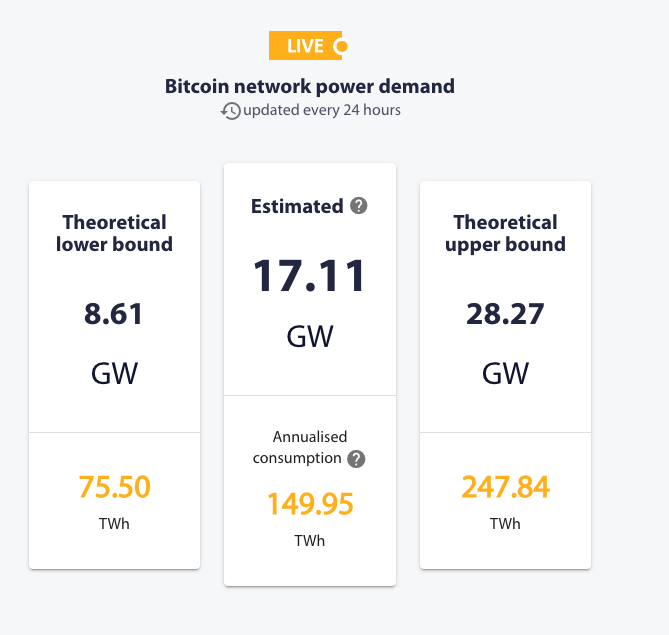 Stats from the Cambridge Centre for Alternative Finance. Global energy consumption is estimated at 25,000 terawatt-hours, according to the IEA.
However, while it is frequently depicted as an energy-intensive and carbon-heavy industry, Bitcoin mining consumes only 149.95 terawatt-hours of electricity annually, accounting for less than 0.7% of global energy, as reported by the Cambridge Center for Alternative Finance.
Related: Tether invests in El Salvador’s $1B renewable energy project
Meanwhile, renewable energy, including hydro, continues to dominate the global Bitcoin mining energy landscape. Neighboring Norway, for instance, contributes approximately 1% of the Bitcoin hash rate and is entirely renewable, while the new GDA facility in Sweden represents another green energy Bitcoin miner.
Ultimately, Anders concluded, “It’s super cool that more miners are coming to the Nordic European countries to help us with this mission.”
Collect this article as an NFT to preserve this moment in history and show your support for independent journalism in the crypto space.
Magazine: Bitcoin is on a collision course with ‘Net Zero’ promises
