Disclaimer: Information found on CryptoreNews is those of writers quoted. It does not represent the opinions of CryptoreNews on whether to sell, buy or hold any investments. You are advised to conduct your own research before making any investment decisions. Use provided information at your own risk.
CryptoreNews covers fintech, blockchain and Bitcoin bringing you the latest crypto news and analyses on the future of money.

South Korea’s cryptocurrency liquidity declines as stablecoin reserves drop by 55% while equity purchases increase.

On-chain data indicates a significant decline in dollar-pegged token reserves since July, with the most recent decrease prompted by the weakening of the won.
What to know:
- Stablecoin reserves on South Korea’s leading five crypto exchanges have decreased by approximately 55% since July 2025, with withdrawals increasing after the won fell below 1,500 per dollar in mid-March.
- Despite a rise in inflows into local equities, stablecoin reserves are declining, indicating a larger shift in investor behavior, aided by tax-advantaged “repatriation” accounts.
- This transition has contributed to a semiconductor-driven rally in the KOSPI while reducing retail liquidity in crypto, linking future capital flows to the performance of Korea’s stock market.
In South Korea, stablecoin reserves have significantly decreased since July, even as stock market inflows have increased, highlighting a change in capital allocation.
The total value of these dollar-pegged tokens held in wallets associated with the five largest crypto exchanges in South Korea has plummeted by 55%, with on-chain data revealing a notable wave of outflows initiated by the won’s dip past 1,500 per dollar in mid-March.
Research from Allium Labs, which monitors Ethereum and Tron wallets across Upbit, Bithumb, Coinone, Korbit, and GOPAX, indicates that the combined stablecoin holdings fell from $575 million in July 2025 to about $188 million by mid-March, with the decline accelerating as the won reached 16-year lows against the dollar.
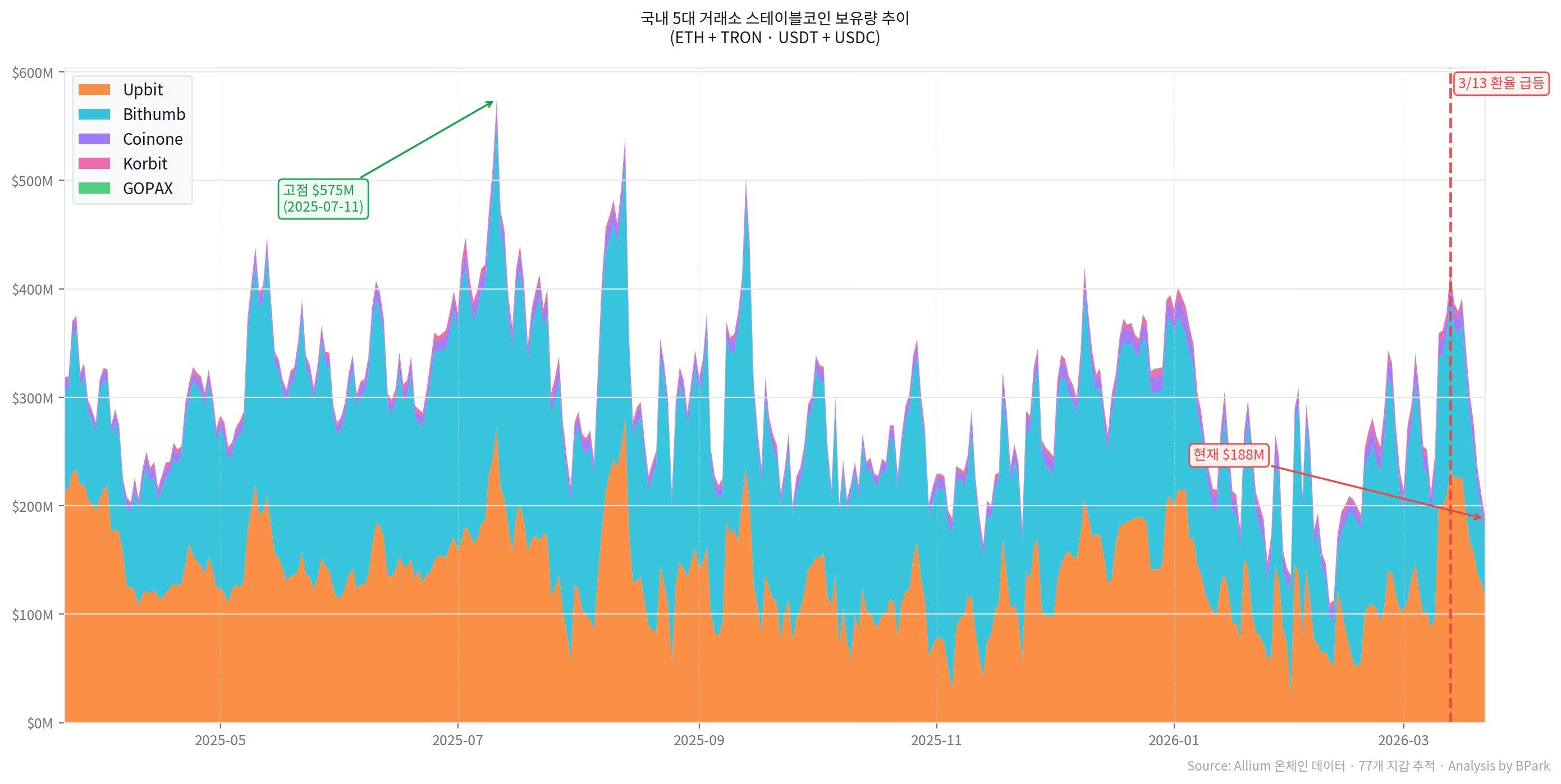 (Stablecoin holdings on Korean exchanges/Allium Labs compiled by Bradley Park)
The timing indicates that traders disposed of tether at high USD/KRW levels after the won weakened past 1,500 per dollar in mid-March, a level not observed since the 2008 financial crisis.
The depreciation of the currency heightened the motivation to liquidate dollar-denominated assets, with traders converting to won and reallocating into domestic investments, as noted by DNTV Research founder Bradley Park.
Related Posts
The outflows signify the current phase of a wider trend of Korean retail capital migrating from crypto to equities, a transition that CoinDesk first reported in November. While the previous rotation was primarily narrative-driven, focusing on AI-related chipmakers as altcoin momentum waned, the recent drawdown seems connected to a specific foreign exchange trigger rather than a shift in risk tolerance.
The South Korean government has recently intensified measures to attract capital into domestic markets via new initiatives such as “repatriation” accounts, which offer up to 100% capital gains tax exemptions for investors who sell assets abroad and reinvest locally.
This trend is apparent in brokerage statistics. Investor deposits, which serve as an indicator of cash available for stock purchases, decreased from approximately ₩131 trillion ($86 billion) in early March to around ₩112 trillion ($74 billion) following the mid-month currency fluctuation, suggesting that capital was actively invested in equities as stablecoin reserves dwindled. Deposits have since started to stabilize, indicating that new inflows are replenishing the buying power.
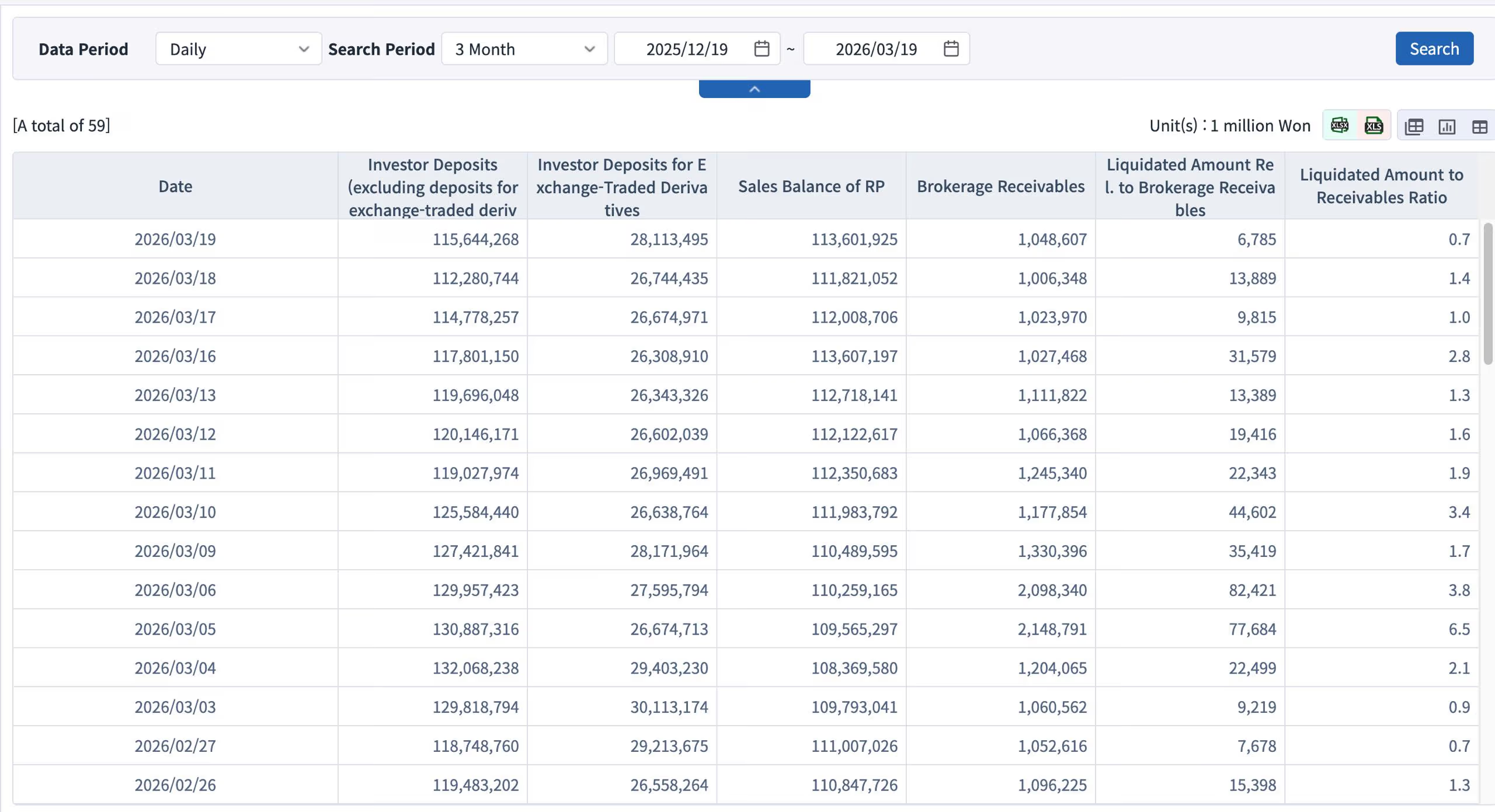 (Korea Financial Investment Association)
The KOSPI, which was already up 75% in 2025, has seen an additional 37% increase this year, making it the top-performing major index globally. The rally is heavily concentrated, with Samsung Electronics and SK Hynix representing about half of the market capitalization and over 50% of projected profits, making them the primary targets for both retail and institutional investments.
Wider stablecoin transaction volumes throughout Asia have increased over the past year, as per data from Artemis, indicating that the decline on Korean exchanges signifies a domestic capital shift rather than a regional pullback.
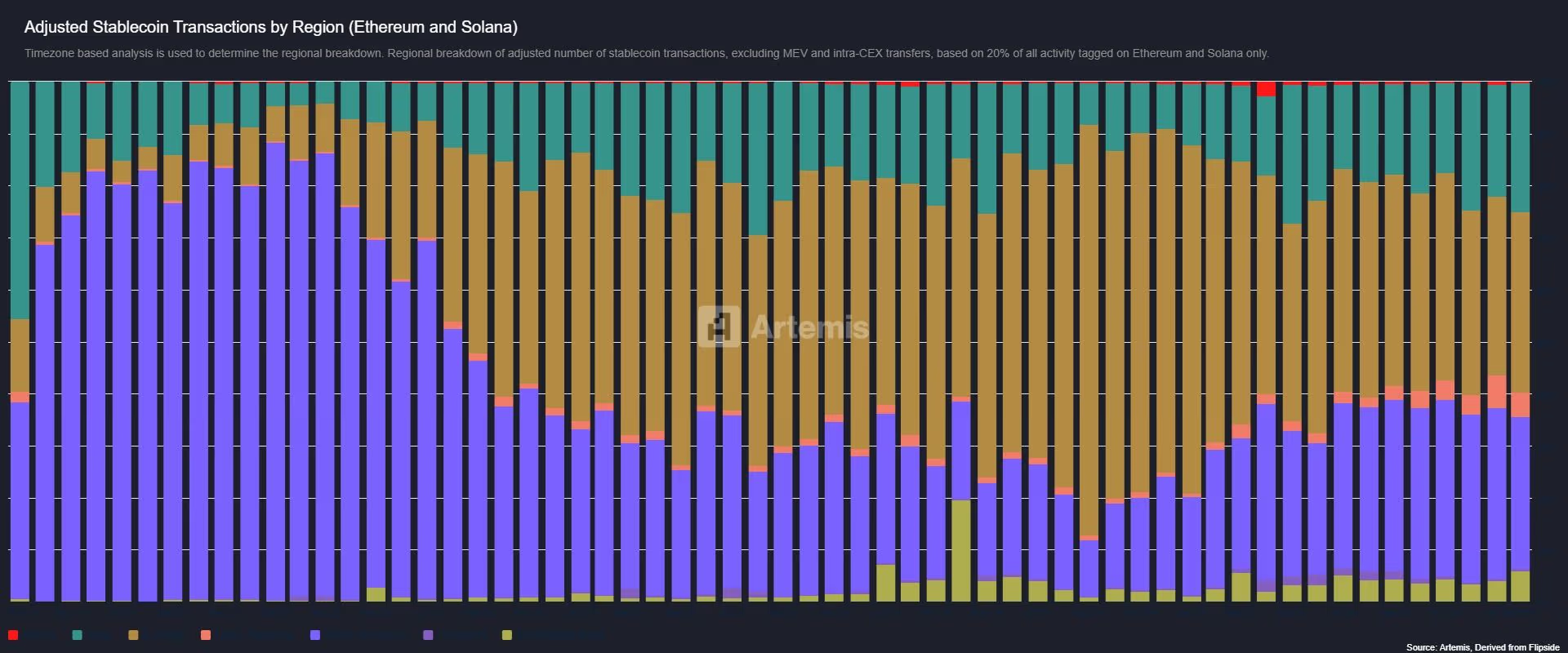 (Artemis)
For cryptocurrency markets, this transition highlights the depletion of one of their crucial retail liquidity sources.
Korean market participation has historically intensified market cycles, and current data indicates that capital is actively being reallocated rather than remaining inactive. The likelihood of these flows returning may hinge more on the durability of Korea’s equity rally than on cryptocurrency narratives.
A significant correction, particularly in a market so focused on semiconductor stocks, could swiftly prompt another rotation of capital. The KOSPI has recently faced pressure due to disruptions in oil transport through the Strait of Hormuz, raising concerns about energy supply.
