Disclaimer: Information found on CryptoreNews is those of writers quoted. It does not represent the opinions of CryptoreNews on whether to sell, buy or hold any investments. You are advised to conduct your own research before making any investment decisions. Use provided information at your own risk.
CryptoreNews covers fintech, blockchain and Bitcoin bringing you the latest crypto news and analyses on the future of money.


As the opportunity decreases to pass a crypto market structure bill this year, legislators informed bankers at a Washington summit that the final legislation will not jeopardize deposits.
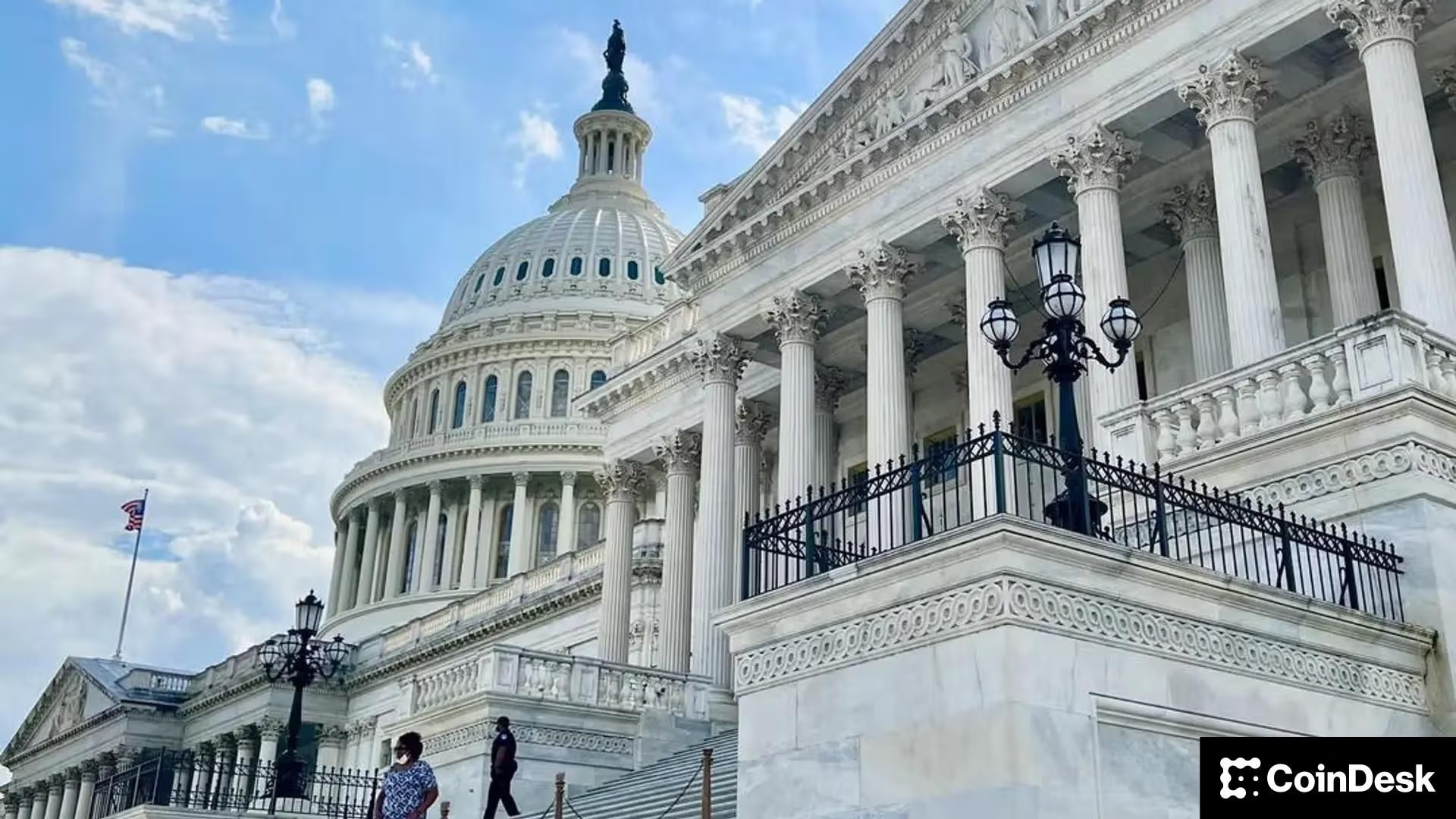 U.S. senators are working to push the crypto Clarity Act forward through a compromise on stablecoin yields. (Jesse Hamilton/CoinDesk)
Related Posts
What to know:
- The American Bankers Association is advocating in Washington to address any perceived loopholes concerning stablecoin yields in the crypto Clarity Act, yet senators at a summit today indicated they are striving for a stablecoin compromise to further that bill.
- Legislators, crypto supporters, and bankers appear to concur on the necessity of keeping rewards away from static stablecoin holdings that mimic bank accounts, as such holdings could compete with traditional bank savings accounts.
- The potential for a significant crypto bill in 2026 still hinges on numerous factors aligning favorably, including resolving various remaining points of contention and navigating a constrained Senate schedule.
The U.S. banking sector had effectively lobbied to impede the crypto industry’s market structure legislation, known as the Digital Asset Market Clarity Act, due to disagreements over the appropriate role of stablecoin rewards. However, lawmakers are persistently negotiating a compromise to advance the proposed legislation.
Among the lawmakers engaged in these discussions, Senator Angela Alsobrooks stated to an audience at an American Bankers Association summit in Washington on Tuesday that both parties in the negotiation — bankers aiming to restrict most stablecoin rewards out of concern for traditional deposits and the crypto sector which views them as a crucial consumer incentive — will likely be “just a little bit unhappy.” The Maryland Democrat has been collaborating with Senator Thom Tillis, a Republican from North Carolina, to devise a method to facilitate a long-delayed Senate Banking Committee hearing on the legislation.
“The compromise that Senator Tillis and I have been developing is one that we believe will implement the necessary safeguards to help prevent — to the best of our ability — the deposit flight that we wish to avoid while simultaneously fostering innovation,” Alsobrooks remarked, referring to banks’ concerns that rewards on stablecoin holdings closely resemble bank deposits, potentially leading individuals to withdraw their funds from banks.
“We definitely need these safeguards to avert deposit flight, but we will likely need to reach some agreements,” the senator added.
Currently, the compromise appears to concentrate on the possibility that a limited scope of stablecoin activities could qualify for consumer rewards provided by crypto platforms.
The previous year’s stablecoin legislation, the Guiding and Establishing National Innovation for U.S. Stablecoins (GENIUS) Act, “prohibited payment stablecoin issuers from offering interest to attract customers,” noted ABA President Rob Nichols. He contended that “unless crypto exchanges and other affiliated entities are subject to the same sensible restrictions, it is a clear attempt to circumvent congressional intent.”
Senator Mike Rounds, a Republican from South Dakota who, like Alsobrooks and Tillis, serves on the Senate Banking Committee, conveyed to the bankers on Tuesday that he is “unsure” about the correct approach to stablecoin rewards at this time. He stated that providing rewards to customers should not depend on the amount of money held in an account but rather could be linked to the level of account activity.
“We are striving to reflect that in our discussions,” he mentioned.
The U.S. Office of the Comptroller of the Currency recently suggested a rule to largely adopt the GENIUS Act, although its stance on stablecoin rewards was perceived as unclear by the crypto industry. The agency asserted that it would not permit circumventions of the yield ban for stablecoin issuers. Nevertheless, industry insiders have expressed confidence that they will be able to establish rewards programs that comply with the OCC’s proposal, which digital asset advocates assert allows significant flexibility for rewards programs designed as customer incentives.
Despite the bankers emphasizing the risks associated with the yield loophole affecting their business model this week, the legislation could still progress if Alsobrooks, Tillis, and other members of the Senate Banking Committee are satisfied with the new compromise language. The subsequent step would be a markup hearing, similar to the one that was postponed earlier this year. If the bill successfully passes that stage, it would be merged with a version that has already been approved by the Senate Agriculture Committee.
A final iteration would then be presented to the full Senate for a vote, which would necessitate substantial support from Democrats to succeed.
That remains a concern as other discussions beyond stablecoin yield have yet to be resolved. Senate Democrats have raised alarms regarding the decentralized finance (DeFi) sector’s potential to expose vulnerabilities to malicious actors, and they have also argued for the appointment of Democrats to vacant positions at the CFTC and SEC. However, perhaps the most contentious of their demands is to prohibit senior government officials from profiting from personal ties to crypto businesses — notably, President Donald Trump.
There are also procedural challenges. Senate floor time is consistently limited, and other issues could still impede progress, such as the conflict in Iran and Trump’s assertions that he will not endorse any approved bills until Congress delivers a voter-ID package he can sign into law before the midterm congressional elections.
Read More: Market structure state of play: State of Crypto
