Disclaimer: Information found on CryptoreNews is those of writers quoted. It does not represent the opinions of CryptoreNews on whether to sell, buy or hold any investments. You are advised to conduct your own research before making any investment decisions. Use provided information at your own risk.
CryptoreNews covers fintech, blockchain and Bitcoin bringing you the latest crypto news and analyses on the future of money.


The SEC’s endorsement enables Nasdaq to trial blockchain-based iterations of stocks that transact and settle similarly to conventional shares.
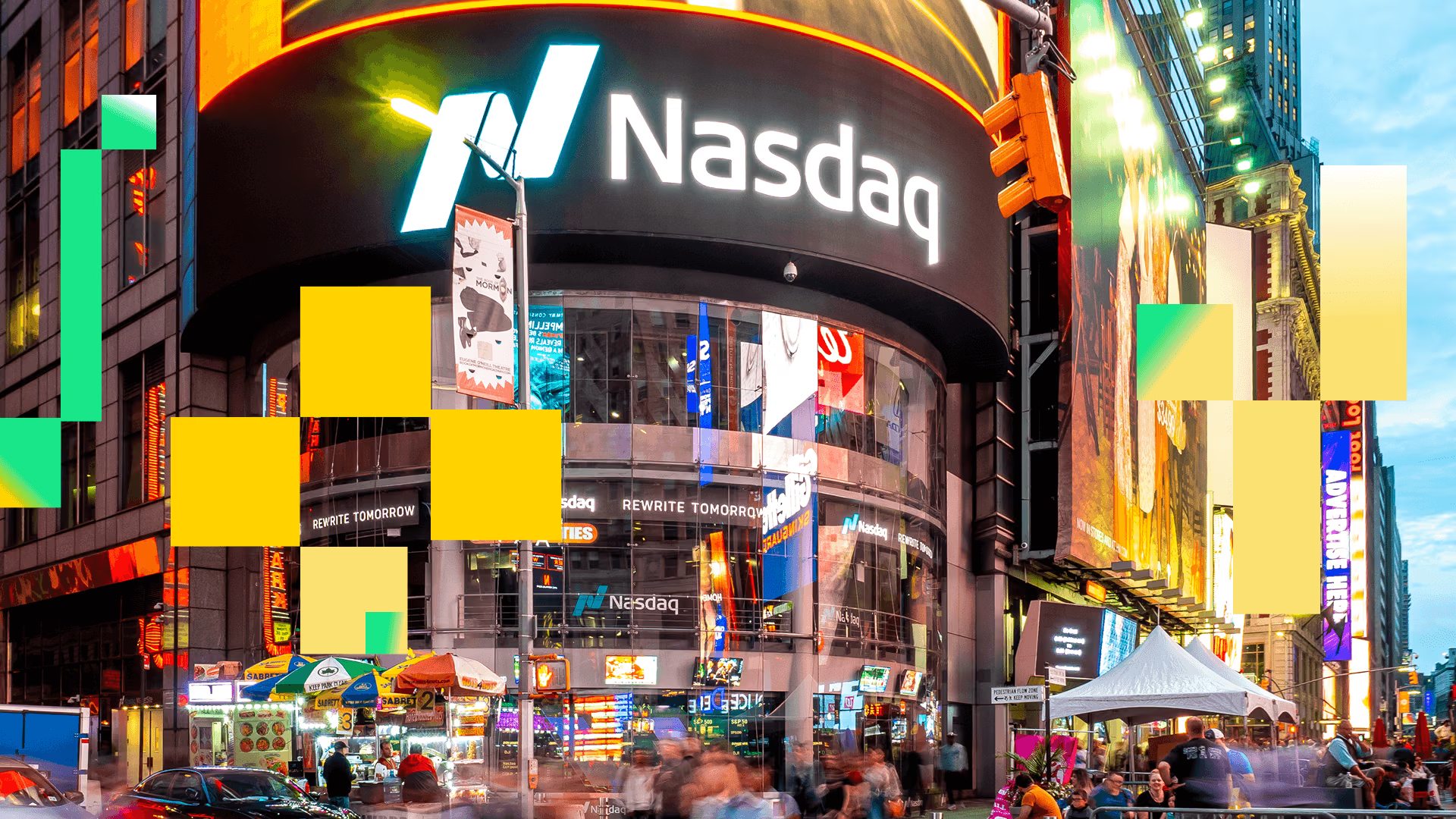 Nasdaq (Wikipedia Commons/CC BY 2.0, modified by CoinDesk)
Key points:
- The Securities and Exchange Commission granted approval for Nasdaq’s initiative to facilitate the trading of specific securities in tokenized formats, thereby incorporating blockchain technology into U.S. equity markets.
- Within this new framework, eligible Nasdaq participants have the option to settle trades as blockchain-based tokens that function alongside conventional shares, maintaining the same tickers, prices, and rights for investors.
- The tokenization of stocks is an emerging and rapidly evolving sector, attracting interest from major exchanges such as Nasdaq and NYSE parent company ICE.
The U.S. Securities and Exchange Commission (SEC) sanctioned Nasdaq’s proposal on Wednesday, allowing certain securities to be traded in tokenized formats, marking a significant advancement in the integration of blockchain technology within U.S. equity markets.
Nasdaq’s tokenization initiative is associated with a pilot being conducted by the Depository Trust Company (DTC), which will manage the clearing and settlement of tokenized trades. Nasdaq submitted its request for regulatory approval in September.
Related Posts
Under the new framework, eligible Nasdaq participants may decide to settle trades using blockchain-based tokens rather than through traditional book-entry systems.
Tokenized shares will coexist with standard shares on the same order book and at the same price point. They will possess equivalent rights, utilize the same ticker and CUSIP (identification number), and adhere to current market regulations.
The SEC indicated that this structure complies with investor protection standards, emphasizing that surveillance, data reporting, and settlement timelines will remain unchanged.
This development follows the rising trend of tokenizing traditional assets, including stocks, bonds, and funds, which has grown significantly within the digital asset domain. This process enables near-instant and continuous trading of tokens linked to real-world assets.
This trend has garnered attention from major U.S. exchanges. Nasdaq announced last week that it is working on a framework to enable publicly listed companies to issue blockchain-based variations of their shares. It has partnered with crypto exchange Kraken to distribute tokenized stocks worldwide. Simultaneously, Intercontinental Exchange (ICE), the parent company of the NYSE, has invested in crypto exchange OKX with intentions to introduce new tokenized stocks and crypto futures.
Read more: Here is why Nasdaq and owner of NYSE are putting the $126 trillion equity market on blockchain
