Disclaimer: Information found on CryptoreNews is those of writers quoted. It does not represent the opinions of CryptoreNews on whether to sell, buy or hold any investments. You are advised to conduct your own research before making any investment decisions. Use provided information at your own risk.
CryptoreNews covers fintech, blockchain and Bitcoin bringing you the latest crypto news and analyses on the future of money.

Reasons for Bitcoin’s decline beneath $68,000 heightening the potential for a fall below $60,000.

The negative gamma area beneath $68,000 may initiate a self-reinforcing sell-off, causing an even greater decline.
 Risk of a bitcoin crash grows (Getty images)
What to know:
- Bitcoin has decreased approximately 2% to $67,000 in light of renewed geopolitical tensions, yet options positioning indicates that the market structure is particularly vulnerable.
- Strong demand for downside protection in Deribit-listed put options ranging from $68,000 to the mid-$50,000s has established a “negative gamma” zone that may compel dealers to sell additional bitcoin as prices decline.
- A persistent drop below $68,000 could incite a self-reinforcing wave of selling driven by hedging, potentially driving bitcoin significantly under $60,000 if low holiday liquidity cannot accommodate the selling pressure.
President Donald Trump’s aggressive stance toward Iran has contributed to a decline in bitcoin of about 2% over the last 24 hours, bringing it to $67,000. Although this price movement aligns with typical volatility, the underlying market structure appears fragile.
This fragility is primarily attributed to the activity within the Deribit options market, particularly an accumulation of defensive positions just beneath current prices that might lead to a drop down to $50,000.
A fragile setup below $68,000
In recent weeks, traders have been acquiring put options that provide downside protection. These defensive activities have been focused on put options at strike prices of $68,000 and lower, extending down to the mid-$55,000s. This trend is understandable given the macroeconomic uncertainties stemming from the Iran conflict, potential quantum threats, and the severe bear market that commenced late last year.
However, when this type of positioning accumulates, it creates what experienced traders refer to as a “negative gamma” zone — a situation where market makers or dealers providing liquidity to an exchange’s order book must react to price changes in ways that ultimately accelerate the prevailing bearish trend.
Such dynamics have historically intensified both bullish and bearish trends.
Related Posts
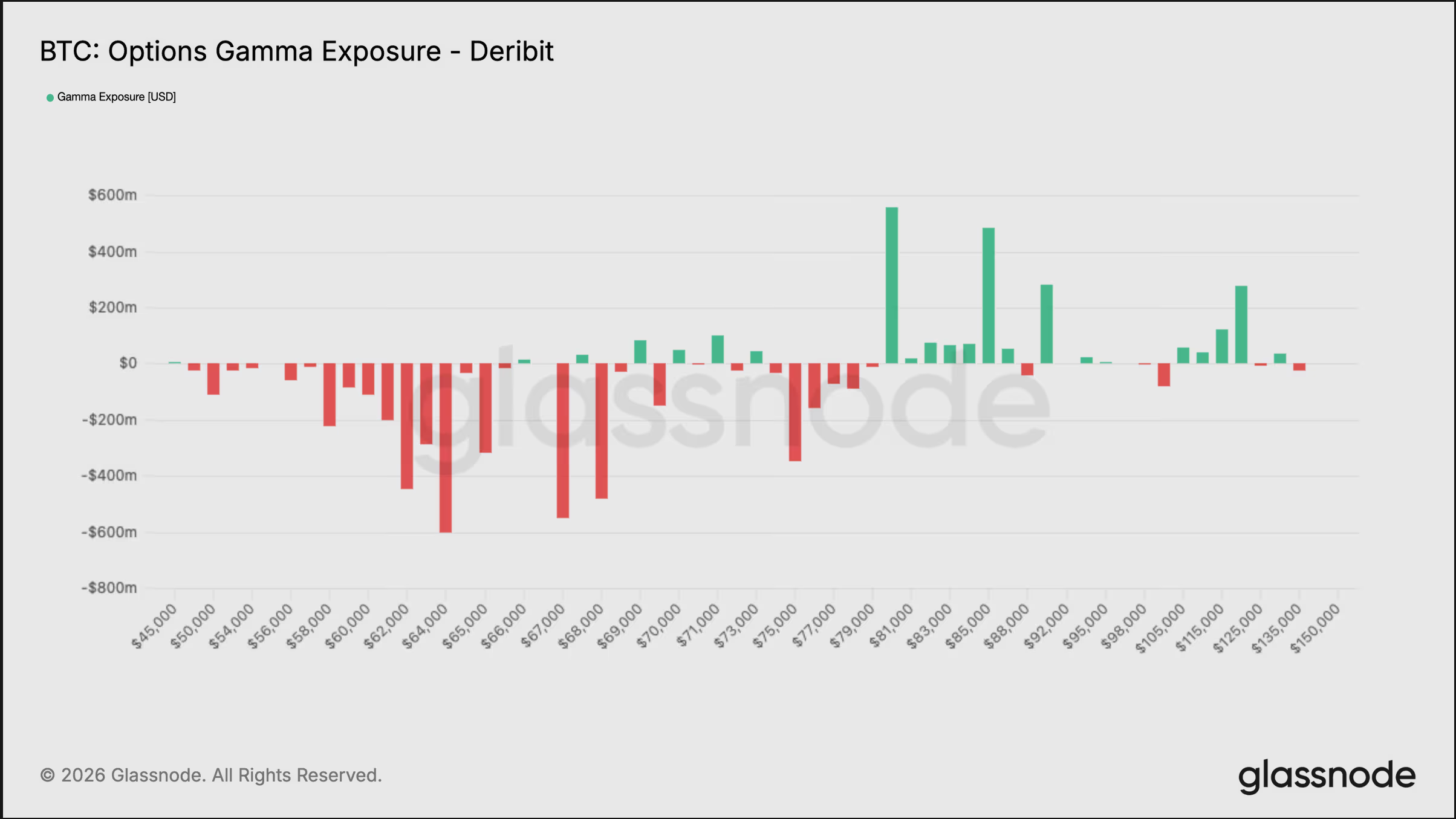 BTC: options gamma exposure on Deribit. (Glassnode)
The Glassnode chart illustrates that dealer gamma exposure is predominantly negative from $68,000 to $50,000. This situation arises from being on the opposing side of traders’ long put positions.
In simpler terms, dealers are maintaining short put positions. Therefore, as the market declines below $68,000, they may incur losses and are likely to short BTC to mitigate their exposure.
This hedging activity can further depress prices, creating a feedback loop that may escalate rapidly.
This highlights why the recent dip below the $68,000 mark is crucial. A break below this threshold signifies not only technical weakness but also opens the possibility for forced selling to amplify.
“Negative gamma is now building just below current price levels, from $68K all the way down to the high 50s,” Glassnode stated in its weekly report.
“Entering this zone could trigger increased selling as hedging flows strengthen downside momentum, transforming what would typically be a gradual move into a more abrupt repricing, with a potential return to the $60k level, the lowest point of the February 5 sell-off,” the firm added.
With liquidity remaining relatively low after the March 27 options expiration, and likely to stay thin during the Easter holidays, there may be insufficient buyers to absorb this pressure.
Consequently, if the feedback loop activates completely, the decline could extend significantly below $60,000.
This situation indicates that while bitcoin is currently responding to geopolitical developments, the underlying market mechanisms can also influence its trajectory.
If prices manage to stay above $68,000, the existing setup may dissipate with minimal impact. However, a sustained drop below that level could shift the market into a condition where selling perpetuates itself, transforming a typical dip into a more profound decline.
