Disclaimer: Information found on CryptoreNews is those of writers quoted. It does not represent the opinions of CryptoreNews on whether to sell, buy or hold any investments. You are advised to conduct your own research before making any investment decisions. Use provided information at your own risk.
CryptoreNews covers fintech, blockchain and Bitcoin bringing you the latest crypto news and analyses on the future of money.


The honey badger is often regarded as Bitcoin’s spirit animal. The meme was first popularized by Bitcoin advocate turned Bitcoin Cash supporter Roger Ver in 2013 when he invested $1,500 monthly for a billboard in California that proclaimed, “Bitcoin is the Honey Badger of Money.”
Since that time, the honey badger has become a rare symbol, making sporadic appearances in memes and tweets, as well as during its annual gathering on the Baltic Coast of Europe.
A sighting of the Baltic Honeybadger generates excitement among even the most dedicated Bitcoin enthusiasts. Sustained by a diet of red meat and Latvian beer, it is often found near cypherpunk events and is frequently seen hovering over computer screens, reviewing and modifying lines of code, captivating both cypherpunks and Bitcoin (BTC) supporters.
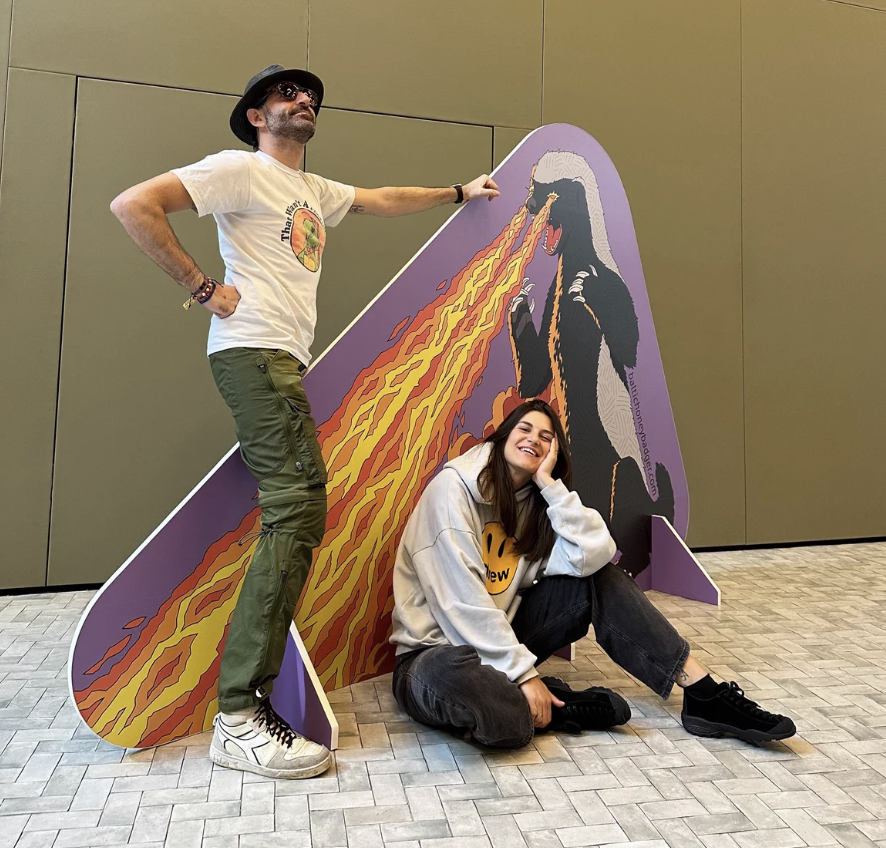 Content creators Rikki and Laura with the honey badger. Source: Bitcoin Explorers
The Baltic Honeybadger conference was initiated in 2017, featuring speakers Andreas Antonopoulos and Elizabeth Stark. Dubbed “the most OG Bitcoin conference,” this Riga-based event emphasizes privacy, anti-surveillance, and cypherpunk ideals.
Privacy is a human right
These values were evident on the Cypherpunk Stage. Often crowded or with limited standing space, the Cypherpunk Stage was strictly off-limits to cameras, recording devices, and live streaming.
A group of “Bitcoin Bears” (security personnel) monitored the Honeybadger audience. No media, tweets, or photographs were permitted online — all activities remained confined to the venue.
 Entrance to the Cypherpunk Stage. Source: Bitcoin Lyon, Aurore
At the conference’s opening, Max Keidun, founder of Honeybadger and CEO of Hodl Hodl and Debifi, declared that any attendees found recording or photographing the Cypherpunk Stage would be expelled from the conference and banned from Honeybadger indefinitely. He remarked:
“We don’t joke in Eastern Europe.”
These principles were evident throughout the event. Many participants wore badges indicating their preference to avoid being photographed, the conference goodie bag included a privacy-focused bandana, and it was common to hear attendees ask each other, “Are you doxed?” — essentially inquiring if their identities were shared or concealed online.
Freedom of speech was also a significant theme. One of the talks on the Cypherpunk Stage by Bitcoin activist Rikki compared certain aspects of Bitcoin in El Salvador to central bank digital currencies.
Bitcoin educator Giacomo Zucco discussed how “midwits” can hinder Bitcoin’s progress. With humorous intent, he pointed out that less intelligent Bitcoin supporters, or “80 IQ plebs,” contribute positively, while “midwits” struggle with nuances and miss the broader context.
However, despite its original charm, the Honeybadger may face the risk of fading away. Numerous Bitcoin conferences globally have transformed into social media spectacles and selfie opportunities due to the increasing mainstream appeal of Bitcoin and the rise of charismatic Bitcoin advocates like Michael Saylor, Natalie Brunell, and Jack Mallers on television screens across the United States.
Indeed, Rigel Walshe from Swan Bitcoin remarked that the Bitcoin 2021 conference in Miami resembled a Christian rock festival. He humorously questioned why thousands of young individuals would gather to hear older speakers discuss complex topics like sound money or salvation.
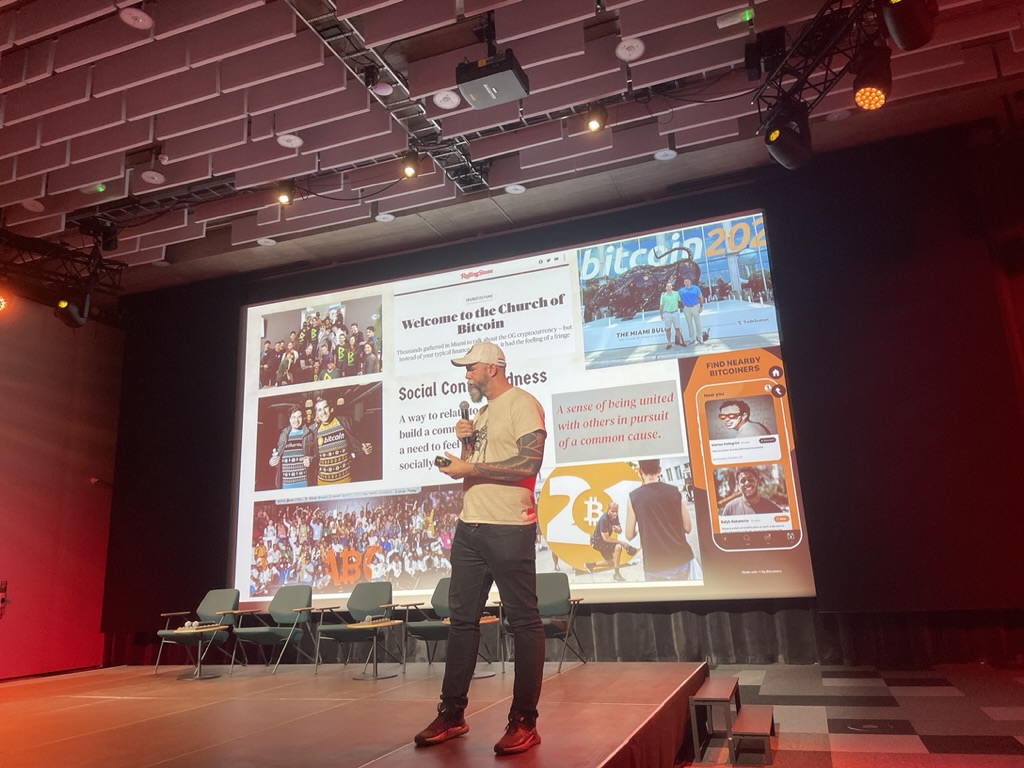 Rigel Walshe compared and contrasted Bitcoin and religion.
Related Posts
If Miami’s Bitcoin conference was akin to a rock festival, Honeybadger represented a dive bar, where a wide range of topics were open for discussion, from nuclear conflict to Miniscript, from human rights to hamster wheels. (Indeed, all these subjects were addressed during the talks.)
Moreover, unlike larger crypto conferences, Bitcoin’s price was rarely mentioned—except for one panel on the first day. The discussion titled “When 100K?” featured Blockstream CEO Adam Back reiterating his assertion that Bitcoin would reach new highs before the Bitcoin halving in April 2024. The panel eventually shifted to a conversation about macroeconomics.
Lightning strikes Riga
As is typical with Bitcoin conferences, the side events and offstage activities captured significant attention. The team from Nostr, a decentralized protocol proposing an alternative to X (formerly Twitter), hosted events and led discussions.
A party organized and funded through Nostr Zaps — Bitcoin tips over Nostr — concluded the weekend. All funds to support the open bar, purchase pizzas, and sponsor a live performance with rented instruments were crowdfunded and sent over the Lightning Network in the days leading up to the conference.
Derek Ross, a Nostr developer, explained that “purple-pilling” complements “orange-pilling” in another talk. Understanding Bitcoin is referred to as being orange-pilled, while grasping Nostr is termed purple-pilled.
 Francis introduces Chain Duel.
Additionally, Portuguese programmer Francis organized a Chain Duel tournament. Chain Duel is a social Bitcoin game that merges elements of the classic 90s game Snake with satoshis, the smallest unit of Bitcoin. While the game appears straightforward, it is both addictive and competitive.
Participants registered for Chain Duel by sending satoshis to the in-game Lightning Network address with a payment note as their name. The tournament winner received a prize of 1,520,000 satoshis, valued at over $300.
Lightning-enabled transactions were a key feature throughout Honeybadger. All food trucks at the conference accepted Bitcoin and Bitcoin Lightning payments, and every merchant who spoke with Cointelegraph noted that paying with Lightning was quicker and easier than using card payments. Additionally, Lightning avoids the fees imposed by Mastercard and Visa.
In total, over 1.1 BTC ($27,600) was transacted via Lightning during the conference. BTCPay Server, the team responsible for the payment terminals, shared the statistics on social media.
 Honeybadger’s Lightning-enabled card racing against someone else’s NFC card at a coffee truck.
Basement Bar, a Latvian establishment in the city center, was bustling with Bitcoin enthusiasts eager to pay in satoshis. As a Bitcoin-friendly venue, it became the primary gathering spot over the weekend as patrons tapped, zapped, and scanned Bitcoin as their preferred payment method.
Indeed, the Bitcoin-critic meme “No one uses Lightning” was countered by the events, discussions, and activities at Baltic Honeybadger. The term “Lightning” was mentioned in eight of the talks, with discussions covering topics from Breez CEO Roy Sheinfeld explaining offline payments to insights on smart contracts on Lightning and Synota CEO Austin Mitchell stating that “Lightning is transactive energy.”
Sam Wouters, a Bitcoin research analyst at River, summarized Lightning’s role within the Bitcoin network:
“Lightning is likely part of the scaling puzzle. Lightning bought us time.”
Overall, the Baltic Honeybadger conference shifted the focus from headline-grabbing announcements typical of larger Bitcoin conferences to in-depth discussions and debates. Privacy was prioritized over photo opportunities, while Lightning payments surpassed fiat transactions.
Baltic Honeybadger served as a rallying cry for cypherpunk ideals. It is often overlooked that Satoshi Nakamoto, the creator of Bitcoin, was also a cypherpunk. They chose to remain anonymous and vanished as Bitcoin entered the mainstream.
