Disclaimer: Information found on CryptoreNews is those of writers quoted. It does not represent the opinions of CryptoreNews on whether to sell, buy or hold any investments. You are advised to conduct your own research before making any investment decisions. Use provided information at your own risk.
CryptoreNews covers fintech, blockchain and Bitcoin bringing you the latest crypto news and analyses on the future of money.

Oracle surges 11% in premarket trading amid AI demand alleviating concerns over ‘SaaS apocalypse’

Growth in cloud and AI sectors exceeded expectations as investor anxiety regarding Oracle’s debt strategy and software disruptions diminished.
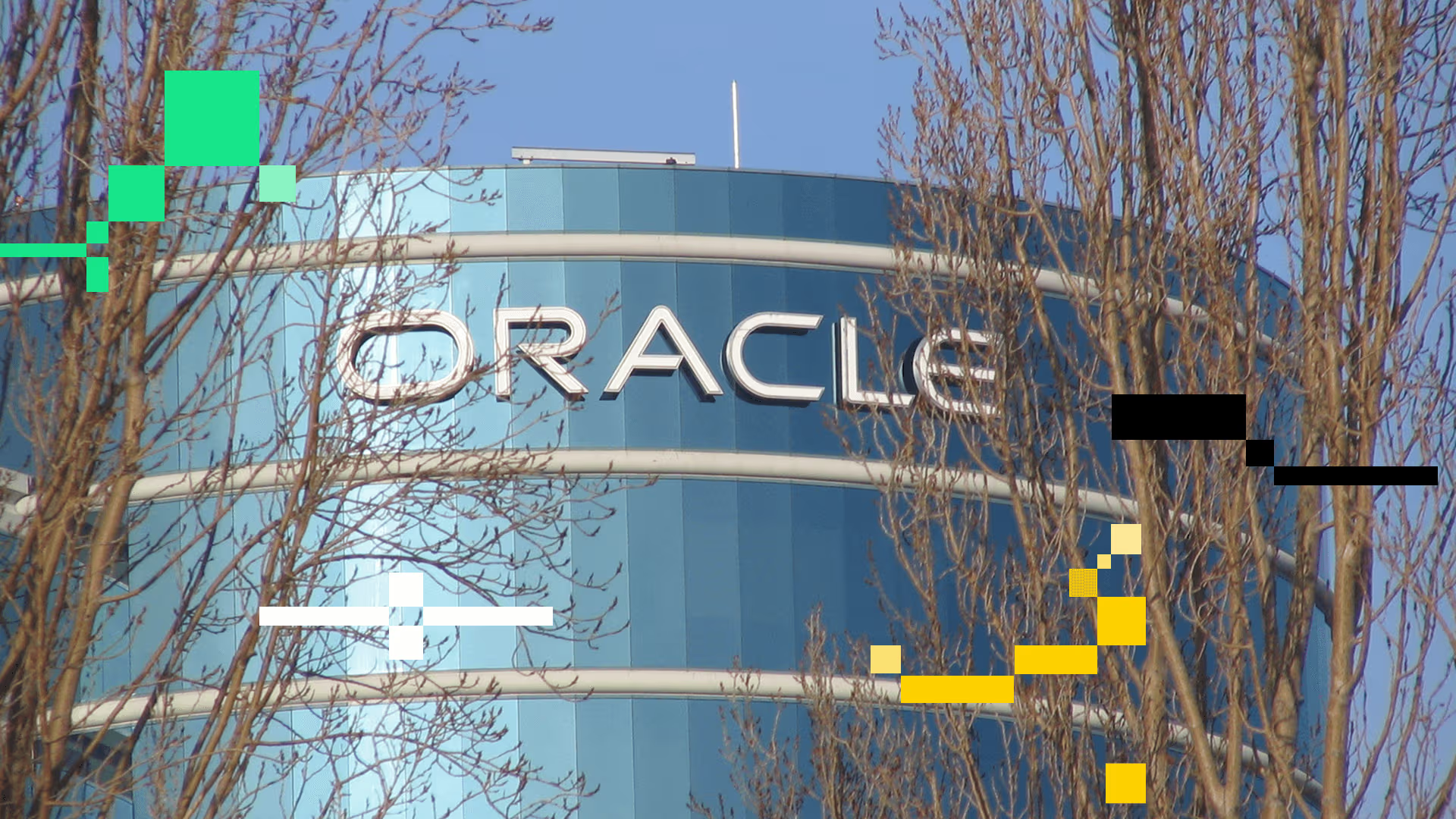 Oracle shares surged (Peter Kaminski / CC BY 2.0)
Key points to consider:
- Oracle announced revenue of $17.19 billion, reflecting an 18% increase and surpassing expectations, with cloud revenue growing by 41%.
- The surge in Oracle’s stock propelled the IGV software ETF up approximately 1% in premarket trading, while bitcoin experienced a decline of about 0.5% prior to CPI data release, indicating a potential weakening of the correlation between software and cryptocurrency.
- Oracle’s leadership alleviated concerns regarding a “SaaS apocalypse,” claiming that generative AI will enhance software platforms by integrating AI agents into essential applications.
On Wednesday, Oracle (ORCL) shares rose by 11% in premarket trading following the company’s report of better-than-anticipated results and their rebuttal to worries about an imminent “SaaS apocalypse,” which helped to reduce investor apprehensions about both AI disruption and recent debt increases.
Related Posts
Revenue increased by 18% to $17.19 billion, exceeding the $16.92 billion forecasted by analysts, as reported by the Wall Street Journal. Cloud revenue grew by 41%, and sales from cloud infrastructure surged by 81%, underscoring robust demand related to artificial intelligence.
During the earnings call, management addressed concerns that generative AI might threaten traditional software companies. Executives contended that customers prefer AI to be integrated directly into critical systems rather than utilizing separate tools.
The financial results also helped to allay fears regarding Oracle’s financial structure after the firm announced its intention to raise as much as $50 billion in debt and equity for AI infrastructure development. Oracle stated that it has already secured $30 billion through investment-grade bonds and mandatory convertible preferred stock, with demand significantly exceeding supply.
Oracle’s upward movement also positively impacted the iShares Expanded Tech-Software Sector ETF (IGV), which rose about 1% in premarket trading, where Oracle ranks as the fourth-largest holding. This performance contrasted with bitcoin, which fell approximately 0.5% in anticipation of U.S. CPI data, suggesting a potential easing of the strong correlation between software stocks and bitcoin.
Earlier this year, both assets moved closely in tandem. The IGV experienced a decline of about 34% from its peak in October, coinciding with a nearly 50% correction in bitcoin as both software stocks and cryptocurrency faced simultaneous sell-offs.
