Disclaimer: Information found on CryptoreNews is those of writers quoted. It does not represent the opinions of CryptoreNews on whether to sell, buy or hold any investments. You are advised to conduct your own research before making any investment decisions. Use provided information at your own risk.
CryptoreNews covers fintech, blockchain and Bitcoin bringing you the latest crypto news and analyses on the future of money.

Negative outlook intensifies in cryptocurrency as fluctuations and risk management increase.

Bitcoin’s short-lived surge dissipated in the wake of an oil price spike driven by conflict, increasing volatility, and a decrease in futures interest, indicating heightened caution across crypto markets.
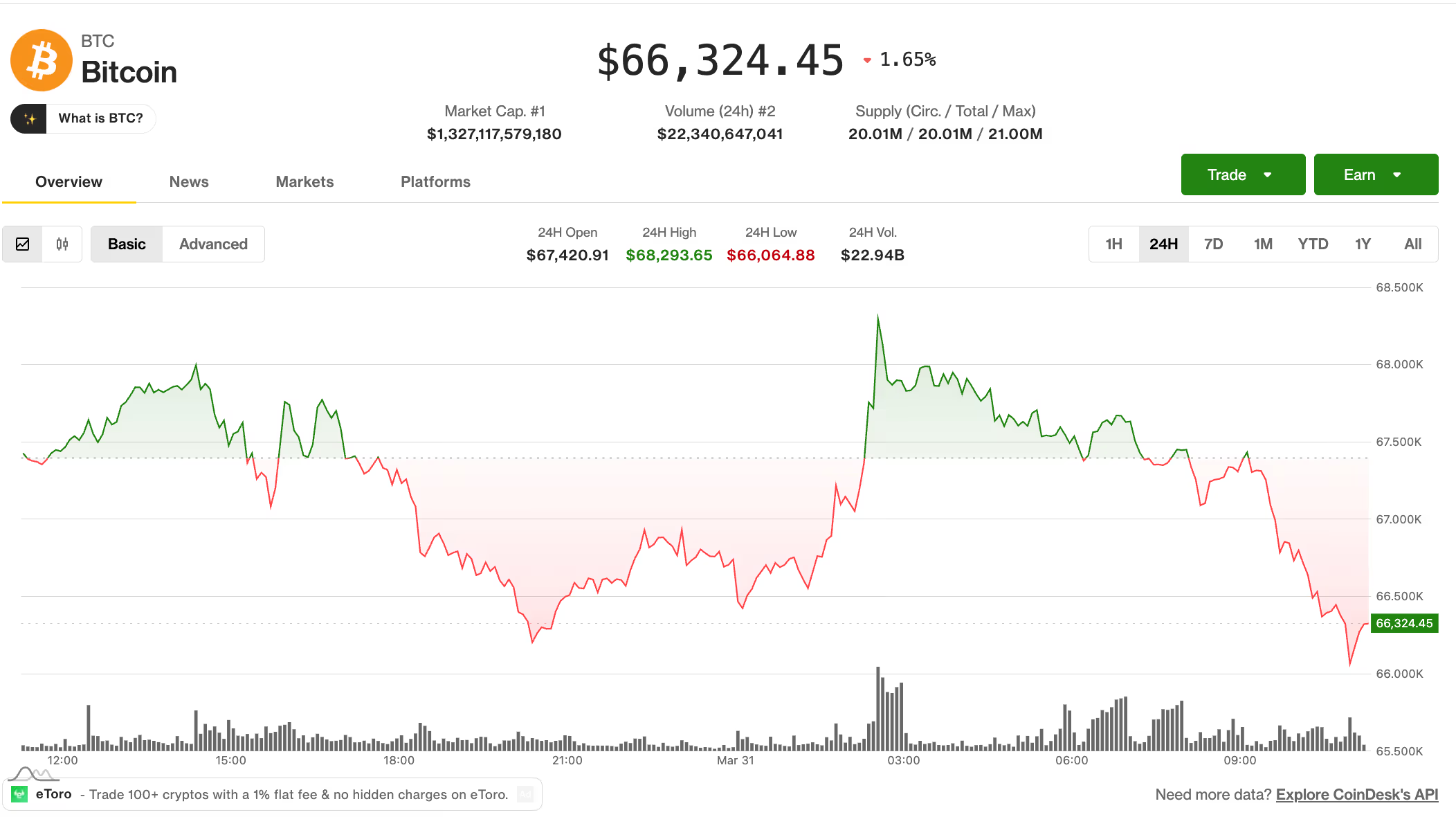 BTC/USD (CoinDesk Data)
Key points:
- BTC surged to $68,300 before retreating to $66,500, with implied volatility (as indicated by the BVIV index) rising to 58%, suggesting further turbulence ahead.
- Futures open interest has decreased by over 18% this year, with significant declines across major tokens indicating capital outflows.
- Options markets reveal strong interest in downside protection, with the $60,000 BTC put being the most congested trade.
The cryptocurrency market displayed signs of instability on Tuesday, as bitcoin reached $68,300 shortly after midnight UTC before falling back to $66,500.
The initial surge was fueled by reports of U.S. President Donald Trump expressing a willingness to conclude the conflict in Iran without reopening the Strait of Hormuz. However, this optimism diminished after Israeli officials indicated readiness to “continue operations for weeks to come.”
Related Posts
The conflict, now in its 32nd day, has driven energy prices higher, with Brent crude priced around $107 per barrel, raising inflation concerns and fostering a risk-averse sentiment.
While the cryptocurrency market maintained relative resilience throughout March, it is beginning to exhibit signs of frailty after bitcoin failed to surpass $75,000 on two separate occasions.
U.S. stocks diverged from the cryptocurrency market on Tuesday, with Nasdaq 100 and S&P 500 index futures both gaining 0.8%.
Derivatives Market Activity
- Cumulative industry-wide crypto futures open interest (OI) fell by over 3% to $103.79 billion within 24 hours, continuing the risk-off trends noted throughout the first quarter. The total has decreased by over 18% since the beginning of the year.
- OI has contracted across BTC, ETH, SOL, and XRP futures, indicating capital outflows from the leading cryptocurrencies. Other tokens, such as BCH, AVAX, and LTC, have experienced double-digit percentage declines in open interest.
- Privacy-centric ZEC stands out, as its futures market exhibits bullish behavior. The token’s OI increased by more than 3% alongside slightly positive funding rates and cumulative volume delta. This combination indicates a rising demand for bullish exposure.
- Conversely, DOGE has the most unfavorable 24-hour cumulative volume delta among major tokens.
- Bitcoin’s 30-day implied volatility index, BVIV, has risen to 58% from 54% late last week, surpassing its 50-day average to suggest potential for increased price fluctuations.
- Ether’s volatility index has remained stable between 70% and 80% for the seventh consecutive day.
- On Deribit, bitcoin risk reversals with a June expiration reflect a strong preference for put options. These downside hedges are trading at an 8 to 10 volatility-point premium over calls. Meanwhile, bearish sentiment in ether is relatively contained.
- The $60,000 bitcoin put continues to be the most favored position, boasting a total open interest of $1.50 billion.
Token Insights
- The altcoin market faced greater losses than bitcoin on Tuesday, with tokens like NEO, HBAR, and PUMP declining between 2.6% and 3.3% since midnight UTC.
- A select few tokens are defying this trend, including BCH and AI-related currencies, which are performing positively.
- CoinMarketCap’s “Altcoin Season” indicator currently shows a score of 51/100, reflecting relative strength over the past few weeks despite Tuesday’s downturn.
- However, the next significant movement will still depend on bitcoin’s ability to either break above $75,000 or drop below $62,000. Altcoins generally perform well during bitcoin consolidation but tend to lose value during major fluctuations.
