Disclaimer: Information found on CryptoreNews is those of writers quoted. It does not represent the opinions of CryptoreNews on whether to sell, buy or hold any investments. You are advised to conduct your own research before making any investment decisions. Use provided information at your own risk.
CryptoreNews covers fintech, blockchain and Bitcoin bringing you the latest crypto news and analyses on the future of money.

Market fluctuations reach peak not seen in a year, potentially indicating a low point for bitcoin.

Bitcoin has its own volatility index (BVIV), which surged in early February, indicating that the cryptocurrency markets might have already undergone their panic stage.
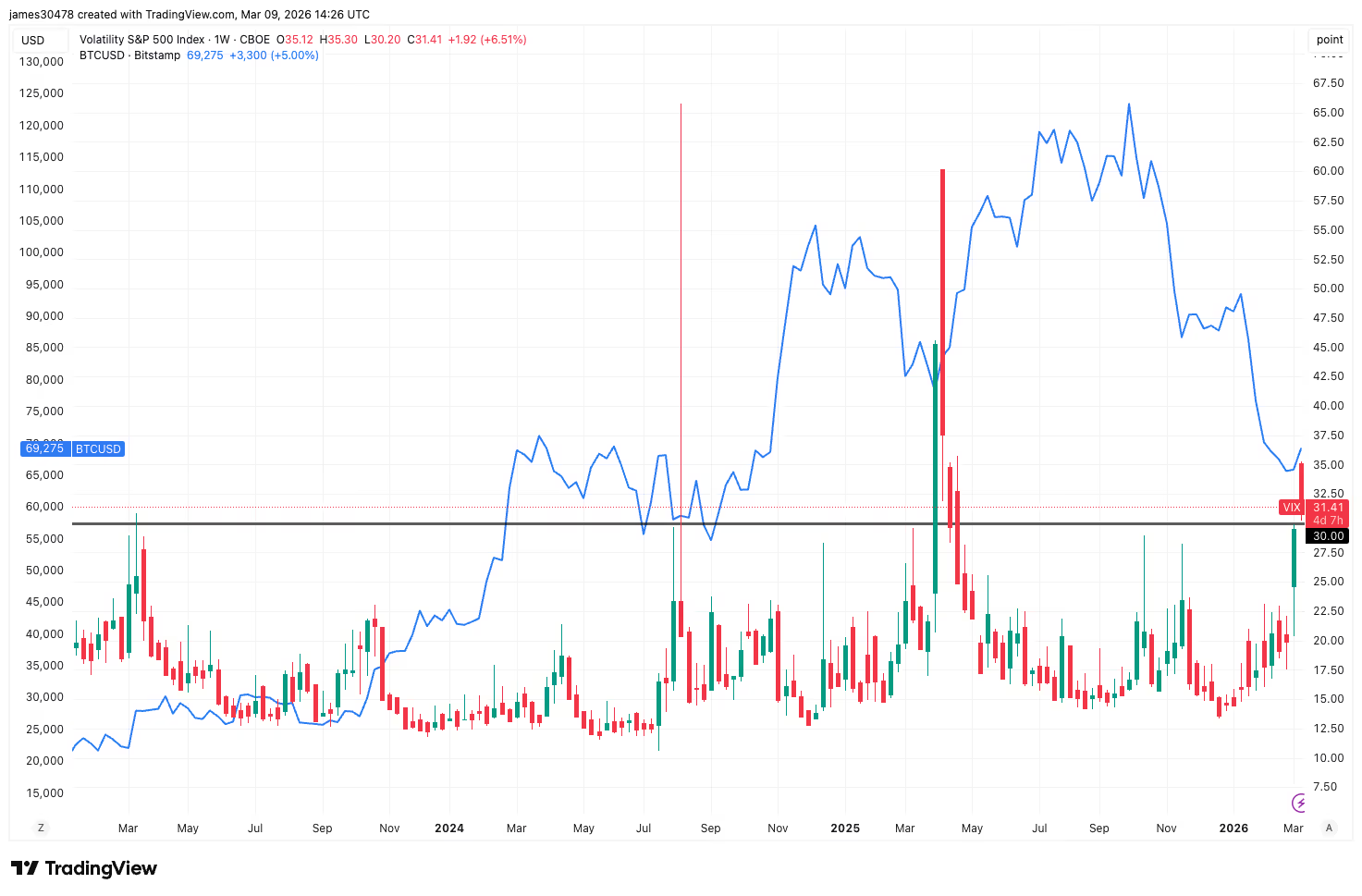 BTC vs VIX (TradingView)
Key points:
- The VIX, which serves as an indicator of stock market volatility — commonly referred to as Wall Street’s fear gauge — rose above 35, a threshold that has historically coincided with bitcoin market lows.
- Bitcoin’s volatility index, BVIV, indicates that the cryptocurrency market may have already undergone its panic phase in February.
The VIX and bitcoin usually exhibit inverse movements, with sharp increases in the volatility index often aligning with local bottoms for bitcoin.
Related Posts
The CBOE Volatility Index (VIX), measuring anticipated volatility in the S&P 500 based on options pricing and widely regarded as Wall Street’s “fear gauge,” climbed to its peak in almost a year, surpassing 35. This increase indicates rising panic in traditional markets.
This movement occurred as global markets responded to a rise in oil prices. WTI crude briefly soared to about $120 when futures opened on Sunday but later retreated toward $100. This volatility has impacted traditional safe havens and equities, resulting in declines in both U.S. stocks and gold.
In contrast, Bitcoin has deviated from this trend. The leading cryptocurrency has risen approximately 5% in the past 24 hours, trading above $69,000.
Historically, bitcoin tends to reach its lows when the VIX experiences spikes. During the tariff-induced market disruption in April 2025, bitcoin found support around $75,000 as the VIX surged to about 60. In August 2024, the unwinding of the yen carry trade drove the VIX above 64, while bitcoin fell to approximately $49,000. A similar trend was observed during the Silicon Valley Bank crisis in March 2023, when the VIX temporarily exceeded 30 and bitcoin reached a local low near $20,000.
Bitcoin’s volatility index indicates that the cryptocurrency market has already faced its panic phase. The Bitcoin Volmex Implied Volatility Index (BVIV), which assesses expected price fluctuations derived from bitcoin options pricing, soared above 96 in early February when bitcoin momentarily dropped to $60,000, marking the highest level since the yen carry trade volatility in August 2024. The BVIV has now settled just above 60.
This divergence may suggest that the cryptocurrency markets anticipated the stress currently affecting traditional finance, although a VIX near 30 implies that volatility in traditional markets may not yet be resolved.
