Disclaimer: Information found on CryptoreNews is those of writers quoted. It does not represent the opinions of CryptoreNews on whether to sell, buy or hold any investments. You are advised to conduct your own research before making any investment decisions. Use provided information at your own risk.
CryptoreNews covers fintech, blockchain and Bitcoin bringing you the latest crypto news and analyses on the future of money.

Kraken’s unexpected Federal Reserve victory could signal an influx of cryptocurrency companies with limited access to the Fed.

The Kansas City Fed may refer to this as "Tier 3" access, yet Kraken’s entry into the esteemed Fed payments system has stirred concerns among bankers while boosting optimism within the crypto sector.
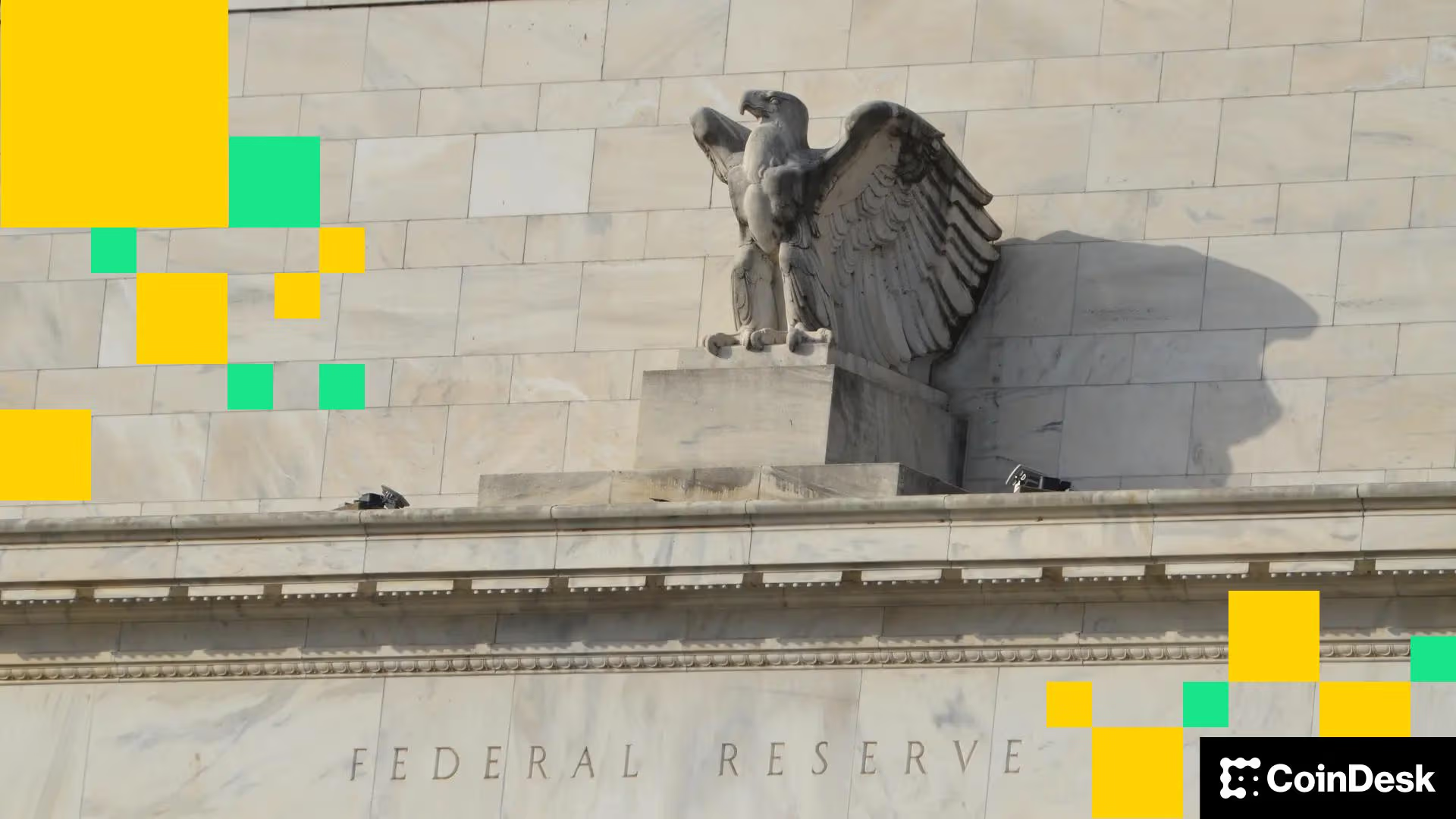 Kraken’s new Federal Reserve account has the potential to pave the way for additional crypto companies. (Jesse Hamilton/CoinDesk)
Related Posts
Key points:
- Analysts believe Kraken could be the first of several firms to gain direct access to the Federal Reserve payments system following this week’s sanction of the crypto exchange‘s limited master account.
- This approval came from the regional Fed bank in Kansas City, creating some ambiguity regarding the relationship of Kraken’s new status with the ongoing initiatives by the national Federal Reserve Board to develop a new "skinny" master account framework.
The crypto sector continues to dismantle barriers to the core U.S. financial system, and the authorization of a limited Federal Reserve account for digital assets exchange Kraken represents yet another significant step that analysts anticipate could initiate a trend.
The entry of crypto into the Fed payment system — albeit provisional and limited — has unsettled traditional banks and created confusion regarding the Fed’s current efforts to establish guidelines for how crypto firms can obtain limited "skinny" master accounts. However, Kraken’s Co-CEO Arjun Sethi remarked that this development signifies "what it looks like when crypto infrastructure matures into core financial infrastructure."
According to the Federal Reserve Bank of Kansas City, Kraken’s Wyoming-chartered banking subsidiary, Payward Financial, has been granted access to a "limited purpose" account as a "Tier 3" participant for a period of one year.
"We view this as the first of many Federal Reserve approvals for crypto entities to secure master accounts, which would provide them direct access to the central bank payment systems such as Fed Wire," stated Jaret Sieburg, a Washington policy analyst at TD Cowen, in a client communication on Thursday. "Access to master accounts for crypto entities was unavoidable under President [Donald] Trump, given his backing of the crypto sector. We anticipate further announcements in the upcoming months."
Ian Katz, an analyst monitoring federal financial policies at Capital Alpha in Washington, shared a similar view.
"The Fed’s decision could potentially facilitate access for other crypto firms including Circle, Anchorage, and Custodia, a Wyoming-based company that has previously attempted to sue the Fed for the right to secure a master account," he observed.
What does direct access to the Fed payments systems imply for Kraken? Possibly, according to Sethi: immediate "settlement between fiat and crypto, institutional-grade cash management integrated with digital asset custody, and programmable financial products developed within a fully regulated environment."
Traditional banking operators in the U.S. expressed dissatisfaction regarding the Kraken development — the latest challenge they have noted from the crypto industry.
"There are considerable risks associated with extending direct Fed account access to institutions that function outside the conventional banking regulatory framework," the Independent Community Bankers of America stated in a release. "The Fed should maintain restrictions on master account access to entities that fulfill the highest standards in the financial services sector."
However, former Kraken CEO and current chairman, Jesse Powell, welcomed the news.
"We’re the bankers now," the Kraken co-founder wrote on the social media platform X. "Saddle up."
Other crypto-related institutions have also pursued entry into the Fed payments system, including Anchorage Digital (which has sought a full master account, allowing for interest on reserves held with the Fed) and the recently recognized federally approved trust bank, Erebor Bank. The industry continues to advocate for the Fed’s initiative to create a new policy to replace the 2022 guidance that the Kansas City Kraken decision was based upon.
At the national level, the Federal Reserve board has begun drafting new policies for what are generally referred to as "skinny" master accounts for firms that do not require the full range of traditional master account services. However, this process is still in its infancy, and should regional Fed banks begin approving similar accounts in the interim, it could lead to uncertainties regarding the implications of the new policy once it is finalized.
"This action disregards public input that the Federal Reserve sought on this framework, and it was enacted without transparency regarding the approval process or the risk mitigation measures that have been established to address the significant risks it presents," stated Paige Pidano Paridon, co-head of regulatory affairs at the Bank Policy Institute.
The Federal Reserve board in Washington, where the central bank is located, referred requests for comment this week to Kansas City.
The regional Fed banks, of which there are twelve across the U.S., operate under their own priorities and management, which can result in inconsistent decisions on these matters. Thus, it remains unclear whether the geographical location of the Fed hub — such as Minneapolis for Anchorage Digital, and Cleveland for Erebor — will influence their decisions.
President Jeff Schmid of the Kansas City Fed stated that they will continue to collaborate with firms in the region "to help ensure that access to the payment system fosters a level competitive landscape and upholds the stability and resilience that have supported the Federal Reserve’s payment system offerings throughout its history.”
