Disclaimer: Information found on CryptoreNews is those of writers quoted. It does not represent the opinions of CryptoreNews on whether to sell, buy or hold any investments. You are advised to conduct your own research before making any investment decisions. Use provided information at your own risk.
CryptoreNews covers fintech, blockchain and Bitcoin bringing you the latest crypto news and analyses on the future of money.


Blockchain analysis has played a crucial role in assisting the United States Internal Revenue Service (IRS) in seizing approximately $10 billion worth of cryptocurrency since it commenced investigations into a wide range of crimes related to digital assets.
This significant point was highlighted by IRS Criminal Investigations (IRS-CI) Chief Jim Lee during an extensive, exclusive interview with Cointelegraph in Amsterdam. Lee was among various representatives from both public and private sectors exchanging knowledge and insights at the Links conference organized by blockchain analytics firm Chainalysis in the Netherlands.
Lee, along with a team from the IRS-CI, provided an insider’s perspective on how the enforcement agency has addressed the use of cryptocurrency and digital assets in numerous financial crimes that fall within its jurisdiction.
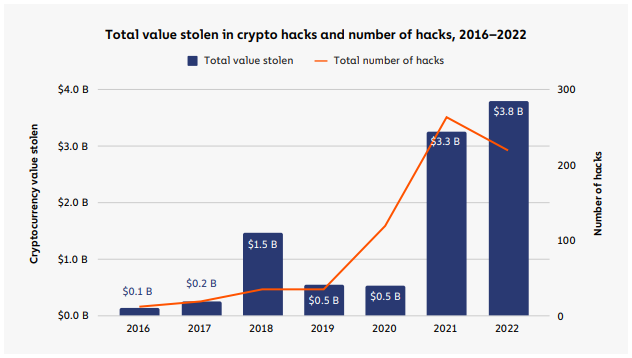 Hacks targeting major exchanges, Decentralized Finance protocols, and cross-chain bridges have resulted in a surge of stolen funds over the past two years. Source: Chainalysis 2023 Crypto Crime Report
Chief Lee has been a special agent with the IRS for 28 years and has led the unit since 2020. In the years preceding his leadership, the IRS-CI has encountered a growing number of criminal investigations involving digital assets, which have increasingly landed on the desks of its agents.
Related: IRS prepares for an increase in crypto cases in the upcoming tax season
The IRS’ engagement with the cryptocurrency sector began earnestly in the early 2010s as Bitcoin (BTC) started to integrate into the monetary system as an alternative, decentralized method of holding and transferring value.
As Lee noted, the IRS’ initiatives to establish infrastructure to combat identity theft around 2011 laid the groundwork for its efforts to investigate crimes related to digital currency:
“When cryptocurrency came into the picture, we were already thinking about digital crimes and money trails using Web2.”
However, the agency’s capacity to comprehend, investigate, and ultimately prosecute and seize cryptocurrencies and digital assets became reliant on tools created by private entities.
The IRS-CI is one of numerous law enforcement and government agencies that utilize a specific suite of blockchain analysis tools developed by Chainalysis. Founded in 2014, the company has become a cornerstone for blockchain-based investigations globally over the past decade.
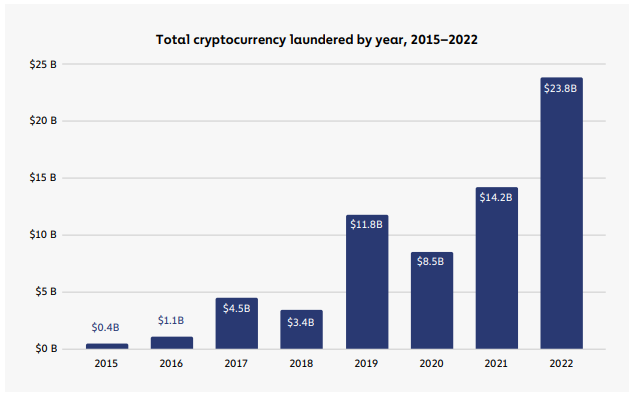 Data from Chainalysis’ 2023 Crypto Crime report underscores the rise in the value of money laundering via cryptocurrencies over the past seven years. Source: Chainalysis 2023 Crypto Crime Report
Related Posts
For the IRS, the collaboration with Chainalysis has proven essential, with Lee emphasizing that his unit’s endeavors to investigate crypto-related crimes would be nearly ‘impossible’ without the infrastructure and tools currently available. The public-private partnership with Chainalysis is centered on investing in technology that aids in tracing cryptocurrency and analyzing data from public blockchains to darknet marketplaces.
“Think about all the data that I have working for the IRS. It may not be the most, but it’s the richest. Now I can take all this other data we have and then match it up against the records that I have. I mean, it’s just incredibly powerful, but it takes time, energy and money.”
Despite having access to these tools, Lee acknowledges that investigating crimes involving digital assets is a challenging task. Investment in personnel, data, and technology has been crucial in its efforts to combat crypto-related crime:
“When we’re talking about the crypto space, the way I look at it is data and technology combined. It takes significant investment because you can’t just get those results. You can’t just seize $10 billion in value.”
Although the market value of the seized cryptocurrency in the IRS’ possession has decreased from an estimated $10 billion at the time of seizure, the agency still faces the challenge of securely holding billions of dollars in digital assets.
This presents a complex issue for the IRS-CI Chief, who points out straightforward considerations for cryptocurrency custody that become increasingly stressful when managing substantial amounts of digitized value:
“Where do I store it? On chain or off chain? Do I keep it in my office? Do I lock up the seed phrases elsewhere? We’re talking about a lot of money.”
The IRS-CI investigations have yielded positive results, with the department often being the largest contributor to the U.S. Treasury asset forfeiture fund in recent years. The seizure of $3.6 billion linked to the 2016 Bitfinex hack exemplifies the efforts of Lee’s unit to recover stolen funds.
Related: IRS reminds taxpayers of crypto income reporting ahead of 2022 filing
Another important aspect of the IRS CI’s mission is to share knowledge and skills in utilizing tools like Chainalysis Reactor with local and international law enforcement, primarily aimed at enhancing financial crime investigations.
Part of Lee’s trip to Europe in May 2023 involved training over 60 different Ukrainian officials from various law enforcement agencies. The IRS-CI also provided Chainalysis Reactor licenses to Ukrainian law enforcement, which will assist in blockchain and cryptocurrency tracing amid the ongoing Russian-Ukrainian conflict.
Magazine: Best and worst countries for crypto taxes — plus crypto tax tips
