Disclaimer: Information found on CryptoreNews is those of writers quoted. It does not represent the opinions of CryptoreNews on whether to sell, buy or hold any investments. You are advised to conduct your own research before making any investment decisions. Use provided information at your own risk.
CryptoreNews covers fintech, blockchain and Bitcoin bringing you the latest crypto news and analyses on the future of money.


Glassnode data indicates distribution among cohorts as BTC dips below $67,000, with whales generally remaining neutral.
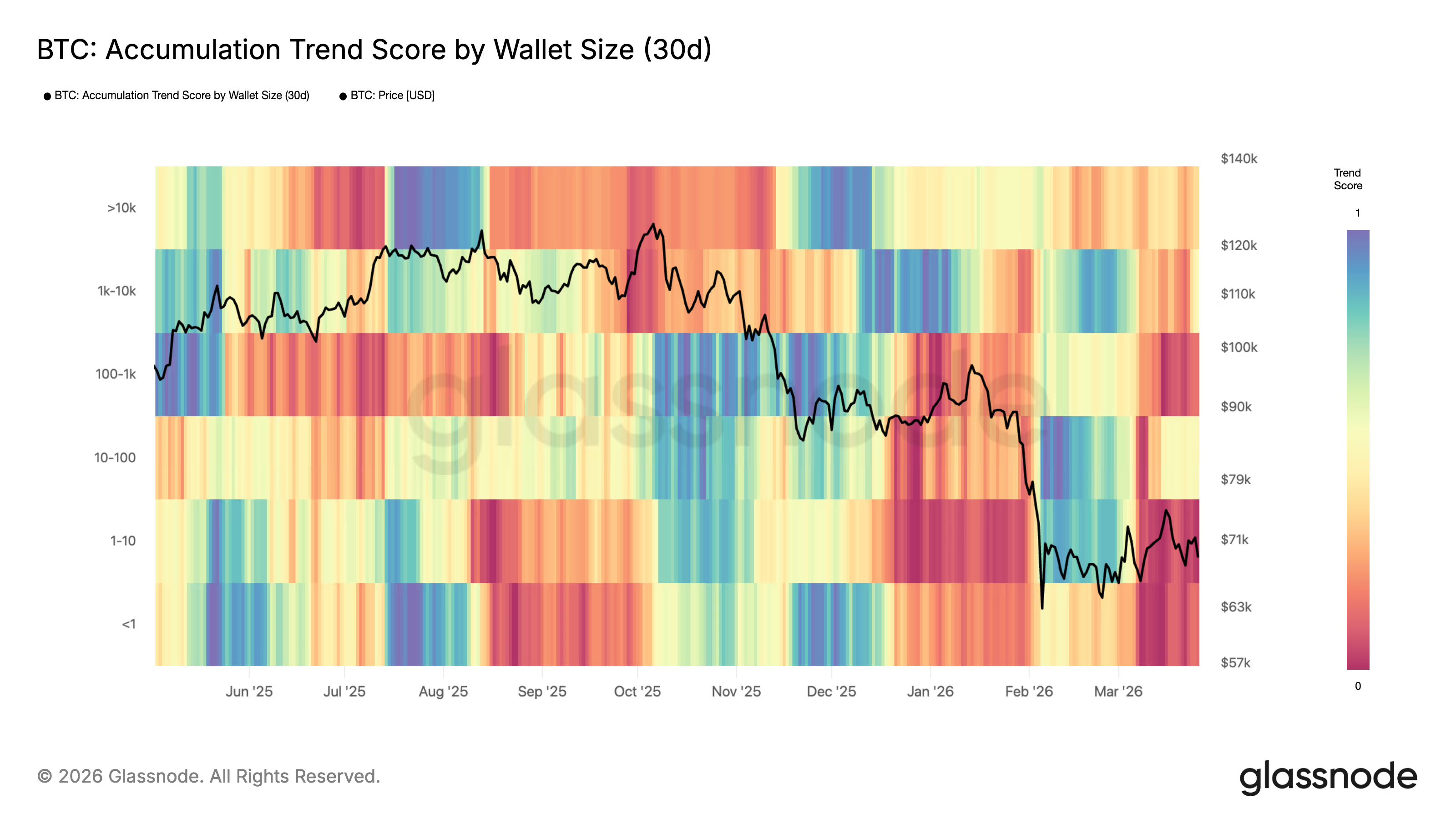 Accumulation Trend Score by Cohort (Glassnode)
Key points:
- Retail wallets holding under 10 BTC are spearheading the sell-off, with accumulation scores close to zero, reflecting aggressive distribution.
- Large holders, particularly whales, are primarily on the sidelines, exhibiting minimal selling activity and showing little indication of renewed accumulation.
Related Posts
Glassnode’s Accumulation Trend Score, categorized by cohort, indicates widespread selling driven by retail participants as bitcoin declines below $67,000.
The 30-day Accumulation Trend Score, segmented by wallet cohorts, assesses the relative actions of entities accumulating or distributing coins on-chain. It integrates both the size of each cohort’s holdings and their net balance shift over the past month. A score nearing 1 denotes accumulation, especially by larger entities, while a score near 0 signifies distribution or lack of accumulation.
At present, the most significant selling pressure is coming from retail participants possessing less than 10 BTC. Wallets with less than 1 BTC have a score of 0.11, while those in the 1 to 10 BTC range score even lower at 0.05, indicating aggressive distribution.
As we move up the scale, selling pressure diminishes. Whales holding between 1,000 and 10,000 BTC are neutral with a score around 0.5, indicating neither significant accumulation nor distribution, as they await further price developments.
The largest group, those with over 10,000 BTC, are displaying slight distribution but not at the levels observed late last year when Bitcoin was priced above $90,000. Additionally, entities holding between 100 and 1,000 BTC are also experiencing notable distribution.
Since early February, accumulation has been limited, particularly when bitcoin briefly approached $60,000. The current trend implies that retail investors are capitulating, while larger market players remain inactive, observing rather than actively purchasing.
