Disclaimer: Information found on CryptoreNews is those of writers quoted. It does not represent the opinions of CryptoreNews on whether to sell, buy or hold any investments. You are advised to conduct your own research before making any investment decisions. Use provided information at your own risk.
CryptoreNews covers fintech, blockchain and Bitcoin bringing you the latest crypto news and analyses on the future of money.


Research indicates that merely 8% to 10% of the global Bitcoin hashrate operates within power markets sensitive to oil, implying that geopolitical disruptions may influence BTC prices more significantly than mining expenses.
 How does oil at $100 impact Bitcoin network (Maria Lupan/Unsplash)
What to know:
- Luxor estimates that merely 8 to 10 percent of the global Bitcoin computing power is situated in electricity markets tied to crude prices, particularly in Gulf nations like the UAE and Oman.
- Luxor contends that geopolitical disturbances causing oil prices to exceed $100 are more likely to influence mining through Bitcoin’s valuation rather than electricity expenses.
As oil prices climb beyond $100 amidst escalating tensions in the Middle East, the concern for the Bitcoin network and miners shifts from whether their energy costs will increase to whether Bitcoin’s value will decline.
Research conducted by bitcoin mining software and services firm Luxor’s Hashrate Index suggests that the immediate impact of oil price fluctuations on mining costs is expected to be minimal, while the wider macroeconomic effects could have a heavier impact on the sector.
Nonetheless, the repercussions of rising oil prices are not nonexistent for the Bitcoin network.
Luxor estimates that around 8 to 10 percent of the global Bitcoin hashrate operates in electricity markets where prices are closely connected to crude oil. These operations are predominantly found in Gulf states like the United Arab Emirates and Oman, with smaller contributions from Iran, Kuwait, Qatar, and Libya.
“The truly oil-exposed nations” are the Gulf states, Luxor noted in its research report, mentioning that the UAE and Oman together account for approximately 6% of the network’s computing power or hashrate.
“These grids primarily rely on natural gas derived from oil production, with electricity pricing that correlates more closely with crude than in the US or Russia,” the report stated.
Related Posts
Additionally, Iran is estimated to contribute another 0.8%, while other smaller contributors like Kuwait, Qatar, and Libya bring the total crude-sensitive hashrate exposure to about 8–10% of the network.
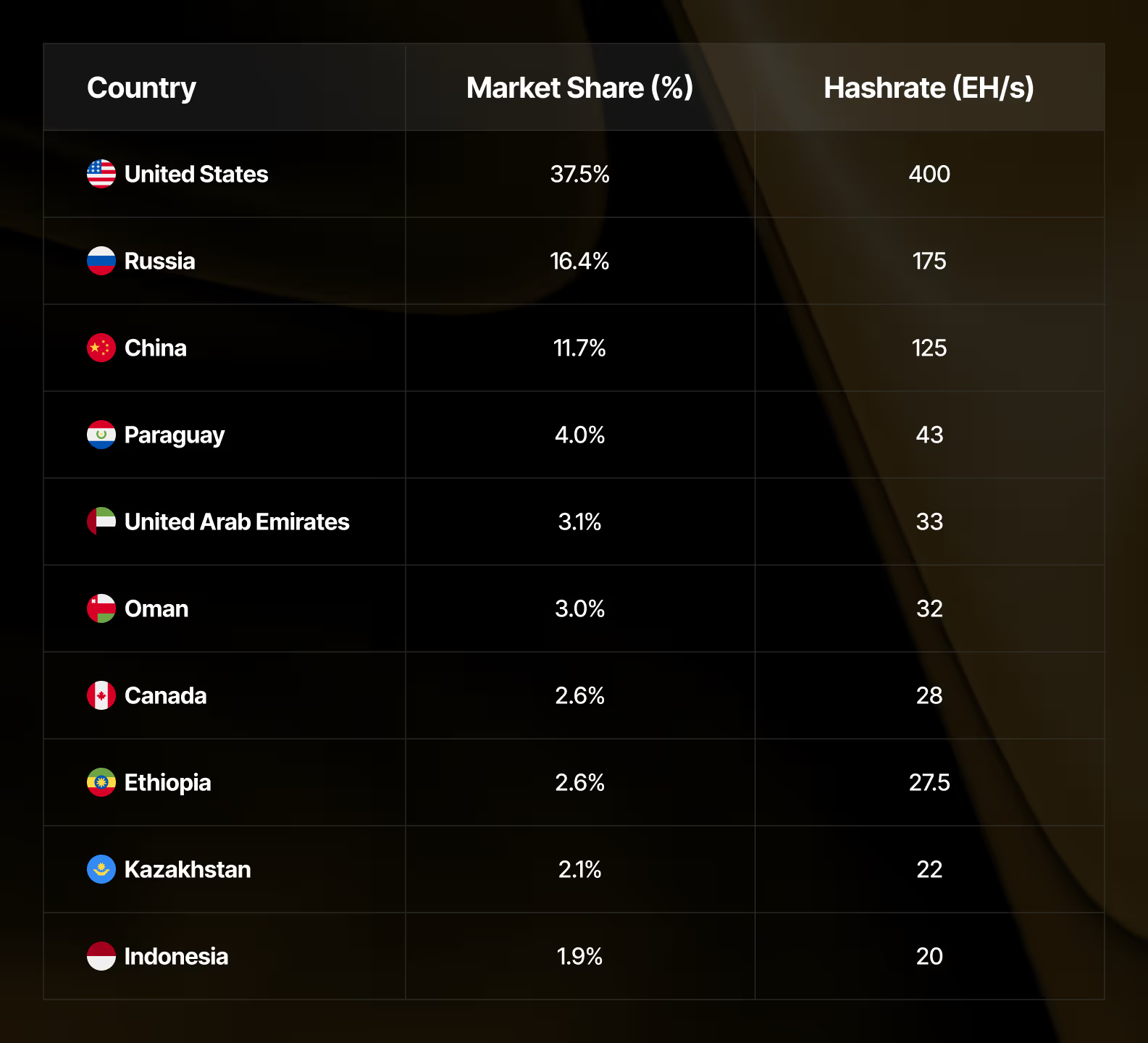 Top countries powering the Bitcoin network in 1Q (Hashrate Index)
Approximately 90% of the network operates in areas where electricity costs are determined by natural gas, coal, hydroelectric, or nuclear energy, indicating that fluctuations in crude oil prices have minimal direct effects on mining expenses.
Impact on mining
What implications does this hold for bitcoin miners, who operate energy-intensive equipment to maintain the network and verify transactions?
Luxor suggests that even if oil prices persist above $100 per barrel, the impact on mining economics due to increased electricity costs would likely be confined to a minor segment of the network. Energy is the most significant input cost for Bitcoin mining.
Rather, the greater concern for miners rests in how geopolitical events influence Bitcoin’s valuation. Luxor states that periods of macroeconomic stress typically lead to risk-averse behavior in financial markets, which can exert pressure on volatile assets like Bitcoin.
Recent statistics referenced by the firm indicate that hashprice, a metric of miner profitability, dropped to an unprecedented low of $27.89 per petahash per second per day in February, primarily driven by a 23.8% decline in Bitcoin’s price during that same timeframe.
For miners, Luxor concludes that profitability is significantly more responsive to variations in Bitcoin’s price than to changes in electricity costs.
Read more: Bitcoin hashrate drops 12% in worst drawdown since China mining ban: CryptoQuant
