Disclaimer: Information found on CryptoreNews is those of writers quoted. It does not represent the opinions of CryptoreNews on whether to sell, buy or hold any investments. You are advised to conduct your own research before making any investment decisions. Use provided information at your own risk.
CryptoreNews covers fintech, blockchain and Bitcoin bringing you the latest crypto news and analyses on the future of money.

How this week’s decline in Korean stocks may have contributed to the rise in cryptocurrency values

Korea’s tech-centric Kospi has dropped 20% over the past two trading sessions, potentially driving the country’s swift profit-seeking traders back towards cryptocurrency.
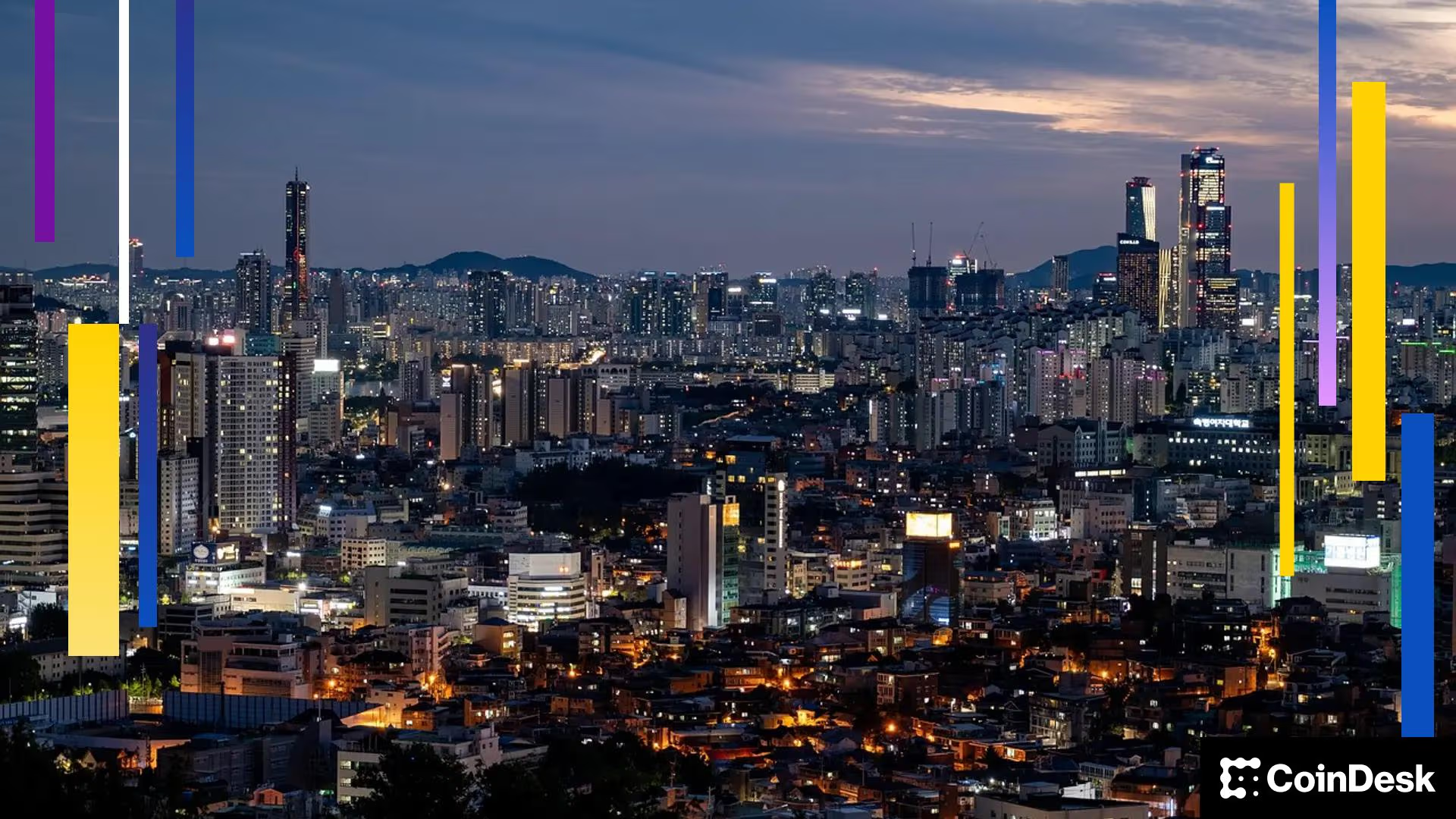 The decline in stocks in Seoul may have contributed to the rise in crypto prices (csk/Pixabay, modified by CoinDesk)
Key points:
- Bitcoin’s rise above $73,000 on Wednesday came after a 20% drop in the South Korean stock market over the previous two days.
- This decline follows a significant retail-driven surge that had elevated the Kospi by nearly 180% since April 2025.
- The so-called Kimchi premium is currently around 1%, indicating an uptick in crypto trading activity, but demand has not yet reached speculative highs.
This week, South Korea’s stock market experienced one of its swiftest declines on record, with the Kospi decreasing by approximately 20% in just two trading days, as geopolitical tensions temporarily disrupted what could be characterized as a speculative bubble in popular AI-linked stocks.
The rapid downturn followed months of intense buying from retail investors, which had propelled the Kospi—led by Samsung and SK Hynix—upward by nearly 180% over a span of about 10 months.
The timing has attracted attention to the activities in Korea’s crypto markets, which have begun to see an increase in trading volumes once more.
Related Posts
South Korea remains one of the few markets where retail traders are significantly involved in both equity and digital asset markets. Analysts have noted that local traders frequently switch between speculative markets, rather than completely exiting risk assets.
In November, a CoinDesk analysis referred to the phenomenon as the “Great Korean Pivot,” highlighting that trading volumes on domestic crypto exchanges had declined as retail traders shifted to technology stocks associated with artificial intelligence.
However, that equity rally has now either stalled or reversed.
When one market slows down, South Korean traders often redirect their focus to another. This trend may be benefiting crypto, as evidenced by bitcoin’s 7% increase in the last 24 hours, rising above $73,000. Other cryptocurrencies like Ether (ETH), Solana (SOL), and XRP (XRP) have also experienced similar gains.
Retail indicators remain moderate
Although crypto trading volumes have increased, the current level of activity does not yet reflect the intense speculative surges characteristic of prior Korean market cycles.
A significant indicator is the Kimchi premium, which assesses the disparity between bitcoin prices on Korean exchanges and those on global markets. When domestic demand surges, bitcoin typically trades at a notable premium in the Korean won markets.
Currently, that premium is relatively modest, with data from CryptoQuant showing the Korea Premium Index around 1%, significantly lower than the levels observed during previous retail-driven surges. Nonetheless, there is a slight increase in retail sentiment as the Kimchi premium had briefly dipped into negative territory in mid-January.
