Disclaimer: Information found on CryptoreNews is those of writers quoted. It does not represent the opinions of CryptoreNews on whether to sell, buy or hold any investments. You are advised to conduct your own research before making any investment decisions. Use provided information at your own risk.
CryptoreNews covers fintech, blockchain and Bitcoin bringing you the latest crypto news and analyses on the future of money.

Franklin Templeton supports Ondo in efforts to enable round-the-clock stock trading on the blockchain with its $1.7 trillion resources.

The initiative broadens access to U.S. markets as tokenized securities become increasingly popular among digital investors.
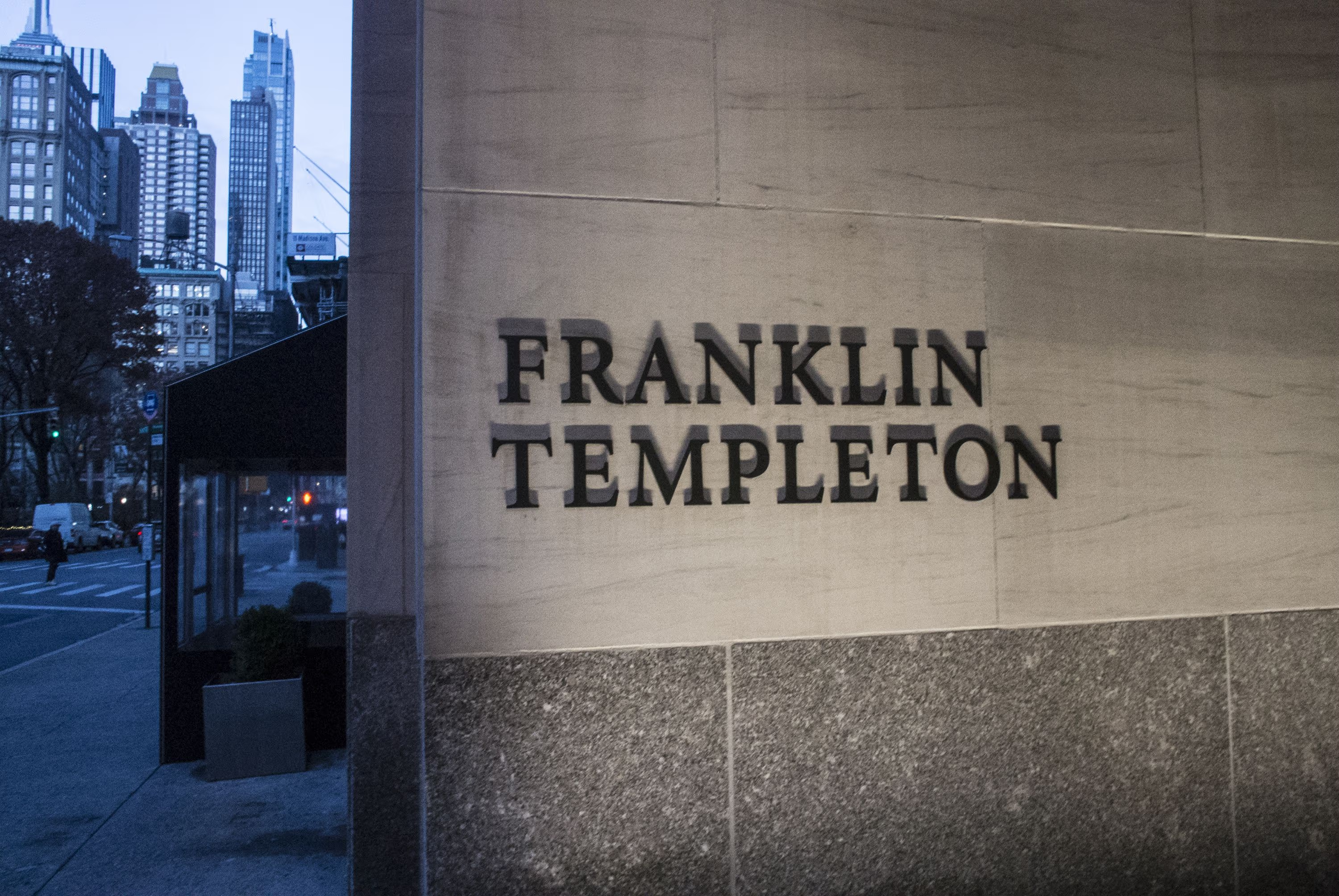 (Bill Tompkins/Getty Images)
Related Posts
Key points:
- Ondo Finance is collaborating with Franklin Templeton to provide tokenized versions of conventional investment products on the blockchain, aiming to connect traditional finance with cryptocurrency infrastructure.
- The partnership will utilize Ondo Global Markets to create tokens that are backed by real-world assets such as stocks and ETFs, while Franklin Templeton contributes products and guidance for crypto-native users.
- This move into tokenized securities underscores both the potential for expanded, continuous market access and the regulatory and competitive hurdles faced by banks, brokers, and asset managers.
Ondo Finance announced it will collaborate with Franklin Templeton to deliver tokenized versions of traditional investment offerings to blockchain users, marking a significant step towards integrating conventional finance with cryptocurrency infrastructure.
The initiative focuses on Ondo Global Markets, a platform that issues blockchain-based tokens supported by tangible assets like publicly listed stocks and exchange-traded funds. These tokens reflect the value of the underlying securities and can be stored in digital wallets, enabling users to gain exposure without the necessity of a brokerage account.
Franklin Templeton, which oversees approximately $1.7 trillion in assets, will provide investment products and assist in the implementation. The companies also intend to introduce educational programs aimed at crypto-native users who might lack familiarity with long-term portfolio strategies.
This partnership builds on a rising trend where major asset managers are experimenting with blockchain technologies to distribute products. Franklin Templeton has already created digital asset tools, while others, such as BlackRock, are investigating tokenized funds and on-chain settlement.
Launched in September 2025, Ondo Global Markets reports over $620 million in total value locked and more than $12 billion in trading volume across 60,000 users. The company states that interest is emerging from users seeking exposure to traditional markets without the complications of cross-border accounts, currency conversions, or trading hours.
The implications extend beyond mere convenience. Tokenization has the potential to transform how assets are transferred and who can access them. Traditional markets operate on limited hours and involve multiple intermediaries. In contrast, blockchain systems function continuously and facilitate direct ownership through wallets.
However, this transition will challenge the extent to which tokenized securities can operate within current regulations. Authorities have yet to fully clarify how these instruments should be managed when transferred across borders and wallets rather than through brokerages.
Competition is also intensifying. An increasing number of firms are now providing tokenized funds, and significant financial entities are contemplating how to maintain their roles as access gatekeepers. If blockchain-based distribution becomes prevalent, it could undermine the traditional advantages held by banks and brokers that manage access to markets.
For Ondo and Franklin Templeton, the expectation is that investors will favor a model that integrates familiar assets with innovative infrastructure.
