Disclaimer: Information found on CryptoreNews is those of writers quoted. It does not represent the opinions of CryptoreNews on whether to sell, buy or hold any investments. You are advised to conduct your own research before making any investment decisions. Use provided information at your own risk.
CryptoreNews covers fintech, blockchain and Bitcoin bringing you the latest crypto news and analyses on the future of money.


Former CFTC Chair Christopher Giancarlo states that banks require the stalled Digital Asset Market Clarity Act more than cryptocurrency companies.
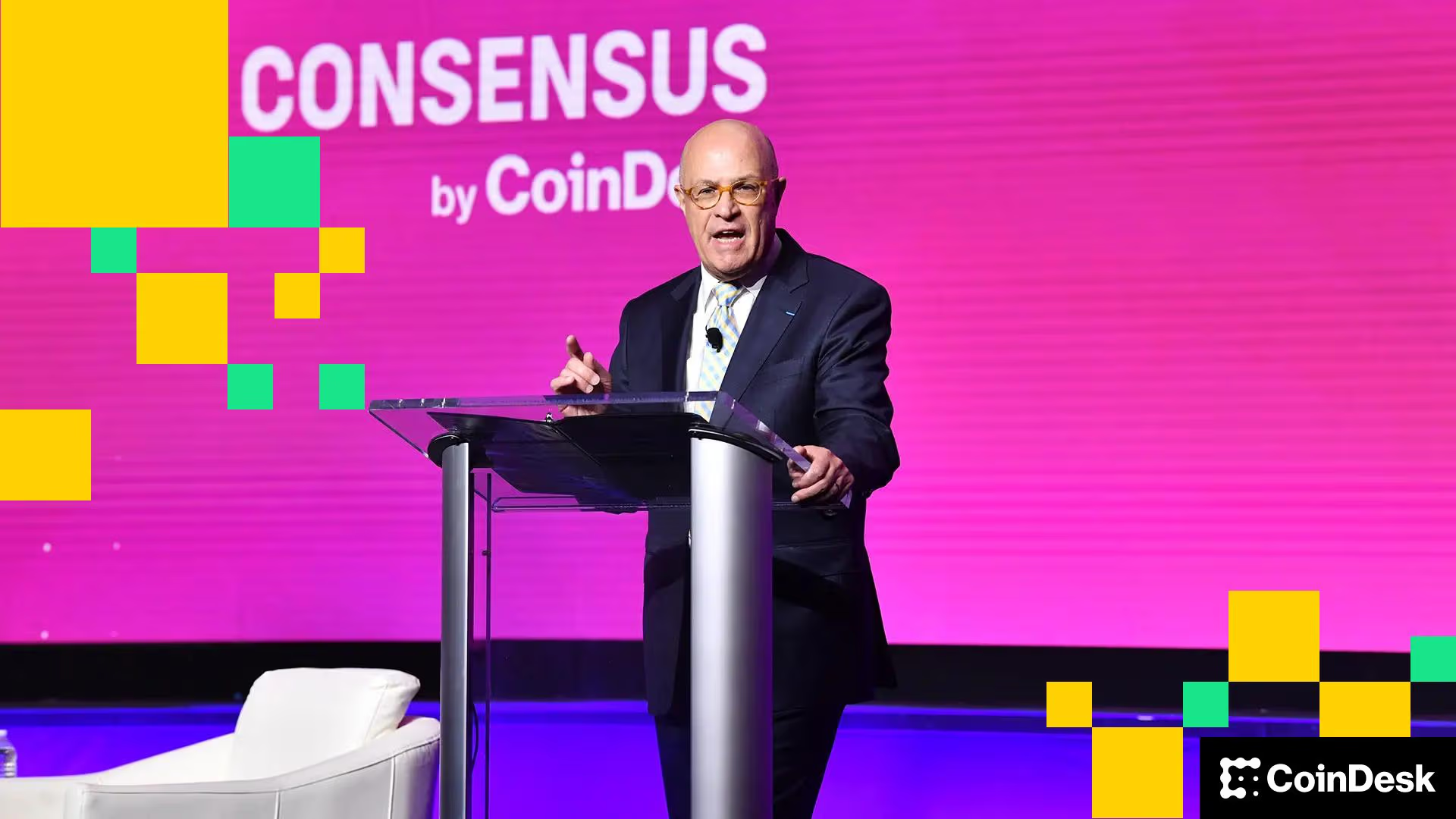 Giancarlo asserts that banks have a greater need for the Clarity Act than cryptocurrency firms. (Shutterstock/CoinDesk)
Key points:
- Christopher Giancarlo, the former chair of the CFTC, stated that banks require the stalled Digital Asset Market Clarity Act more than cryptocurrency companies.
- The bill’s approval will offer the regulatory clarity necessary for investments in new digital payment systems.
- This legislation is currently stalled over the issue of whether cryptocurrency firms should be permitted to provide incentives to stablecoin holders, a matter that concerns banks due to potential capital outflows.
- Giancarlo noted a risk that financial activities might migrate to Europe and Asia, estimating the chances of the bill’s passage at approximately 60-40 after missing a deadline set by the White House.
According to Christopher Giancarlo, a former chair of the Commodity Futures Trading Commission (CFTC), the banking sector stands to benefit more from the stalled U.S. Digital Asset Market Clarity Act, which is intended to regulate digital assets, than the cryptocurrency sector.
"The banks require this more than crypto," Giancarlo remarked during an interview with Scott Melker on Sunday’s Wolf Of All Streets podcast. "Their legal advisors are informing their boards: You cannot invest billions in building these digital infrastructures without regulatory certainty. Banks cannot tolerate regulatory ambiguity."
Related Posts
The bill has been at an impasse since January, with cryptocurrency firms, including Coinbase’s CEO Brian Armstrong, opposing Senate Banking Committee proposals that would restrict cryptocurrency companies from providing rewards to stablecoin holders.
Stablecoins, which are cryptocurrencies linked to external references like the dollar, play a crucial role in the blockchain-based payment systems discussed in the bill: Banks regard them as essential components for a new digital framework that could facilitate quicker and more effective money transfers, while cryptocurrency firms are already testing their utility in international transactions.
However, banks are apprehensive that permitting stablecoin rewards might lead to a capital exodus from their institutions and are seeking a “level playing field,” as expressed by JPMorgan CEO Jamie Dimon. Officials from the Trump administration have also criticized banks for holding the legislation “hostage.”
Giancarlo cautioned that should banks oppose this, the cryptocurrency sector will continue to evolve, potentially relocating overseas.
"If the banks oppose this now, it’s not going to disappear. It will simply shift to Europe. It will move to Asia … and then American banks will realize, ‘Whoa.’ Our traditional, identity-based, message-driven system is no longer effective anywhere else," he explained.
Giancarlo assessed the likelihood of the bill’s passage at around 60-40. “We have numerous issues to address before we can finalize this,” he mentioned, noting that both parties have already surpassed the White House’s March 1 deadline.
