Disclaimer: Information found on CryptoreNews is those of writers quoted. It does not represent the opinions of CryptoreNews on whether to sell, buy or hold any investments. You are advised to conduct your own research before making any investment decisions. Use provided information at your own risk.
CryptoreNews covers fintech, blockchain and Bitcoin bringing you the latest crypto news and analyses on the future of money.

Experts divided on the influence of Federal Reserve and US debt ceiling on Bitcoin valuation

On April 26, House Republicans narrowly approved their legislation to raise the U.S. debt ceiling. This prompted analysts to begin assessing its possible effects on Bitcoin (BTC) prices, with opinions varying from extremely pessimistic to excessively optimistic.
Ultimately, the liquidity of the U.S. dollar is central to both of these contrasting perspectives.
"Deflationary recession" to trigger a BTC rally similar to 2020?
Some analysts, such as Jesse Meyers, the COO of investment firm Onramp, contend that increasing the debt ceiling would lead the Federal Reserve to create more money, thereby enhancing capital inflows into "risky" assets like Bitcoin.
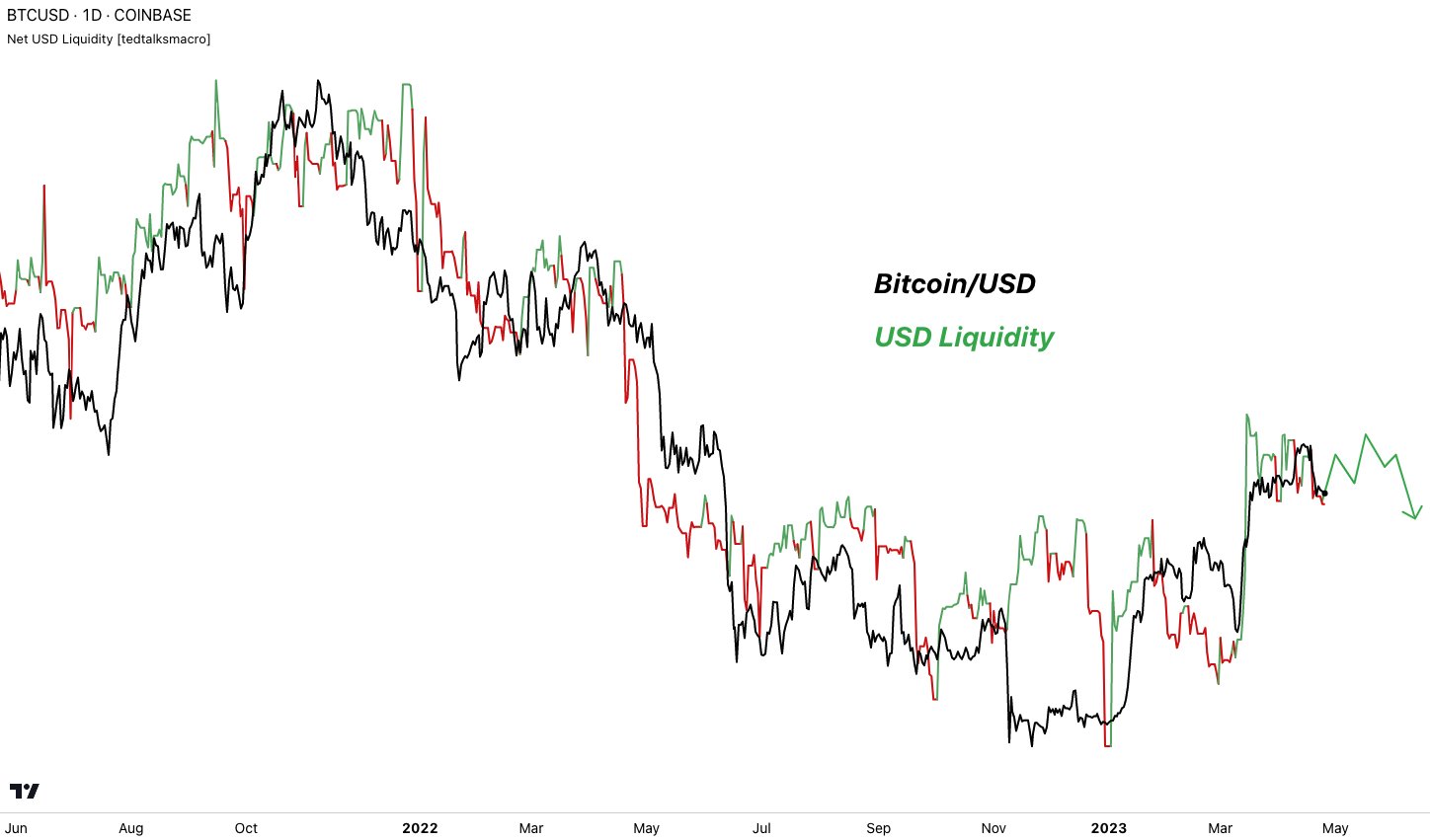 BTC/USD daily price chart vs. dollar liquidity. Source: TradingView.com
The debt ceiling signifies the highest amount of money the U.S. government is permitted to borrow to fulfill its financial obligations.
Related: Fed balance sheet adds $393B in two weeks — Will this send Bitcoin price to $40K?
Raising it allows for the issuance of additional debt to generate more capital. However, since the Fed is no longer purchasing bonds due to its "quantitative tightening," and with the available M2 money supply declining, the U.S. government debt may struggle to attract buyers.
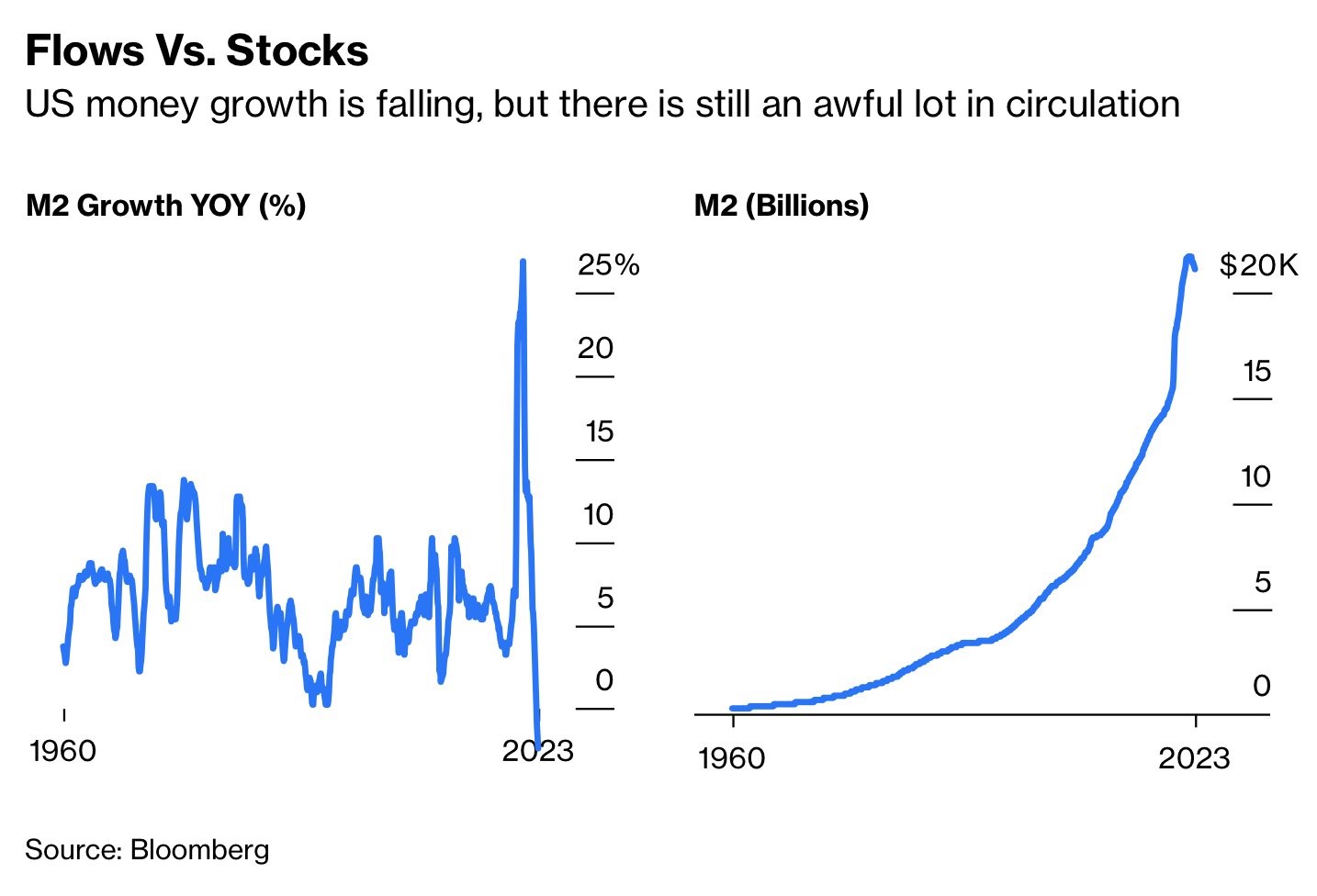 M2 year-over-year flow versus stock. Source: Bloomberg
In other terms, a deflationary recession that Meyers anticipates could compel the Fed to revert to its quantitative easing strategy.
"When the debt ceiling is raised and credit contraction leads to an economic crisis… They will have to print money on a large scale," he remarked, adding:
"Bitcoin was the beneficiary during the last round of stimulus."
Related Posts
Dollar credibility decline could elevate Bitcoin price
The government reached its $31.4 trillion debt ceiling in January 2023. Thus, it theoretically cannot generate additional capital until the Senate approves the bill passed by the House.
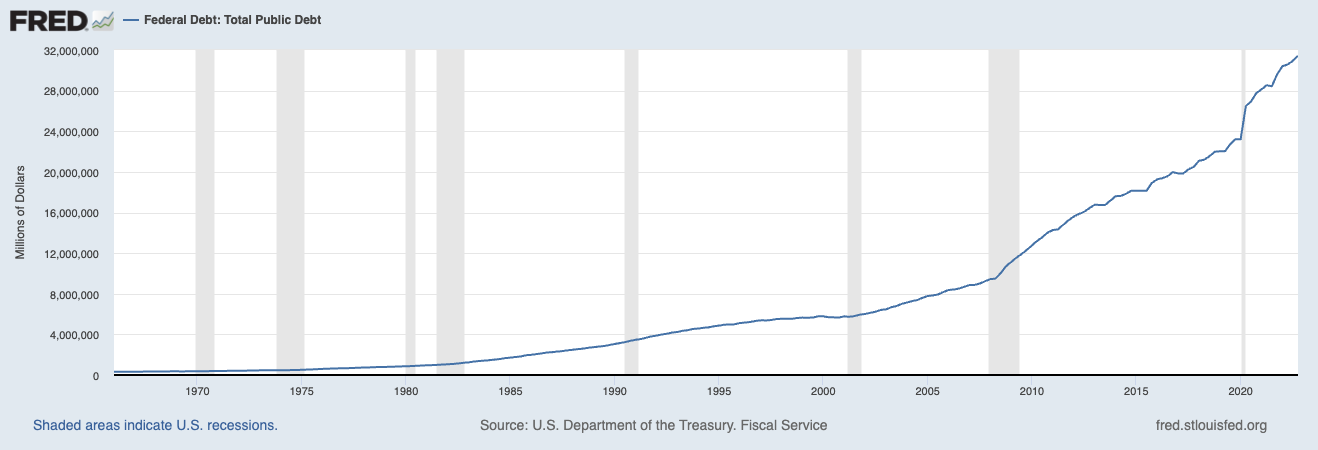 U.S. public debt to date. Source: FRED
However, it is improbable that the Senate will approve it, and Biden has also pledged to veto the legislation.
This impasse could lead to the U.S. government defaulting on its debt in June, which would have adverse effects on the U.S. dollar, according to Jeff John Roberts, crypto editor at Fortune.
"If [Republicans] choose to take a kamikaze approach during the current debt ceiling standoff, it will inflict another significant blow to the dollar’s credibility—and further enhance Bitcoin," he stated.
Former U.S. Treasury Secretary Lawrence Summers, on the other hand, minimizes the concerns surrounding a potential debt default, asserting that the likelihood of it occurring is below 2%.
Summers:
"I believe the chances that we will default in the sense of insolvency, and over some period people who hold bonds will not be able to get paid, are – assuming no major war occurs – certainly under 2% over the next decade."
Fed unlikely to implement QE, bears assert
Sharing a similar viewpoint, analyst TedTalksMacro indicates that extending the debt ceiling would ensure that the Fed continues to reduce its balance sheet through the ongoing QT.
This suggests diminished liquidity and, consequently, increased downward pressure on Bitcoin.
"One caveat to the liquidity downturn/sideways trend for the remainder of 2023 would be if the Fed were to conclude or slow the current pace of QT," TedTalksMacro adds.
This article does not provide investment advice or recommendations. Every investment and trading decision carries risk, and readers should perform their own research before making a choice.
