Disclaimer: Information found on CryptoreNews is those of writers quoted. It does not represent the opinions of CryptoreNews on whether to sell, buy or hold any investments. You are advised to conduct your own research before making any investment decisions. Use provided information at your own risk.
CryptoreNews covers fintech, blockchain and Bitcoin bringing you the latest crypto news and analyses on the future of money.


Regulators in Rhode Island have issued a currency transmitter license to X (Twitter), representing a significant advancement for the company’s entry into the financial services domain.
This license is a legal necessity for entities engaging in financial operations on behalf of users concerning the transfer and receipt of funds — a category that encompasses both fiat and cryptocurrency assets. The authorization will enable X to hold, transfer, and exchange digital currencies.
X’s Rhode Island Currency Transmitter License received approval on Aug. 28, as per the Nationwide Multi-State Licensing System (NMLS).
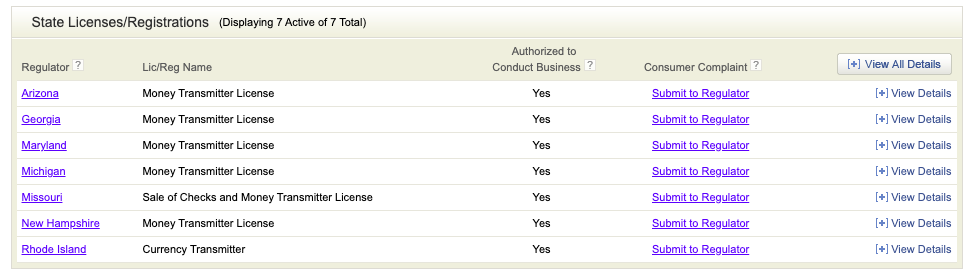 X holds a total of seven money and currency transmitter licenses. Source: NMLS
This development signifies a crucial step in Elon Musk’s ambition for X to evolve into an “everything app” — which would encompass both crypto and fiat payment options.
Related Posts
Although reports suggest that X’s forthcoming payment feature will initially support only fiat currencies, Musk has allegedly directed developers at X to design the payment system in a manner that allows for the future incorporation of cryptocurrency functionality.
The approval follows closely on the heels of X obtaining money transmitter licenses in Michigan, Missouri, and New Hampshire, all of which were granted on July 5. With this latest license, X has now secured transmitter licenses in a total of seven U.S. states.
Related: Elon Musk praises pro-crypto Republican presidential candidate
The specific financial services that will be offered when X launches its payment features remain uncertain.
Individuals familiar with the company’s strategy have suggested that X will initially provide fiat currency transaction services akin to those of PayPal — a platform co-founded by Musk — while allowing for potential future integration of cryptocurrency.
Deposit risk: What do crypto exchanges really do with your money?
